
The Role of Local Agents for International Investors
The Role of Local Agents for International Investors
Buying property abroad without a trusted local expert is like trying to win a card game when you don’t know the rules and everyone else at the table does. The role of local agents goes far beyond showing listings or processing paperwork. In a foreign market like Panama, a skilled local agent is the difference between paying tourist prices for a property worth far less and closing a deal with the confidence of someone who has done it dozens of times. If you’ve ever wondered exactly what a local agent does, what separates a great one from a mediocre one, and how to actually use that relationship to your advantage, this article answers all of it.
Table of Contents
- Key takeaways
- The role of local agents: legal definitions and core responsibilities
- What separates local agents from national or online providers
- Strategic financial advantages local agents deliver
- How to choose and leverage a local agent effectively
- My perspective on the evolving role of local agents
- How Panamainvestors connects you with the right local expertise
- FAQ
Key takeaways
| Point | Details |
|---|---|
| Agents are legal representatives | Local agents are authorized to solicit, contract, and collect on behalf of companies in specific geographic areas. |
| Local knowledge beats algorithms | Hyper-local insights on pricing, risks, and community dynamics give investors a measurable financial edge. |
| Agents pay like locals | High-performing agents use vendor credit and B2B terms that international buyers cannot access independently. |
| Vetting matters enormously | Bilingual, well-connected agents with verified local reputations protect investors from costly cultural and legal blind spots. |
| Long-term partnerships win | Agents who know your goals act as strategic advisors, not just transaction facilitators. |
The role of local agents: legal definitions and core responsibilities
Before you can appreciate what a great local agent does in practice, it helps to understand what they are formally authorized to do. Local agents are defined legally as individuals or firms operating within a specific geographic area who are authorized to solicit business, enter contracts, and receive payments on behalf of the companies or principals they represent. That legal scope matters because it means a local agent is not simply an advisor offering opinions. They can bind deals, negotiate terms, and act on your behalf with real authority.
This distinction separates local agents from general consultants, listing aggregators, or offshore platforms that merely connect buyers with properties. A local agent carries fiduciary responsibility. In real estate specifically, that means:
- Representing your interests in negotiations with sellers, developers, and attorneys
- Reviewing contracts under the legal and regulatory framework of the country where the property sits
- Collecting and managing transactional documents, deposits, and closings
- Acting as the legal point of contact in the local jurisdiction if disputes arise
In Panama, this is especially significant. The country’s property laws, notarial requirements, and residency-linked investment programs all carry specific procedural steps that an unfamiliar buyer can mishandle easily. Knowing which steps trigger tax obligations or affect title clarity requires someone who operates within that system every day, not someone advising from another country.
The function of local representatives in real estate also extends to understanding seller-side motivations, which a remote platform will never surface organically. That ground-level awareness is what makes a local agent’s formal responsibilities so much more powerful in practice than they appear on paper.
What separates local agents from national or online providers
Here is where most international investors underestimate what they’re giving up by relying on a property listing website or a large national firm with no real presence in the market they want to buy into.
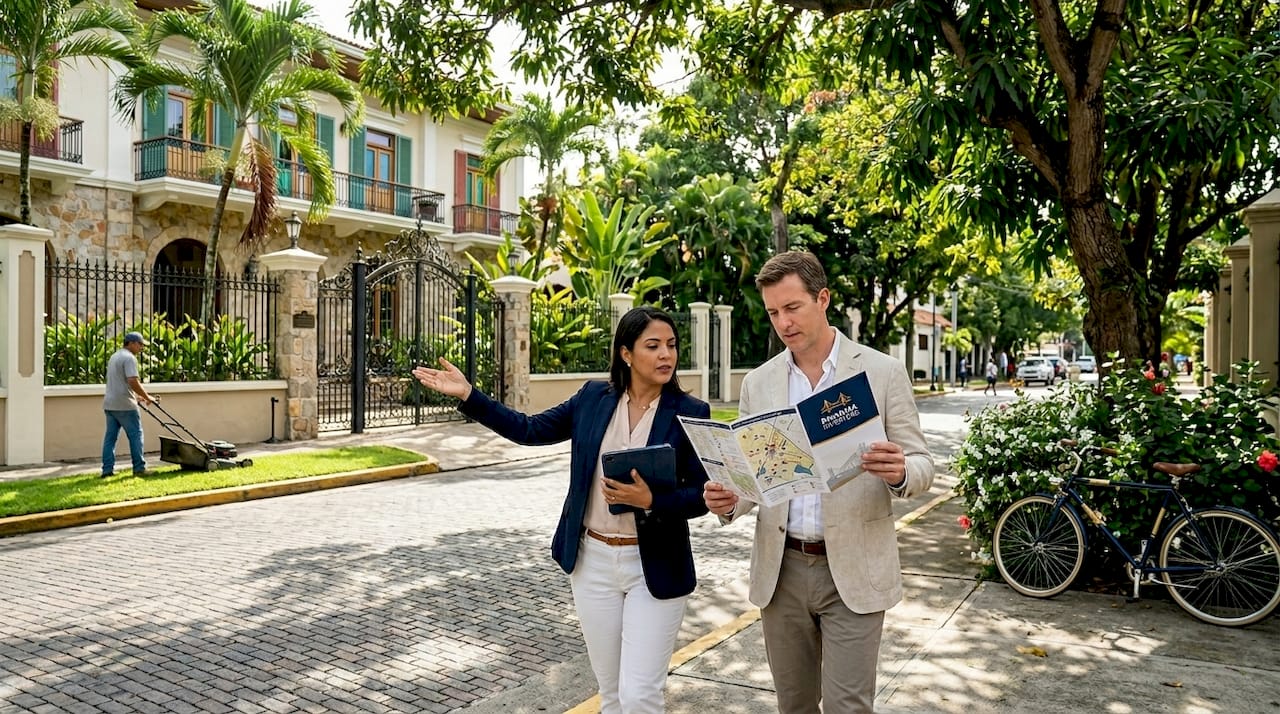
Trust and community presence are critical differentiators for local agents in ways that remote or impersonal providers simply cannot replicate. When a local agent has operated in a specific neighborhood for years, they have something no algorithm can generate: reputation. Local buyers, sellers, attorneys, and notaries all know who this person is, whether they deliver, and whether their word is reliable.
A few specific ways this plays out for you as an international buyer:
-
Personalized risk management. Local agents act as long-term risk managers, adapting their guidance as your situation changes. If you buy a rental property and later want to convert it to a residency-qualifying investment, a local agent who knows your portfolio and goals can restructure your approach rather than starting from scratch.
-
Real-time advocacy. When issues arise, including title disputes, construction delays, or HOA conflicts, a local agent with community standing can intervene personally. Clients benefit from real-time advocacy during disputes in ways that a remote service provider cannot provide.
-
Community-specific risk knowledge. In Panama, certain coastal zones carry flood risk classifications, some condo developments have construction liens on file, and specific micro-markets appreciate dramatically faster than others a few blocks away. A local agent knows this. A national aggregator does not.
-
Hyper-local pricing intelligence. Street-level insights enable better decisions about value retention and negotiation positioning that no platform data can match.
Pro Tip: Ask any agent you’re considering to name three specific micro-market dynamics in the neighborhood you’re targeting. If they can’t answer without looking something up, keep looking.
Leveraging local contacts effectively is not just a nice-to-have. In foreign markets, it’s the foundation of every successful transaction.
Strategic financial advantages local agents deliver
This is the section most articles skip entirely. The importance of local agents is not just relational or informational. It’s financial, and in very concrete terms.
Consider the difference between how a first-time international buyer approaches a transaction versus how an experienced local agent does it:
| Buyer type | How they transact | Typical outcome |
|---|---|---|
| International buyer alone | Pays retail pricing, lacks vendor context, no leverage | Pays premium, misses negotiable items |
| Buyer with local agent | Uses agent’s vendor network, B2B terms, seller intel | Pays market rate or below, avoids hidden costs |
| Buyer with high-performing agent | Agent brings pre-negotiated deals, flags title risks, reads seller motivation | Maximizes value, protects legal position |
High-performing agents act as business partners with established vendor relationships and credit lines, enabling lower transaction costs for buyers who would otherwise pay tourist-level prices at every step of the process. Their vendor relationships extend to attorneys, inspectors, notaries, appraisers, and property managers. Each of those relationships typically comes with faster service and better pricing than a new buyer could negotiate independently.
“The agent you choose is not just finding you a property. They are structuring the financial terms of one of the largest purchases you will ever make in a country where you do not have home-court advantage.”
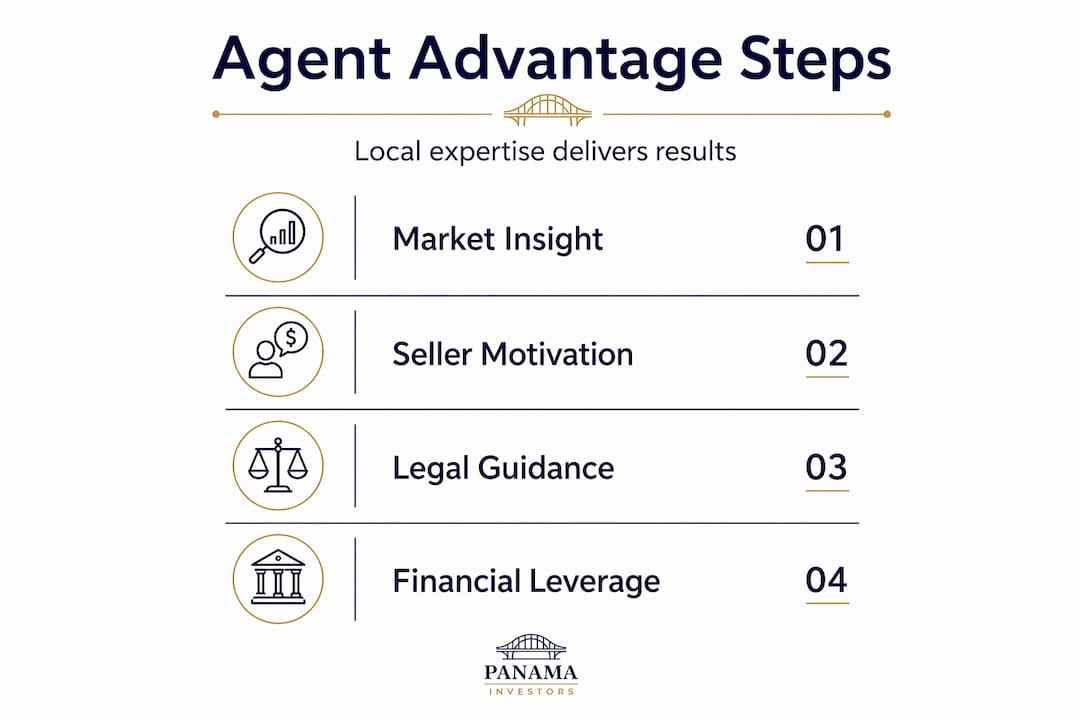
The significance of local agents also shows up in seller motivation intelligence. Local agents advise on seller priorities to structure winning offers, which means they know whether a seller needs to close fast, has emotional attachment to the property, or is testing the market with an inflated price. That intelligence lets you craft an offer that wins without overpaying.
For international real estate buyers, navigating legal complexities is equally part of the financial picture. A single misstep in Panama’s notarial process or residency investment structure can cost far more than any commission you pay your agent.
How to choose and leverage a local agent effectively
The benefits of local agents only materialize if you select the right one. Not every licensed agent with a local office qualifies as the kind of strategic partner described above. Here’s what actually distinguishes a high-value local agent from someone who will merely process your transaction:
- Track record with international buyers. Experience with foreign buyers specifically matters because the questions, concerns, and legal protections relevant to non-residents are different from those of domestic purchases. Ask for references from buyers who were in a similar situation to yours.
- Bilingual fluency and cultural competence. Bilingual local agents reduce misunderstandings and facilitate smoother processes across language and cultural barriers. This is not just about translation. It’s about interpreting cultural norms in negotiation, understanding how sellers think, and explaining your intentions clearly to all parties involved.
- Verified local reputation. 97% of consumers check reviews before choosing local businesses. A serious agent will have a documented presence, client testimonials, and verifiable transaction history. If their reputation is invisible online, that’s a signal worth taking seriously.
- Network depth. The best agents bring more than themselves. They bring a pre-built team of trusted attorneys, inspectors, appraisers, and property managers who have worked together on multiple deals.
- Honesty about what a property is not. An agent who only emphasizes positives is telling you what you want to hear. An agent who flags the drainage issue, the HOA reserve shortfall, or the neighboring development that will block your view is protecting your investment.
Pro Tip: Before committing to an agent, ask them about a deal they talked a client out of. If they can’t recall one, they’re a salesperson, not an advisor.
Understanding why local expertise unlocks results in Panama’s market specifically comes down to this: the market has low transparency, strong personal networks, and regulatory nuances that only surface through relationships. Without the right local agent, you’re not just working harder. You’re working blind.
My perspective on the evolving role of local agents
I’ve watched countless international buyers arrive in Panama convinced that doing their own research through property portals and investor forums gives them a real read on the market. And I’ve watched many of those same buyers overpay, miss red flags, or lose deals to locals who simply knew more.
What I’ve learned over years of working in this space is that the role of local agents has fundamentally shifted. The best ones today are not gatekeepers to listings. They are strategic partners who hold context you cannot buy or Google. They know which developers have delivered on time and which ones have a pattern of delays. They know which sellers will negotiate and which ones are emotionally attached to a number that doesn’t reflect reality.
The uncomfortable truth is that algorithms and platforms give you confidence without competence. Local agents, when they’re good, give you competence. That’s a very different thing. I’ve seen buyers save tens of thousands of dollars on a single transaction because their agent knew what comparables the seller’s agent was hiding. That’s the real value. Not the listing. Not the paperwork. The knowledge.
Local agent roles in business are evolving toward long-term advisory relationships, and the investors who treat their agent that way consistently outperform those who treat the relationship as a one-time transaction.
— Roie
How Panamainvestors connects you with the right local expertise
If you’ve read this far, you already understand what separates a great local agent from a mediocre one. The next question is how you actually find one you can trust in a market you don’t yet know well.

Panamainvestors was built specifically to solve this problem for international buyers. Led by Luca Piva, a licensed local agent with over 12 years of experience in Panama’s real estate market, the platform goes beyond generic listings and connects you with buyer-focused advisory services designed to protect your investment from the first consultation through closing and beyond. Luca’s network spans vetted attorneys, sellers with real motivation, and off-market deals that never appear on public platforms. If you’re serious about buying property in Panama the right way, start with a strategy call and let local expertise do what algorithms never can.
FAQ
What is the role of local agents in real estate?
Local agents legally represent buyers or sellers within a specific geographic area, handling negotiations, contracts, and due diligence. In foreign markets like Panama, they also provide hyper-local market knowledge and vendor relationships that international buyers cannot replicate independently.
Why is hiring a local agent important for international buyers?
International buyers lack access to community-level pricing intelligence, seller motivation context, and local vendor networks that experienced local agents bring. Without that foundation, foreign investors routinely overpay or overlook legal and financial risks.
What should I look for when choosing a local agent abroad?
Prioritize bilingual fluency, a verified track record with international clients, deep local vendor networks, and an agent who gives you honest assessments rather than only positive ones. References from buyers in similar situations to yours are the most reliable signal.
How do local agents provide financial advantages beyond finding properties?
High-performing agents use established vendor relationships and pre-negotiated terms that allow buyers to transact at local rates rather than tourist-level pricing. They also use seller motivation intelligence to structure offers that win without overpaying.
Can a local agent help with legal matters in Panama?
While local agents are not attorneys, they work closely with specialized legal counsel and can direct you to trusted professionals who understand Panama’s notarial requirements, title processes, and residency investment structures that affect your transaction.
