Leverage local contacts for real estate success in Panama
Leverage local contacts for real estate success in Panama
- Panama Investors
- May 8
- 9 min read
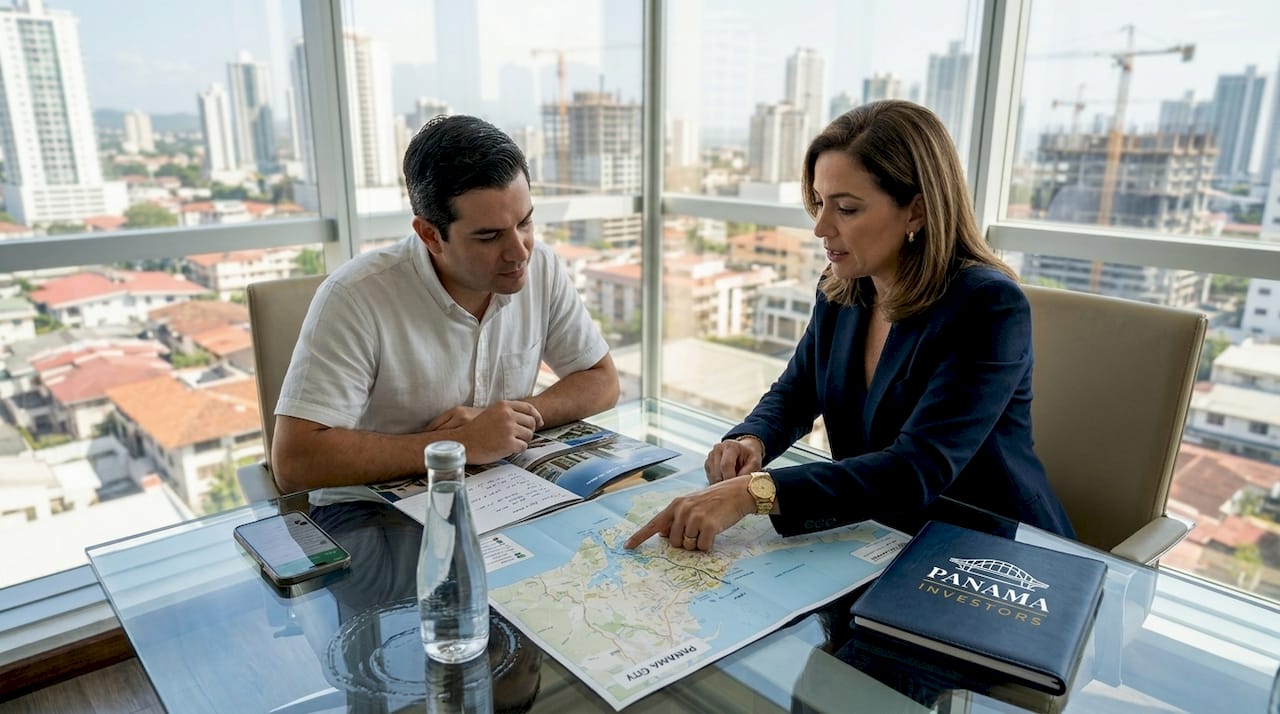
Panama’s real estate market offers genuinely compelling returns, a dollarized economy, and residency pathways that few other markets can match. But arriving as a foreign investor without trusted local connections is like navigating Panama City without a map during rainy season. You can get somewhere eventually, but you’ll waste time, money, and patience on detours that a knowledgeable local would have helped you skip entirely.
Table of Contents
Key Takeaways
Point | Details |
Local contacts are vital | Investors who leverage trusted relationships unlock better deals and safer transactions. |
Trustworthy vetting is essential | Always verify credentials and references to avoid costly mistakes in Panama’s property market. |
Legal counsel is non-negotiable | Expert legal advice protects buyers from compliance risks and ensures smooth property deals. |
Relationships drive long-term success | Building rapport with local experts supports sustainable investment outcomes in Panama. |
Understanding the value of local contacts in Panama real estate
The word “contacts” gets thrown around loosely in investment circles, but in Panama it carries a precise and critical meaning. A strong local network is not just convenient. It is, in many cases, the difference between a profitable acquisition and a costly legal dispute.
Local contacts in the Panama property market typically fall into four core categories. First, licensed real estate agents who know specific neighborhoods, developer relationships, and off-market inventory. Second, legal counsel fluent in Panamanian property law, title registration, and foreign ownership rules. Third, community insiders such as long-term expatriates and property managers who understand what life in a given area actually looks like on the ground. Fourth, financial advisors who can structure purchases to maximize tax efficiency within Panama’s territorial tax system.
The concrete benefits of this network are substantial. Local agent advantages include access to listings that never reach public portals, negotiation leverage built on existing seller relationships, and the ability to flag legal red flags before they become expensive problems. Without these connections, foreign buyers frequently overpay, miss title defects, or misunderstand which zones allow rental income or commercial use.
Here is a direct comparison of what these two scenarios look like in practice:
Factor | Buyer with local contacts | Buyer without local contacts |
Listing access | Off-market and exclusive deals | Public portals only |
Negotiation power | Seller relationships, price context | Guesswork on fair market value |
Legal protection | Proactive due diligence | Reactive, often post-problem |
Timeline to close | Typically 60 to 90 days | Often 4 to 6 months or longer |
Hidden cost risk | Minimized through expert guidance | High, especially with unclear titles |
Post-purchase support | Ongoing management network | Starts from scratch |
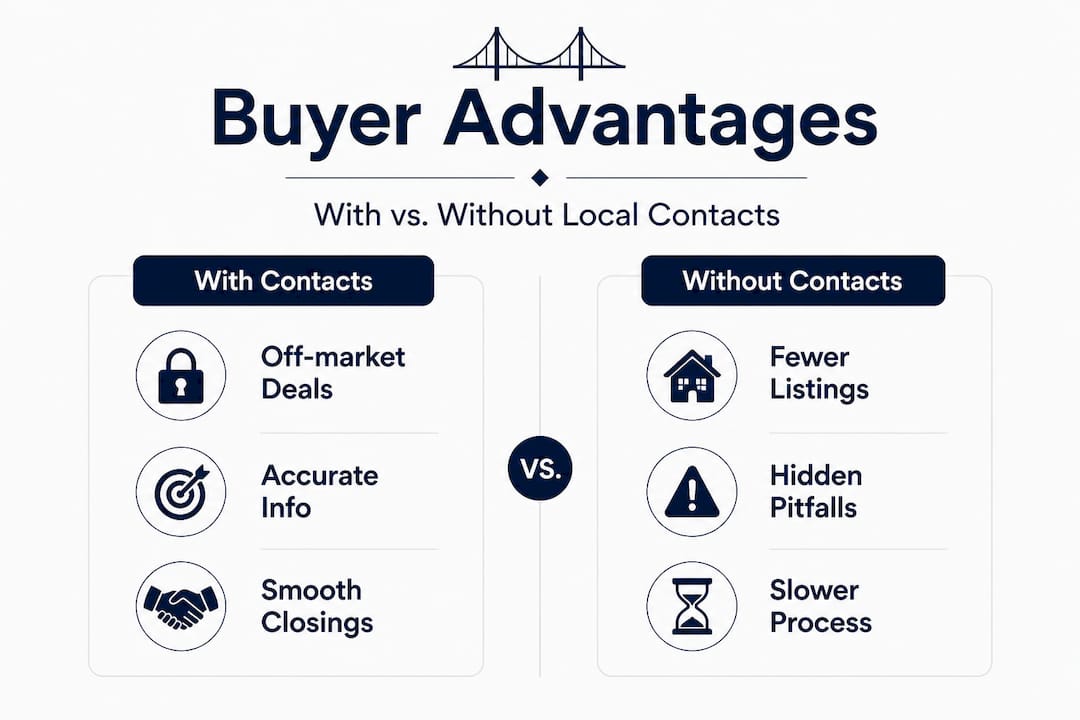
The advantages on the left side of that table are not theoretical. They reflect the real outcomes that consistently separate investors who build relationships in Panama from those who try to navigate the market remotely or through generic platforms. Pairing your financial goals with the right Panama buyer’s agent guidance from the start puts you firmly in that left column.
Identifying and evaluating local contacts
Knowing that you need local contacts is one thing. Finding the right ones is where most foreign investors stumble. Panama has a growing expat community and a thriving real estate industry, but not every professional operating in this market has your interests at heart.
The best sources for identifying legitimate local contacts include:
Established real estate advisory firms with verifiable transaction histories and licensed agents
Expat networks and community forums where long-term residents share genuine firsthand recommendations
Legal consultants registered with the Panama Bar Association who specialize in property transactions
Developer referral programs which, while useful, should always be verified independently since they have an inherent conflict of interest
Once you have a list of prospects, evaluate them against a clear checklist before committing to any working relationship:
Do they hold a valid Panama real estate license or relevant professional registration?
Can they provide client references from transactions completed within the last 12 to 24 months?
Do they have experience specifically with foreign investor transactions, not just local buyers?
Are their fees, commissions, and service scope defined in writing before any agreement?
Do they communicate clearly and promptly, including in your preferred language?
The foreign investor guide outlines how international buyers can connect with qualified local professionals who understand the regulatory and practical landscape. That kind of structured guidance matters enormously when you are vetting contacts from abroad.
Red flags to watch for are just as important as the positive checklist. Be cautious of anyone who discourages you from hiring independent legal counsel. Walk away from contacts who cannot explain their fee structure clearly, who pressure you into fast decisions, or who claim exclusivity on “deals that expire tomorrow.” These are classic pressure tactics in markets where information asymmetry is high.
Pro Tip: Always request a reference list and verify at least two or three contacts independently. Do not just call the numbers provided. Search for the references on LinkedIn or in expat community groups to confirm the connection is genuine.
The Panama property advisory blog is a practical resource for staying current on market developments while you build your local network.
Building trust and relationships with local experts
Identifying solid contacts gets you to the starting line. Building genuine trust is what converts those contacts into long-term value for your investment portfolio. In Panama’s relationship-driven business culture, how you show up in the early stages of a professional relationship often determines what access and loyalty you receive over time.
Here is a practical sequence for establishing productive working relationships with local experts:
Schedule an introductory meeting in person if possible, or via video call with a structured agenda. Come prepared with your investment criteria, budget range, preferred locations, and timeline.
Communicate openly about your goals including your risk tolerance, intended holding period, and whether you plan to use the property personally or as a rental asset.
Formalize agreements in writing before any property search begins. A clear engagement letter defines scope, fees, and expectations, protecting both parties and establishing a professional foundation.
Maintain ongoing transparency throughout the process. If your investment priorities shift, communicate that early rather than allowing your contacts to pursue options that no longer fit your strategy.
Follow up consistently after meetings, site visits, and reviews. In a market where personal rapport drives access, showing that you are a serious and responsive buyer builds your credibility fast.
The legal dimension of these relationships deserves special emphasis. Panama legal counsel is not optional or supplementary. It is the structural backbone of any safe transaction. A qualified attorney will review the title history, confirm zoning classifications, check for encumbrances or liens, and ensure the purchase agreement reflects your actual interests. Without this layer of expertise, even a trusted agent relationship leaves you exposed.
Pro Tip: Attend local real estate events, investment seminars, and expat community gatherings in Panama City, Boquete, or wherever you are targeting your investment. These settings give you a natural opportunity to meet professionals in an informal context, assess their credibility, and expand your network without the transactional pressure of a direct pitch meeting. Even one or two events per trip can open doors that months of email outreach cannot.

If you want to move faster, scheduling a Panama expert consultation gives you direct access to a seasoned professional who already has these relationships built and ready to deploy on your behalf.
Applying local connections: The Panama real estate purchase process
Understanding where local contacts add the most value requires looking at the full purchase timeline rather than treating them as a resource you consult once.
Here is how the process unfolds stage by stage:
Sourcing listings (Weeks 1 to 4): Local agents with developer relationships and seller networks surface off-market opportunities that match your criteria. This is where exclusive listings strategy becomes a tangible financial advantage, not just a marketing phrase.
Initial due diligence (Weeks 2 to 6): Legal counsel begins title searches, verifies ownership history, and confirms zoning classifications while you are still comparing properties. Doing this in parallel with the search saves weeks.
Negotiation (Weeks 4 to 8): A local agent who knows the seller, understands comparable sales, and can communicate in the seller’s language has a structural advantage in price and terms negotiation that no remote buyer can replicate independently.
Purchase agreement and legal review (Weeks 6 to 10): Your attorney drafts or reviews the promesa (the initial purchase commitment) to ensure your deposit is protected and your conditions for closing are enforceable.
Closing and title transfer (Weeks 10 to 16): Local counsel manages the Public Registry process, confirms transfer taxes are correctly calculated, and ensures the title is registered in your name without defects.
Post-purchase management (Ongoing): Local property managers, maintenance networks, and rental agents keep your asset performing without requiring you to be on the ground full time.
Here is a data table that shows the typical timeline and outcome difference for buyers who engage local contacts versus those who proceed independently:
Stage | With local contacts | Without local contacts |
Listing search | 1 to 4 weeks | 6 to 12 weeks |
Due diligence | 2 to 4 weeks | 4 to 8 weeks |
Negotiation and agreement | 2 to 3 weeks | 4 to 8 weeks |
Closing | 4 to 6 weeks | 8 to 16 weeks |
Total average timeline | 60 to 90 days | 4 to 8 months |
Risk of legal complications | Low (proactive review) | High (reactive discovery) |
Review the international buying overview for a fuller picture of each stage and what to prepare before you begin.
A critical note on compliance: Panama’s Public Registry is the legal authority on property ownership. No verbal agreement, informal contract, or developer promise substitutes for a properly registered title. Skipping or rushing the legal due diligence phase to save time or money is the single most common source of disputes and losses for foreign buyers. Never close on a property without independent legal review.
Why most investors underestimate local connections
Here is an observation that most general investment articles will not tell you: the investors who get the best deals in Panama are not always the ones with the largest budgets. They are the ones who invested the most in relationships before they ever made an offer.
There is a consistent pattern among buyers who struggle in Panama’s market. They spend months researching listings online, comparing price-per-square-foot data, and reading market reports. Then they arrive expecting to transact as if they were buying an asset in New York or London, where information is symmetric, regulation is transparent, and contracts are largely standardized. Panama does not work that way, and treating it as if it does is an expensive assumption.
Online data in Panama is notoriously incomplete. Listing prices are often negotiating starting points, not reflections of actual market value. Rental yield estimates published on property portals frequently exclude vacancy rates, management fees, and maintenance costs that local managers would quote you honestly. The real estate income analysis provides a candid look at what the actual numbers look like after those real-world factors are included.
The deeper insight is that local relationships in Panama compound over time in ways that pure capital does not. A trusted agent remembers your criteria when an off-market opportunity surfaces. A legal contact flags regulatory changes before they affect your property’s zoning or rental classification. A community insider tells you about infrastructure plans, neighborhood shifts, or developer reputations that no database captures. This is the kind of intelligence that protects and grows your investment in ways that no amount of online research can replicate.
Short-term thinking leads investors to treat these relationships as a one-time transaction cost. Long-term thinkers treat them as infrastructure, something you build before you need it and maintain even when you are not actively buying. The financial, legal, and cultural returns on that investment are disproportionate to the effort it requires.
Unlocking success with Panama Investors
The guidance in this article gives you a clear framework. But frameworks only produce results when executed by people who know the terrain intimately.

Panama real estate investment advisory connects serious buyers with vetted local contacts, including licensed agents, legal counsel, and financial advisors who have spent years building the relationships that matter in Panama’s market. Led by Luca Piva, a licensed agent with over 12 years of on-the-ground experience, Panama Investors gives you immediate access to the network that most foreign buyers spend months trying to build independently. Whether you need legal guidance, exclusive listing access, or a personalized strategy session, a Panama expert consultation is the fastest way to move from research to results.
Frequently asked questions
How do I find trusted local agents for real estate in Panama?
Research established real estate advisory firms and request references from recent foreign buyer transactions. Panama Investors specializes in connecting buyers with vetted local agents who have verifiable track records.
What legal support should I expect from local contacts?
Local legal counsel provides essential guidance on compliance, document preparation, and due diligence. Panama legal expertise covers title history review, purchase agreement drafting, and Public Registry registration.
Are there risks to relying solely on online contacts?
Yes. Online sources often lack transparency, context, and effective accountability. Connecting with local professionals through vetted networks provides the personal references and verifiable credentials that secure transactions require.
What stages of property buying can local contacts help with?
Local contacts add value at every stage, from sourcing exclusive listings and negotiating terms to managing legal checks and coordinating post-purchase property management.
Recommended
