Your Guide to Finding Bilingual Realtors in Panama
Your Guide to Finding Bilingual Realtors in Panama
Buying property in a foreign country without speaking the language is one of the fastest ways to lose money. This guide to finding bilingual realtors in Panama gives you a clear, vetted path through a market where legal documents are in Spanish, negotiations require local knowledge, and unlicensed agents operate freely. Whether you’re relocating permanently or investing from abroad, the realtor you choose will determine whether this process goes smoothly or becomes an expensive lesson. Here’s exactly what to know before you start.
Table of Contents
- Key takeaways
- Guide to finding bilingual realtors in Panama: start with licensing
- How to find vetted bilingual real estate agents in Panama
- Realtors vs. attorneys: understanding both roles
- Step-by-step process for working with bilingual realtors
- Common pitfalls when hiring bilingual agents in Panama
- My honest take on working with bilingual realtors in Panama
- Work with vetted bilingual professionals through Panamainvestors
- FAQ
Key takeaways
| Point | Details |
|---|---|
| License verification is non-negotiable | Always confirm your broker holds a valid MICI license before signing anything or making payments. |
| ACOBIR is your best starting directory | Panama’s official real estate association lists over 400 active, vetted bilingual agents through its MLS network. |
| Bilingual realtors are not your lawyers | You need a separate, independent bilingual attorney to review contracts and handle legal due diligence. |
| Steps to hire bilingual agents matter | Verify credentials, check references, clarify communication expectations, and coordinate legal counsel before closing. |
| Red flags are predictable | Unlicensed agents, pressure tactics, and English-only paperwork are common warning signs in Panama’s market. |
Guide to finding bilingual realtors in Panama: start with licensing
Before you search any directory or read any listing, you need to understand how Panama licenses its real estate professionals. All brokers in Panama must hold a valid license from the Real Estate Technical Board (Junta Técnica de Bienes Raíces) under MICI, the Ministry of Commerce and Industry. This is not a formality. It is the legal baseline for practicing real estate in the country.
The licensing requirement stems from Decree Law No. 6 of July 8, 1999, which regulates broker qualifications and sets penalties for illegal practice. Working with unlicensed brokers can result in fines up to $10,000 and criminal proceedings. That applies to the broker, not to you directly, but the deals they put together are unprotected.
Here is what matters most about how to verify a license:
- Check the broker’s license number through the MICI online verification portal before any meeting or payment
- Ask to see the physical license card. The license card is the only official legal proof of qualification in Panama
- Cross-reference the name and number against the MICI registry
- ACOBIR membership, business cards, and social media presence do not replace license verification
“Don’t assume an online presence or association membership guarantees legitimacy. Verify the license first, every time, with no exceptions.”
Pro Tip: When you ask to see a broker’s license card, pay attention to the expiration date. Licenses must be renewed periodically, and an expired license is legally equivalent to having none at all.
How to find vetted bilingual real estate agents in Panama
Once you understand the licensing framework, finding bilingual real estate agents in Panama becomes a more focused exercise. You are not just looking for someone who speaks English. You need someone who speaks English fluently, holds a valid license, has demonstrated experience with foreign buyers, and understands the specific neighborhoods or property types you are targeting.
Here is a practical sequence for how to find bilingual realtors in Panama:
- Start with ACOBIR’s directory. ACOBIR represents over 350 brokers and maintains an MLS network of more than 400 active bilingual realtors. Membership requires a valid broker license, adherence to a professional ethics code, and verified references. This is the closest thing Panama has to a curated, vetted starting list.
- Filter for expat experience. Ask directly how many foreign buyers the agent has represented in the past two years. Bilingual property listings in Panama are common, but an agent who regularly works with expats understands the questions you will ask and the documentation you will need.
- Check expat forums and referrals. Groups on Facebook, Reddit, and expat-specific platforms like Expats in Panama frequently contain honest reviews of agents. These communities tend to be blunt about bad experiences, which makes them useful.
- Request references from past clients. Any professional agent should be able to connect you with two or three past buyers. If they hesitate or deflect, that tells you something.
- Verify their ACOBIR membership status. ACOBIR membership includes access to legal advice, professional networking, and continuing education. Agents who invest in professional development are generally more reliable partners.
- Conduct an introductory call before committing. You are evaluating communication style, responsiveness, and whether they listen to your actual needs rather than pushing a particular inventory.
Pro Tip: Ask each prospective agent to send you a sample bilingual property listing before your first property tour. It shows how they present information and tells you immediately whether their English is truly fluent or just conversational.
Realtors vs. attorneys: understanding both roles
This is one of the most misunderstood aspects of Panama real estate guidance. Many buyers assume that because their realtor speaks English, that person can also explain the legal implications of a contract. That assumption has cost buyers real money.
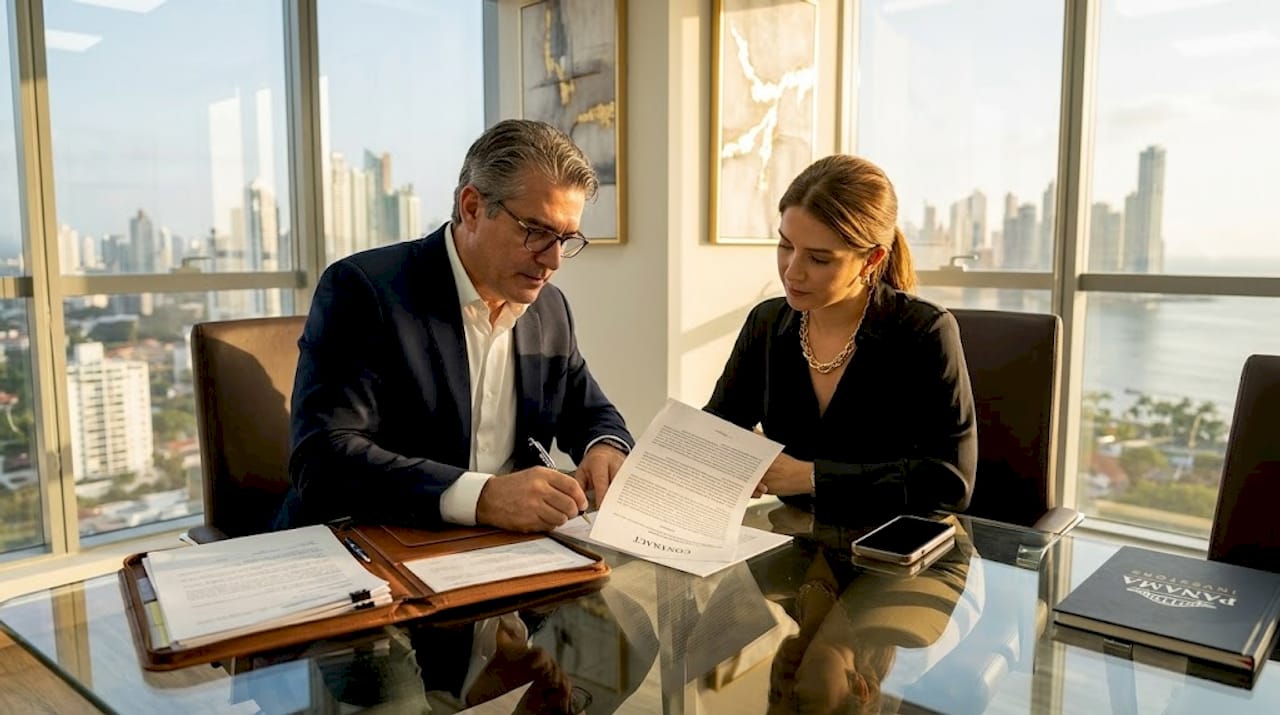
Your bilingual realtor’s job is to identify properties, negotiate price, and guide you through the buying process. That is genuinely valuable work. But real estate agents do not provide legal advice, and they should not be expected to. The legal structure of a Panama property purchase involves Escrituras Públicas (public deeds), due diligence on property titles, liens, encumbrances, and registration with the Public Registry. These are legal matters, not real estate ones.
Key distinctions between these two roles:
- Your bilingual realtor handles property identification, market comparisons, showing schedules, offer negotiation, and coordinating documentation logistics
- Your bilingual real estate attorney reviews all contracts, performs title searches, checks for liens or encumbrances, prepares the Escritura Pública, and registers the property in your name
- The attorney should be independent from your realtor to avoid conflicts of interest
- All official property documents in Panama are in Spanish, regardless of what language your negotiations happen in
“The most protected buyers in Panama use a bilingual realtor for market access and an independent bilingual attorney for everything with a signature on it.”
For a deeper look at legal protections for buyers, Panamainvestors has put together a thorough breakdown of what your attorney should cover before you close.
Step-by-step process for working with bilingual realtors
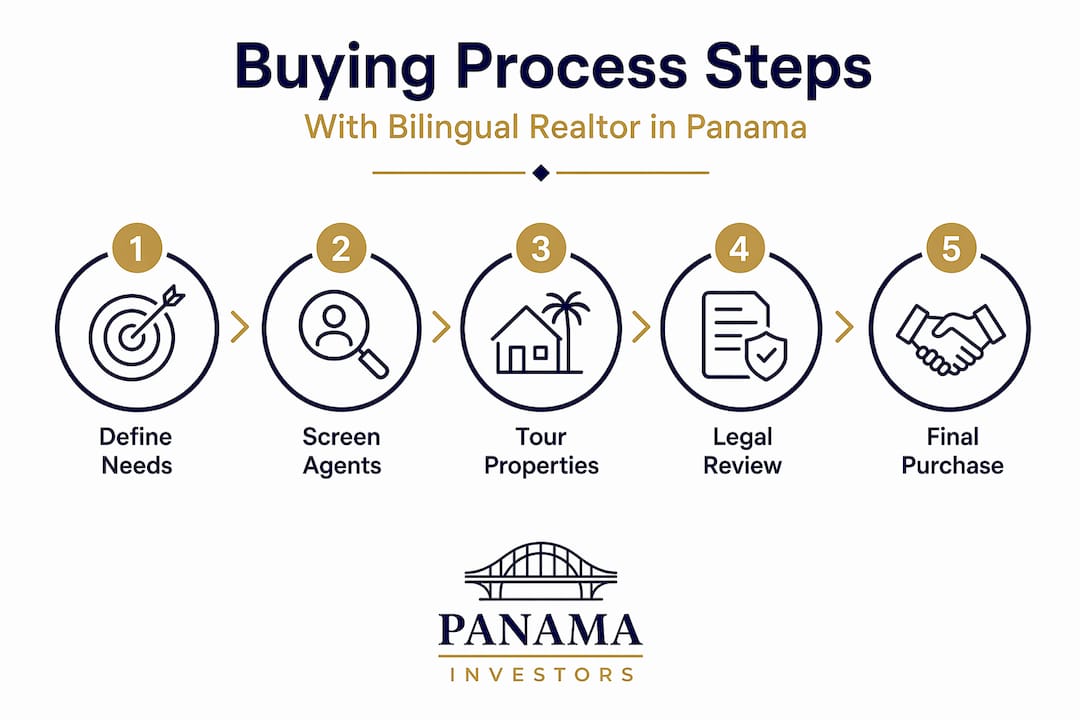
Once you have identified a licensed, vetted bilingual agent and retained an independent attorney, here is how the process should run:
- Define your budget and criteria. Be specific. Neighborhoods, property types, size, intended use (residence vs. rental income), and timeline. Vague briefs produce wasted tours.
- Confirm licenses and credentials upfront. Do this before the first property visit, not after you are emotionally invested in a listing.
- Set communication expectations. State clearly that you want written summaries of all conversations, documents sent in both English and Spanish where possible, and advance notice of all required signatures.
- Review bilingual property listings carefully. Ask your agent to walk you through each line item, not just the highlights.
- Schedule property visits strategically. Group visits by neighborhood and type so you can compare properties objectively.
- Coordinate with your attorney before making any offer. Your attorney should review the preliminary agreement (promesa de compraventa) before you sign.
- Finalize with official registries. The property registration process in Panama takes 3 to 10 business days after legal documentation is complete. Your attorney manages this step.
| Stage | Who leads | What you do |
|---|---|---|
| Property search | Bilingual realtor | Define criteria, review listings |
| Offer and negotiation | Bilingual realtor | Set budget limits in advance |
| Contract review | Bilingual attorney | Read every clause before signing |
| Title due diligence | Bilingual attorney | Confirm clear title and no liens |
| Registration | Bilingual attorney | Monitor Public Registry filing |
Pro Tip: Ask your attorney to provide a written due diligence summary before you wire any funds. This single document will tell you whether a deal is clean or complicated.
For practical detail on securing exclusive listings and what to expect from a buyer’s agent relationship, Panamainvestors covers both topics with specifics that most general guides skip.
Common pitfalls when hiring bilingual agents in Panama
The mistakes most buyers make when finding Spanish speaking realtors in Panama are predictable. Knowing them in advance saves you from learning them the hard way.
- Skipping license verification. Failing to verify a broker’s license is the most common mistake expats make, and it opens the door to scams and unenforceable contracts
- Treating bilingual skills as a substitute for legal expertise. Speaking English does not qualify someone to interpret Panamanian property law
- Skipping the independent attorney. Buyers who rely solely on their realtor’s connections for legal review give up the independent oversight that protects them during contract disputes
- Ignoring the Public Registry. The Escritura Pública is the key document for ownership transfer. If it is not registered, you do not legally own the property regardless of what any private contract says
- Trusting urgency over process. Any agent who pressures you to sign quickly or skip due diligence is putting their commission above your interests
“A legitimate, licensed bilingual realtor in Panama will never discourage you from hiring an independent attorney. If yours does, that is your signal to walk away.”
My honest take on working with bilingual realtors in Panama
I’ve worked alongside buyers in Panama’s real estate market long enough to know the difference between a smooth transaction and a preventable disaster. The gap almost always comes down to one thing: whether the buyer treated licensing verification as a real step or just a formality they intended to check eventually.
I’ve seen buyers lose deposits because they fell in love with a listing before their attorney confirmed the title was clean. I’ve also seen buyers who did everything right: verified the license, hired an independent attorney, moved deliberately, and closed on properties they are still grateful for.
The team approach is not optional if you want real protection. The most successful property buyers use bilingual realtors for market access and independent attorneys for legal oversight. These are not redundant roles. They are complementary ones.
One thing I’d push back on is the idea that finding a good bilingual agent in Panama requires luck or insider connections. It does not. The ACOBIR directory exists. The MICI verification portal exists. Expat forums are full of honest reviews. The tools are there. What most buyers skip is the discipline to actually use them before getting excited about a property.
Build relationships with professionals who are licensed, referenced, and transparent. That combination is more valuable than any single listing.
— Panama
Work with vetted bilingual professionals through Panamainvestors

If you want to skip the cold search and work directly with a network of licensed, vetted bilingual real estate professionals, Panamainvestors is built for exactly that. Luca Piva brings over 12 years of experience in Panama’s property market, along with direct relationships with licensed bilingual agents and independent real estate attorneys. Whether you’re relocating or investing, you get guidance from someone who knows how this market actually works. Book a strategy call and start your property search with trusted, local professionals already in your corner. You can also explore the full buyer’s guide to understand the broader process before your first call.
FAQ
What makes a realtor legally qualified in Panama?
A legally qualified realtor in Panama must hold a valid license from the Real Estate Technical Board under MICI. The physical license card is the only recognized proof of legal qualification, and you can verify it through the MICI online portal before engaging any agent.
How do I verify a bilingual realtor’s license in Panama?
Use the MICI verification portal to cross-reference the broker’s name and license number. You can also check ACOBIR’s directory, but ACOBIR membership alone does not replace direct license verification through MICI.
Do I need an attorney if I already have a bilingual realtor?
Yes. Bilingual realtors facilitate property search and negotiation but do not provide legal advice. All official property documents in Panama are in Spanish, and an independent bilingual attorney is required to review contracts, perform title searches, and register ownership through the Public Registry.
Where can I find bilingual real estate agents in Panama?
ACOBIR’s directory and MLS network are the most reliable starting points, with over 400 active bilingual agents listed. Expat forums, referrals from past buyers, and platforms focused on Panama relocation also provide vetted recommendations with honest reviews.
How long does property registration take in Panama?
The official property registration process takes 3 to 10 business days after your attorney completes all required legal documentation, including the Escritura Pública. Until registration is complete with the Public Registry, the ownership transfer is not legally finalized.
