
Top benefits of owning beachfront homes in Panama
Top benefits of owning beachfront homes in Panama
- Panama Investors
- May 3
- 9 min read

Choosing a beachfront home in Panama is not a single decision. It’s a layered process that forces you to weigh sun-soaked lifestyle rewards against legal complexities, climate risks, and investment math that can look very different from one coastal area to the next. Panama’s dollarized economy, affordable entry points compared to Florida or the Mexican Riviera, and its growing expat infrastructure make it genuinely compelling. But the buyers who get it right are the ones who evaluate the full picture before they ever make an offer.
Table of Contents
Key Takeaways
Point | Details |
Lifestyle advantages | Panama beachfront homes deliver healthy, active living and strong social communities. |
Rental income potential | Beachfront assets attract premium tenants, with legal clarity driving marketability. |
Climate-risk mitigation | Resilience features like elevation and engineered drainage are crucial for retaining value. |
Legal and zoning due diligence | Carefully review coastal access and zoning rules before purchasing to avoid surprises. |
Smart decision framework | Compare lifestyle, investment, and risk factors before committing to a purchase. |
Major lifestyle benefits of Panama beachfront living
Living steps from the ocean is the obvious draw, but the daily quality of life in Panama’s coastal communities runs deeper than the view from your terrace. Ocean proximity delivers real wellness dividends. Salt air, regular swimming, walking on sand, and year-round warm temperatures support cardiovascular health, reduce stress hormones, and encourage the kind of active outdoor lifestyle that many retirees gave up in colder climates. Panama’s Pacific coast, particularly communities like Coronado and Playa Venao, offers consistent surf, sport fishing, and snorkeling that become part of a weekly rhythm rather than a vacation novelty.
The expat community factor is equally significant. Coastal towns along Panama’s Pacific and Caribbean shores have built thriving communities of North American and European residents who share social infrastructure: running clubs, sailing groups, farmer’s markets, and bilingual medical clinics. For retirees, this social layer directly combats isolation, which medical research consistently links to faster cognitive decline. Panama’s why Panama advantages extend here: the Pensionado visa program gives retirees discounts on healthcare, dining, and entertainment that compound those lifestyle benefits meaningfully.
Key lifestyle advantages that beachfront buyers consistently report include:
Year-round warm weather with average temperatures between 75°F and 88°F on Pacific beaches
Immediate access to world-class water sports, fishing, and nature tourism
Tight-knit expat communities with bilingual services and medical support
Dramatically lower cost of living than comparable beachfront locations in the US or Europe
Proximity to Panama City for urban amenities while maintaining coastal tranquility
“Ownership also requires due diligence on beach-access/zoning/legal constraints (e.g., what constitutes beachfront vs. maritime zone or restrictions), because these can affect both usability and marketability.” Buying property in Panama: A complete guide for expats
This quote matters more than most buyers realize. Panama law designates a maritime zone along the coastline where private ownership is restricted. What feels like a beachfront home may technically sit within a concession zone rather than a fee-simple title area. That distinction shapes your legal security, your ability to rent, and your resale market. Before falling in love with a property, review the title structure with a local attorney who specializes in coastal real estate. A good vacation home buying guide will always flag this step early in the process.
Pro Tip: Always ask whether the property sits within the public domain maritime zone before you begin negotiations. The difference between a fee-simple title and a concession agreement changes your ownership rights, rental flexibility, and resale value significantly.
Investment and rental income potential
Panama’s beachfront market has attracted serious investor attention because it sits at an unusual intersection: still-affordable entry prices, a growing international renter base, and structural economic stability. While Florida beachfront estate auctions routinely clear $10 million or more, comparable quality beachfront properties in Panama can often be acquired for $350,000 to $900,000, leaving substantial room for both appreciation and rental yield.
The rental income picture is genuinely strong in the right locations. Premium beachfront homes in Coronado, Pedasi, and Bocas del Toro regularly achieve nightly rates of $200 to $600 during peak travel months, with occupancy rates in top locations running 60 to 75 percent annually. The passive income potential from a well-positioned beachfront property can cover carrying costs and generate meaningful net returns for owners who approach it strategically.
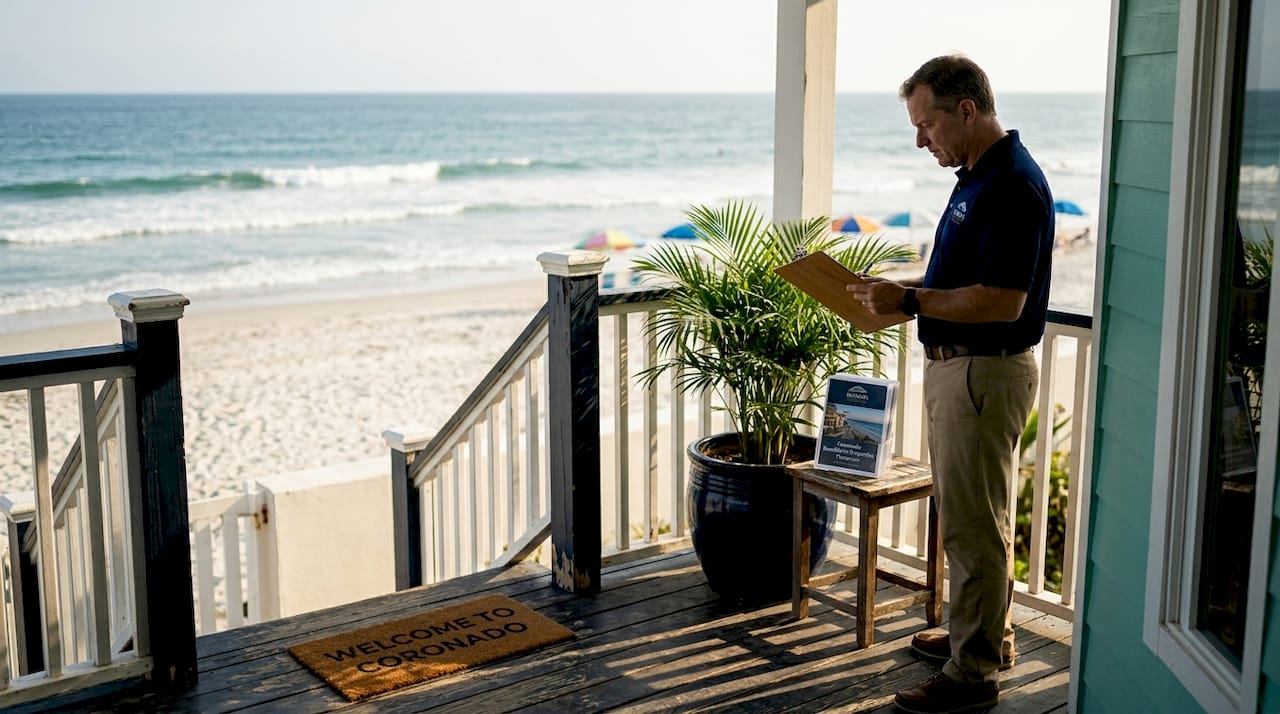
Here’s how Panama compares to peer markets in Latin America:
Market | Average beachfront entry price | Estimated annual rental yield | Title security | Dollar-denominated |
Panama | $350K to $900K | 6% to 9% | Strong (fee-simple) | Yes |
Costa Rica | $400K to $1.2M | 5% to 8% | Good | No |
Colombia | $200K to $600K | 5% to 7% | Moderate | No |
Mexico (Riviera Maya) | $300K to $1.1M | 5% to 9% | Mixed (fideicomiso) | No |
Panama’s dollarized economy is a structural advantage that rarely gets the attention it deserves. When you collect rental income in dollars, you eliminate currency conversion risk entirely. That is not the case in Costa Rica, Colombia, or Mexico, where currency fluctuations can quietly erode returns that look strong on paper. Our full breakdown of the top real estate markets in Panama shows which coastal locations are delivering the strongest appreciation alongside rental demand.
Factors that most directly affect the marketability and income potential of a Panama beachfront home include:
Legal access clarity: Properties with verified public beach access command higher rents and attract more confident buyers
Proximity to amenities: Distance to airports, grocery stores, and medical facilities drives occupancy rates among international renters
Property management infrastructure: Coastal areas with established property management networks generate more consistent rental income
Resilience features: Elevated construction, sea walls, and engineered drainage protect the asset and lower insurance costs
A full comparison of Panama against its regional peers is available in our Panama vs Costa Rica vs Colombia analysis, which digs into net yields, legal frameworks, and expat infrastructure side by side.
Structural risks and resilience: Climate, erosion, and insurance
Beachfront property comes with a physical reality that inland properties simply don’t face. The IMF’s analysis of Panama climate risks confirms that the beachfront retirement thesis in Panama is moderated by coastal climate risks including erosion, flooding, and storm surge, all of which can affect insurance costs, maintenance, and long-term value retention. This is not a distant theoretical concern. It is an active pricing factor in any serious underwriting conversation.
Sea-level rise is already reshaping some of Panama’s lower-lying island communities. Documented relocation efforts in Panama’s low-lying island regions tied to rising sea levels signal that coastal climate risk is not merely theoretical for investors. Buyers considering properties on low-elevation islands or areas with heavy erosion history need to factor long-term insurability into the acquisition decision, not treat it as an afterthought.
Resilience features to evaluate before purchasing any beachfront home include:
Site elevation: Properties elevated 10 feet or more above mean sea level face dramatically lower flood and surge exposure
Engineered drainage systems: Properly designed drainage prevents interior flooding during heavy rain events, which are common in Panama’s rainy season
Shoreline protection: Sea walls, riprap, and vegetation buffers reduce direct erosion impact on the property
Construction quality: Reinforced concrete construction resists humid coastal conditions far better than wood-frame alternatives
Insurance access: Ask whether the property is currently insurable, at what premium, and what the policy covers
Here’s a quick risk comparison between Panama’s two main coastal regions to help frame your due diligence:
Factor | Pacific coast | Caribbean coast |
Hurricane exposure | Low to moderate | Moderate to higher |
Erosion risk | Moderate | Higher in some areas |
Infrastructure quality | Better developed | More variable |
Insurance availability | More accessible | More limited |
Legal title clarity | Generally stronger | More complex in places |
Review the dedicated Pacific Coast real estate guide for a detailed breakdown of how these risk factors play out in specific communities. The foreign investor real estate guide covers the insurance and legal framework in depth.
Coastal resilience is also a growing factor in global coastal town livability rankings, with buyers increasingly weighing long-term habitability alongside lifestyle appeal.
Pro Tip: Request a formal flood zone assessment and a shoreline erosion history report for any beachfront property before you make an offer. These documents are not standard in every Panama listing, but a qualified local agent can obtain them and use them as negotiating leverage if risk factors are present.
Comparing Panama beachfront homes: A decision framework
Smart beachfront investing requires a structured approach. You need to evaluate lifestyle fit, investment fundamentals, climate risk, and legal clarity simultaneously rather than sequentially. Buyers who focus only on lifestyle or only on financials tend to miss critical factors that surface later as costly surprises.
Here is a practical due diligence checklist for evaluating Panama beachfront properties:
Verify the title type (fee-simple versus concession) and confirm clear public beach access rights
Obtain a current survey showing exact property boundaries and proximity to the maritime zone
Review flood zone classifications and request an erosion history from local municipal authorities
Confirm current insurance availability and request quotes from at least two providers
Analyze comparable rental income data for properties within a half-mile radius
Evaluate proximity to infrastructure: airports, hospitals, and grocery access
Inspect construction materials and elevation relative to mean sea level
Review homeowners’ association rules if applicable, especially around short-term rental permissions
Decision factor | What to look for | Red flag |
Legal title | Fee-simple with clear beach access | Concession only, access disputes |
Climate resilience | Elevation, drainage, shoreline protection | Low elevation, erosion damage history |
Rental income potential | Verified occupancy data, management access | Isolated location, legal rental restrictions |
Appreciation history | Comparable sales trending upward | Stagnant market, high inventory |
Insurance | Current policy in force at reasonable cost | Uninsurable or very high premium |
The IMF climate risk data and the expat buying guide together create a clear picture: the best Panama beachfront investments sit at the intersection of strong legal structure, physical resilience, and proven rental demand. The international property buying guide walks through each of these dimensions with country-specific detail.
Beachside convenience and walkability to amenities is a comparable factor in mature coastal markets worldwide, reinforcing why proximity to services drives both renter preference and resale value in Panama’s coastal communities.
What most investors miss about Panama beachfront homes
Here is what twelve-plus years of watching foreign buyers navigate Panama’s coastal market has taught us: the biggest mistakes are almost never about price. They’re about assumptions.
Most buyers arrive with a mental model built from resort visits or surface-level research. They see beautiful water, reasonable prices, and a growing expat scene and conclude that the investment is straightforward. It isn’t. The legal nuances around Panama’s maritime zone catch experienced real estate investors off guard regularly. A property that looks beachfront on a listing photo may sit within a restricted concession zone that limits your rental flexibility, complicates resale, and creates genuine legal exposure if you try to develop or modify the structure. This is not a rare edge case. It’s a common scenario.
The second gap we see consistently is underweighting climate risk in the purchase decision. Buyers focus on current beauty and current prices, not on 10-year insurability or 20-year erosion trajectories. The documented relocations in Panama’s low-lying island communities due to sea-level rise are a concrete signal, not a distant scenario, and they should inform how you evaluate elevation, shoreline protection, and long-term value retention in any coastal acquisition.
The investors who perform best in Panama’s beachfront market are those who treat resilience features and legal clarity as primary selection criteria, not secondary preferences. They are willing to pay a slight premium for a property that sits on fee-simple titled land at meaningful elevation with documented beach access and current insurance. That premium looks expensive at signing and looks very smart five years later when comparable lower-quality properties become harder to insure and harder to sell.
Understanding the full landscape of premium Panama investment markets helps you identify which coastal communities consistently produce this combination of legal security, resilience, and investor returns.
Get expert advice for Panama beachfront property investments
Navigating Panama’s coastal property market successfully requires local knowledge that goes well beyond what any article can deliver. The difference between a strong beachfront investment and an expensive lesson often comes down to who is advising you before you make an offer.

At Panama Investors, Luca Piva and his team bring over 12 years of on-the-ground experience in Panama’s real estate market, with deep expertise in coastal properties across the Pacific and Caribbean. From title verification to climate risk assessment to rental income modeling, our advisory process is built to help you buy with confidence, not guesswork. If you’re ready to identify properties that meet rigorous legal, financial, and resilience standards, contact our advisory team to schedule a personalized strategy call and get matched with listings that fit your goals.
Frequently asked questions
What is considered beachfront property in Panama?
Beachfront property typically refers to land adjacent to the ocean, but legal restrictions apply within 22 meters of the high-tide line on the Pacific and 10 meters on the Atlantic, where private ownership is restricted. Always verify title type and maritime zone boundaries before purchasing.
How are climate risks affecting beachfront home values in Panama?
Coastal climate risks including erosion, flooding, and storm surge directly impact insurance premiums, ongoing maintenance costs, and long-term value retention for beachfront properties. Properties with strong elevation and resilience features hold value better over time.
Are beachfront homes in Panama good for rental income?
Yes, but legal access clarity and location quality are the primary drivers of rental performance. Properties in established coastal communities with strong expat infrastructure and verified beach access generate the most consistent and highest rental yields.
What features should I prioritize when buying a beachfront home?
Prioritize elevation above sea level, engineered drainage, verified fee-simple title with beach access rights, and confirmed insurance availability, as sea-level rise data confirms that physical resilience is a direct factor in long-term value retention and insurability.
Recommended
