The Role of Local Networks in Buying Property in Panama
The Role of Local Networks in Buying Property in Panama
Most buyers approaching Panama’s real estate market start the same way: scrolling listings online, comparing prices, and assuming the process works like buying property back home. It doesn’t. The role of local networks in buying property here goes far beyond finding a friendly face. Local connections determine which listings you ever see, how smoothly your legal paperwork moves, and whether you pay a fair price or an uninformed one. This guide breaks down exactly how those networks work, why they matter, and how to use them to your advantage.
Table of Contents
- Key Takeaways
- Why the role of local networks in buying property matters in Panama
- How local networks unlock off-market listings
- How local coordination smooths the legal and financial process
- The community value that goes beyond listings
- Practical steps for building and using local networks
- My take on why networks make or break Panama property deals
- Connect with Panama’s trusted local real estate network
- FAQ
Key Takeaways
| Point | Details |
|---|---|
| Off-market access matters | Many of Panama’s best properties are sold through private networks before they ever appear on public portals. |
| Local experts reduce legal risk | Attorneys, notaries, and agents who know Panama’s registry system prevent costly delays in closing. |
| Community trust shapes decisions | Neighborhood referral networks give families real intelligence on schools, safety, and price trends. |
| Fees require local budgeting knowledge | Panama’s transaction costs include transfer taxes, notary fees, and attorney fees that local advisors help buyers plan for. |
| Online search alone is not enough | Combining public listings with active local broker engagement is the only reliable way to find the right property. |
Why the role of local networks in buying property matters in Panama
Panama operates under a registered title system, which means legal ownership is only confirmed after a deed registration with the Public Registry. That single procedural requirement alone creates a chain of dependencies that most foreign buyers are not prepared for.
To complete a purchase, you need a local attorney to draft and review contracts, a notary to authenticate the deed, and an agent who understands which documents are required at each stage. These are not interchangeable roles. Each professional has a specific legal function, and if any one of them is unfamiliar with Panama’s property laws, the entire transaction can stall.
Here is what buyers without local connections typically encounter:
- Title verification delays because they hired a generalist attorney unfamiliar with the Public Registry process
- Contract disputes from missing clauses that experienced local attorneys routinely include
- Overpayment from not knowing the realistic price range in a specific neighborhood
- Missed deadlines on deposit payments, which can void purchase agreements
Panama’s legal and administrative framework is not hostile to foreign buyers. Legal protections for buyers are well established. But those protections only work in your favor when the professionals you engage actually know how to apply them.
The impact of local agents in property purchase extends beyond paperwork. A licensed agent with deep community roots can tell you which developments have HOA disputes, which sellers are genuinely motivated, and which neighborhoods are trending before the price data catches up. That kind of knowledge does not appear on any listing portal.
How local networks unlock off-market listings
The most consistently underestimated advantage of local real estate connections is access to properties that never appear on public platforms. Off-market properties circulate through private networks before public listing, and in Panama’s tighter residential markets, those properties often represent the strongest value.
This happens because sellers frequently prefer discretion. A family selling their Punta Pacifica apartment may not want open showings. A developer offloading the last three units in a boutique building may offer below-market pricing to a trusted buyer sourced through a broker relationship, before formally listing the remaining inventory.
Pro Tip: Never rely on a single search channel. Use public MLS portals to understand pricing benchmarks, but maintain an active relationship with at least one local broker who operates in your target neighborhood. The combination is what closes the gap between what is publicly available and what is actually attainable.
Local broker networks operate on trust and reciprocity. When a listing agent knows a buyer’s agent personally, they pick up the phone before uploading to a portal. That dynamic favors buyers who are already represented by someone inside the community. Buyers without that representation are always the last to know.
The practical approach to buying home through local networks involves a few deliberate steps:
- Identify brokers who specialize in your target area, not generalists covering all of Panama City
- Ask specifically about upcoming or pre-market listings during initial consultations
- Request introductions to other trusted professionals in the broker’s network, including attorneys and lenders
- Attend local expat community events or neighborhood meetings where informal property discussions happen
The insight here is simple. Combining online search with local broker engagement maximizes your chances of finding the right property at the right price. Doing one without the other leaves you working with incomplete information.
How local coordination smooths the legal and financial process
Networking in real estate buying is not just about finding properties. The real value shows up during the transaction itself, when multiple professionals must work in sequence without losing momentum.
A typical Panama property purchase moves through these phases: offer submission, deposit payment (usually 10%), promise to purchase contract signing, notary deed preparation, and final Public Registry registration. Each phase has a handoff point where a well-connected local team accelerates the process and an inexperienced one creates friction.
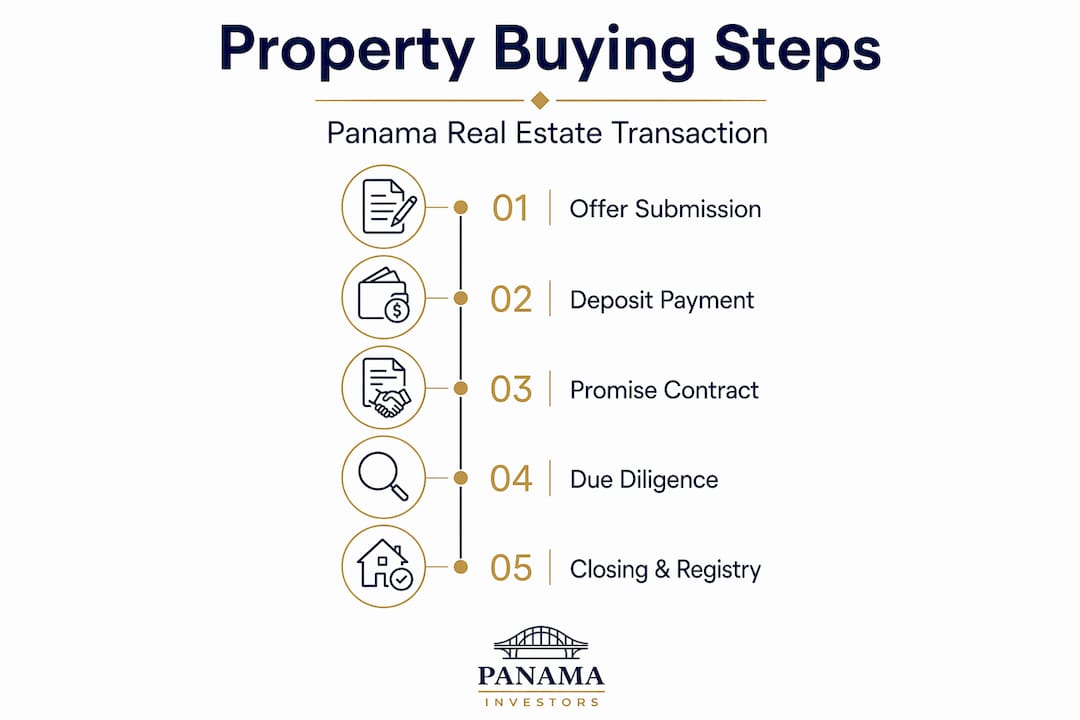
| Transaction phase | Key professionals | Typical cost or timeline |
|---|---|---|
| Offer and negotiation | Agent, seller’s attorney | 1 to 2 weeks |
| Deposit and promise contract | Buyer’s attorney, escrow | 10% of purchase price |
| Notary deed preparation | Notary, attorney | 0.25% notary fee |
| Public Registry filing | Attorney, registry office | 0.3% registration fee, 2 to 6 weeks |
| Transfer tax and attorney fees | Attorney, tax authority | 2% transfer tax, 1 to 2% attorney fees |
Local professionals know this sequence cold. They have existing relationships with specific notaries, they know which registry offices process submissions faster, and they communicate directly with each other in ways that avoid the delays that plague buyers who assemble a team of strangers.
Pro Tip: Before signing any purchase contract in Panama, confirm that your attorney has personally handled at least five property closings in the same municipality. The Public Registry process varies between Panama City, Chiriquí, and other provinces, and that local experience is not transferable.
Financing adds another layer. Local loan officers provide face-to-face guidance and maintain pre-existing relationships with local appraisers, which speeds the mortgage approval process. A foreign buyer arranging financing through an unfamiliar lender often faces longer appraisal timelines and more documentation requests because the lender lacks those relationships.
Local expertise in registry procedures minimizes stalled transactions at the deposit and closing stages. This is the practical meaning of coordination risk in Panama real estate. It is not dramatic. It is a notary who does not return calls, a registry filing that sits unprocessed for an extra month, or an attorney who misses a title encumbrance because they did not know which secondary records to check. Local networks eliminate most of those failure points before they start.
The community value that goes beyond listings
How local connections affect property buying also shows up in the softer, harder-to-quantify intelligence that experienced community members share. For families relocating to Panama, this category of information is often as important as the legal details.
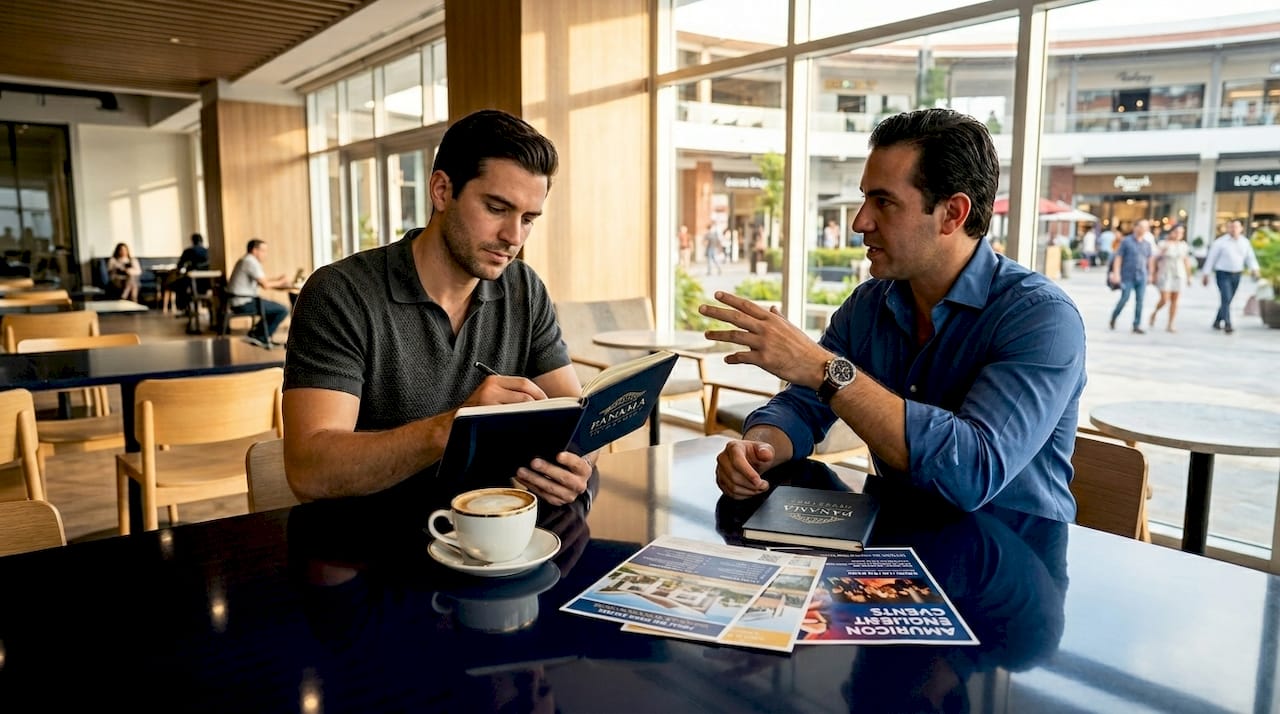
Micro-community trust impacts how quickly buyers learn about price changes, viewings, and preferred sellers in targeted neighborhoods. That trust is built through repeated presence in a community and cannot be replicated by browsing online. A broker who has sold five homes in Costa del Este knows which buildings have elevator maintenance issues, which HOAs run efficiently, and which buildings’ owners are open to negotiation even when their listing says firm price.
For families specifically, community networks provide:
- School enrollment intelligence, including which international schools have wait lists and which neighborhoods provide the most convenient access
- Safety assessments based on local resident experience rather than generalized city data
- Cultural fit indicators from expat community groups already living in the area
- Price trend awareness before those trends appear in public data
The role of community in home buying extends to referrals from local businesses, too. A pediatrician’s office in a target neighborhood, a coffee shop where expats gather, or a local church with an active English-speaking congregation can connect families with residents who have firsthand relocation experience. Those informal conversations often reveal considerations that no property portal captures.
Practical steps for building and using local networks
Knowing the theory is one thing. Here is how to actually build and use local real estate connections when you are buying property in Panama:
-
Research agents by neighborhood, not by agency size. Large international franchises may have name recognition, but the best neighborhood-specific intelligence comes from brokers who focus on a defined area. Look for agents with verifiable local sale history.
-
Request referrals from multiple sources. Ask expat communities, relocation services, and even local employers for attorney and agent recommendations. Overlapping referrals from independent sources are a strong signal of credibility.
-
Verify professional credentials directly. Panama’s real estate agents must be licensed through the Ministry of Commerce and Industries. Attorneys should be registered with the Supreme Court of Justice. Do not skip this check.
-
Use online portals strategically, not exclusively. Portals are useful for benchmarking prices and understanding inventory volume. Use them to prepare for conversations with local brokers, not as your primary search tool.
-
Watch for network quality signals. A credible local agent will proactively introduce you to their preferred attorney, offer references from past clients, and be transparent about their commission structure. Vague answers to direct questions are a warning sign.
-
Avoid single-source dependency. Relying entirely on one person for both agent and attorney services creates a conflict of interest. Your attorney should be independent from your agent, even if both came from the same referral source.
The step-by-step property buying process in Panama is manageable when you have the right team around you. That team is what local network building actually produces.
My take on why networks make or break Panama property deals
I’ve watched buyers arrive in Panama with fully researched spreadsheets, pre-approved financing, and a clear budget, and then spend six months chasing the wrong properties because they had no local relationships. And I’ve seen buyers close on excellent deals within eight weeks because they arrived connected.
The misconception I hear most often is that local networks are just about finding listings faster. They’re not. The real advantage is what happens after you find a property. A well-networked local attorney who knows the registrar’s staff personally gets faster responses. An agent who has closed deals with the same notary for years catches problems before they become contract disputes.
What I’ve learned is that families and individuals who take community networks seriously from day one, before they even select a neighborhood, consistently make better decisions than those who bolt on local connections as an afterthought. The impact of a trusted local agent is not just transactional. It shapes every choice you make, from which areas you seriously consider to which sellers you can actually negotiate with.
My honest advice: your first investment in Panama real estate should be investing in relationships, not searching for properties.
— Roie
Connect with Panama’s trusted local real estate network
If you’re ready to buy property in Panama and want the advantages that local networks provide, Panamainvestors is built around exactly that model.

Led by Luca Piva, a licensed agent with over 12 years of experience in Panama’s real estate market, Panamainvestors gives buyers direct access to vetted local attorneys, lenders, and neighborhood-specific brokers. Whether you’re a family relocating internationally or an individual looking for your first Panama property, the advisory process is personalized to your situation and goals. You won’t start your search from zero. You’ll start it connected. Book a strategy call today and find out what Panama’s local networks can unlock for you.
FAQ
What is the role of local networks in buying property in Panama?
Local networks in Panama give buyers access to off-market listings, experienced attorneys, and connected agents who know the Public Registry process. Without those connections, buyers face slower transactions and limited property choices.
How do off-market listings work in Panama’s real estate market?
Off-market properties circulate through private broker networks before appearing on public portals, often at better prices. Buyers represented by well-connected local agents get early access to these opportunities.
What fees should I expect when buying property in Panama?
Buyers should budget for a 10% deposit, a 2% transfer tax, a 0.25% notary fee, a 0.3% registration fee, and attorney fees of 1 to 2% of the purchase price. A local advisor helps you plan cash flow across each transaction phase.
Do foreign buyers have legal protections when purchasing property in Panama?
Yes, Panama’s legal framework provides strong protections for foreign property buyers, including the right to full ownership under the same registered title system used by citizens. A local attorney familiar with the Public Registry process is the key to activating those protections effectively.
How do I find and vet a credible local real estate agent in Panama?
Look for agents with verifiable sale history in your target neighborhood, licensing through the Ministry of Commerce and Industries, and independent client references. Overlapping referrals from expat communities and relocation services are a reliable signal of local credibility.
