Evaluating Turnkey Homes in Panama: Investor's Guide
Evaluating Turnkey Homes in Panama: Investor’s Guide
A turnkey home in Panama is a finished, move-in-ready property sold at a premium price on the assumption that no further work is required before occupancy or rental. This guide to evaluating turnkey homes in Panama covers the four areas where buyers most often lose money: legal title, physical condition, financial projections, and post-purchase tax compliance. Panama’s market, from Panama City’s Punta Pacifica towers to beachfront lots in Playa Venao, carries risks that differ sharply from U.S. or European turnkey markets. Knowing exactly what to verify before signing protects both your capital and your timeline.
How to verify legal title for turnkey homes in Panama
Title verification is the single most critical safeguard in any Panama real estate transaction, and experienced buyers confirm it must happen before any deposit changes hands. Panama’s property registry system assigns every titled parcel a unique identifier called a finca number. That number is your starting point for every legal check.
Here is the sequence to follow:
- Request the finca number from the seller or listing agent and confirm it matches the physical address and property description.
- Search the Registro Público (Panama’s public property registry) using the finca number to pull the current certificate of title, which shows ownership history, recorded liens, mortgages, and any encumbrances.
- Cross-check with ANATI (Autoridad Nacional de Administración de Tierras) to confirm that cadastral boundaries match the registry record. Mismatches between the two databases are a common source of disputes.
- Review HOA documents for condominiums and gated communities. Turnkey properties require specific attention to HOA governance, fee arrears, and any restrictions on short-term rentals.
- Hire an independent Panamanian attorney to review all documents. Your agent’s lawyer is not independent. Budget $1,500 to $3,000 for a thorough legal review.
One specific risk worth flagging: some properties in coastal and rural areas are sold as derecho posesorio (informal possession rights) rather than titled land. Possession rights carry no legal protection equivalent to a registered finca. Always confirm titled status before proceeding.
Using escrow for overseas buyers adds another layer of protection by holding funds until all title conditions are satisfied at closing.
Pro Tip: Never wire a deposit based solely on a seller’s verbal confirmation of clean title. Obtain a certified registry certificate dated within 30 days of your offer, and have your attorney review it before any funds move.
What physical inspections should you order before buying?
Independent professional inspections uncover hidden issues that standard walkthroughs and virtual tours consistently miss. In Panama, where tropical humidity accelerates moisture damage and construction standards vary widely by developer, this step is non-negotiable.
A licensed structural engineer or architect should inspect the following systems:
- Foundation and structural frame: Look for cracking patterns, settlement, and signs of poor concrete mix, which is common in lower-cost developments.
- Roof and waterproofing: Flat roofs on Panama City condos and metal roofs on beach properties both require specific moisture checks. Water intrusion is the most expensive repair category in the tropics.
- Electrical system: Confirm panel capacity, grounding, and compliance with Panama’s ETESA standards. Older properties often have undersized panels that cannot support modern appliances.
- Plumbing: Check for galvanized pipe corrosion, water pressure, and hot water system condition.
- HVAC: Air conditioning is not optional in Panama. Confirm unit age, refrigerant type, and duct condition.
- Common systems for condominiums: Elevators, water pumps, backup generators, and pool equipment are shared costs. Request maintenance logs and reserve fund balances from the HOA.
For older homes, add a sewer scope to the inspection list. Sewer line failures in Panama City’s older neighborhoods can cost $10,000 or more to repair.
Beyond the physical inspection, request documentation of any renovation work: building permits, contractor invoices, and material warranties. A property marketed as “fully renovated” with no permit history is a red flag. Panama’s Ministerio de Vivienda y Ordenamiento Territorial (MIVIOT) issues construction permits, and your attorney can verify whether the work was legally authorized.
Pro Tip: Ask the seller to provide the inspection contingency window in writing before signing the purchase agreement. A seller who refuses inspection contingencies is signaling that the property will not survive scrutiny.
How do you analyze the rental income potential?
The difference between a profitable and a money-losing turnkey investment comes down entirely to whether your financial model uses realistic assumptions or the seller’s optimistic ones. Panama’s rental market in areas like Casco Viejo, Costa del Este, and Coronado is active, but vacancy and expense figures vary significantly by neighborhood and property type.
Use this comparison to stress-test any pro forma you receive:
| Assumption | Seller’s typical claim | Conservative investor standard |
|---|---|---|
| Vacancy rate | 3–5% | 8–10% |
| Maintenance and CapEx | 5% of rent | 10–15% of rent |
| Property management fee | 8% of rent | 10–12% of rent |
| Annual rent growth | 5%+ | 2–3% |
| Insurance (investor rate) | Homeowner rate | Confirm post-sale investor rate |
To validate rental income independently:
- Pull at least 10 comparable active and recently rented listings on Encuentra24 or local property management company rate sheets for the same neighborhood and unit type.
- Confirm whether the HOA or local zoning permits short-term rentals. Panama City’s Punta Pacifica, for example, has buildings that prohibit Airbnb-style rentals entirely.
- Calculate the Debt Service Coverage Ratio (DSCR) if you are financing. A DSCR below 1.2 means the property’s net operating income barely covers the mortgage payment, leaving no buffer for vacancies or repairs.
- Confirm post-sale insurance costs with a local broker. Investor-owned rental properties carry higher premiums than owner-occupied homes, and sellers routinely quote the lower rate.
Top investment locations in Panama differ considerably in rental yield, so your financial model must reflect the specific submarket, not Panama-wide averages.
What administrative steps are required after closing?
Closing on a Panama property is not the end of the process. Failing to complete post-purchase administrative steps with ANATI and the Dirección General de Ingresos (DGI) leads to higher taxable assessments, surcharges, and interest charges that erode your returns.
The required steps are:
- Update ANATI records to reflect your ownership, any improvements made, and current construction permits. ANATI’s cadastral database feeds the taxable base calculation, so an outdated record can result in an inflated tax bill.
- Request a tax exemption from the DGI on the value of improvements. Panama’s property tax law provides exemptions for new construction and improvements for periods ranging from 5 to 20 years depending on the property value. Missing the filing window forfeits this benefit.
- Confirm registration status before closing. Your attorney should verify that the property is registered and that no pending tax debt exists. Unpaid property taxes transfer with the property in Panama.
- Review your tax account annually. DGI accounts accumulate interest on unpaid balances automatically. A single missed notice can compound into a material liability within two or three years.
Panama’s tax benefits for real estate investors are genuinely favorable, but they require precise administrative follow-through to capture. The exemption does not apply automatically. You must file for it.
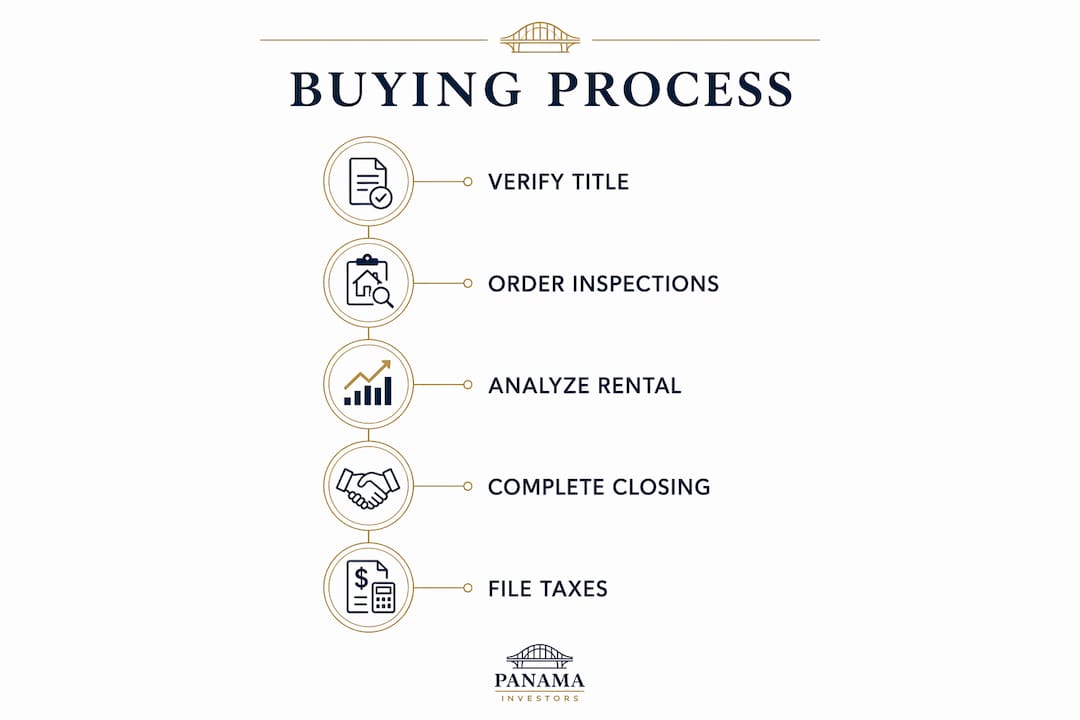
For buyers using Panama real estate as part of a residency or tax planning strategy, the step-by-step buying process explains how these administrative requirements integrate with residency applications and visa timelines.
Key takeaways
Evaluating turnkey homes in Panama requires verified title, independent inspections, stress-tested financials, and timely post-purchase tax filings to protect your investment.
| Point | Details |
|---|---|
| Title verification first | Confirm the finca number at the Registro Público before paying any deposit. |
| Independent inspection required | Hire a licensed engineer to inspect foundation, roof, electrical, plumbing, and HVAC systems. |
| Stress-test all financials | Model vacancy at 8–10% and maintenance at 10–15% of rent, not seller projections. |
| Post-purchase tax filings matter | File for DGI exemptions and update ANATI records promptly to avoid surcharges. |
| HOA and zoning checks | Confirm short-term rental permissions before assuming vacation rental income. |
What I’ve learned from watching investors get Panama turnkey wrong
Most international buyers who run into trouble with Panama turnkey properties make the same two mistakes. They skip the independent title attorney because their agent assured them the title was clean, and they accept the seller’s pro forma without running their own numbers.
Panama’s property registry is public and searchable. There is no excuse for skipping the Registro Público check. I have seen transactions where a property had an undisclosed mortgage lien that the seller had no intention of disclosing. The buyer’s agent knew. The seller’s attorney knew. The only person who did not know was the buyer, because they did not hire their own counsel.
On the financial side, Panama’s rental market in tourist-heavy areas like Playa Venao or Bocas del Toro is genuinely seasonal. A seller quoting annual average occupancy of 80% may be averaging a strong December through March against a very slow May through October. Ask for monthly occupancy data, not annual averages.
Panama’s market is not the U.S. turnkey market. There is no standardized inspection report format, no mandatory seller disclosure form, and no MLS-equivalent with verified days-on-market data. That means the discipline has to come from you and your advisors. Buyers who treat Panama like a plug-and-play investment without doing the work tend to find out why that was a mistake about 18 months after closing.
The good news: buyers who do the work properly, verify title, inspect thoroughly, model conservatively, and file their tax exemptions on time, consistently find Panama to be one of the most favorable real estate markets available to international investors. The dollarized economy, low property taxes, and genuine rental demand in the right neighborhoods make the due diligence effort worth it.
— Roie
How Panamainvestors can support your evaluation process
Panamainvestors, led by Luca Piva with over 12 years of on-the-ground experience in Panama’s real estate market, provides the advisory support that makes the difference between a confident purchase and a costly mistake.

Luca’s team connects buyers with independent attorneys for title review, licensed engineers for structural inspections, and property managers for rental market validation. For investors modeling cash flow, Panamainvestors provides neighborhood-level rental comparables and guides you through DGI exemption filings and ANATI updates after closing. Whether you are evaluating a condo in Panama City or a beachfront property in Playa Venao, the team’s local network and market knowledge give you access to vetted listings and honest assessments. Start your Panama investment with a strategy call to discuss your specific property and goals.
FAQ
What is a turnkey home in Panama?
A turnkey home in Panama is a finished, titled property sold ready for immediate occupancy or rental, typically at a price premium over unrenovated equivalents. Buyers should verify that the seller’s definition of “turnkey” matches an independent inspection report before accepting that claim.
How do I verify property title in Panama?
Use the finca number to search the Registro Público and cross-check cadastral boundaries with ANATI. Title verification must be completed by an independent attorney before any deposit is paid.
What vacancy rate should I use for Panama rental properties?
Model vacancy at 8–10% as a conservative baseline, particularly in seasonal tourist markets like Playa Venao or Bocas del Toro. Stress-testing at this rate prevents overestimating cash flow based on seller projections.
Do I need to file for tax exemptions after buying property in Panama?
Yes. Panama’s DGI exemptions on improvements do not apply automatically. You must file with the DGI and update your records with ANATI after closing to capture the benefit and avoid unexpected tax charges.
Can foreigners own turnkey property in Panama outright?
Yes. Panama grants foreign nationals the same property ownership rights as citizens for titled real estate. The key protection is confirming titled status through the Registro Público, since possession-rights properties do not carry equivalent legal protections.
