Examples of sustainable homes Panama: eco-friendly investment options
Examples of sustainable homes Panama: eco-friendly investment options
- Panama Investors
- 1 day ago
- 9 min read
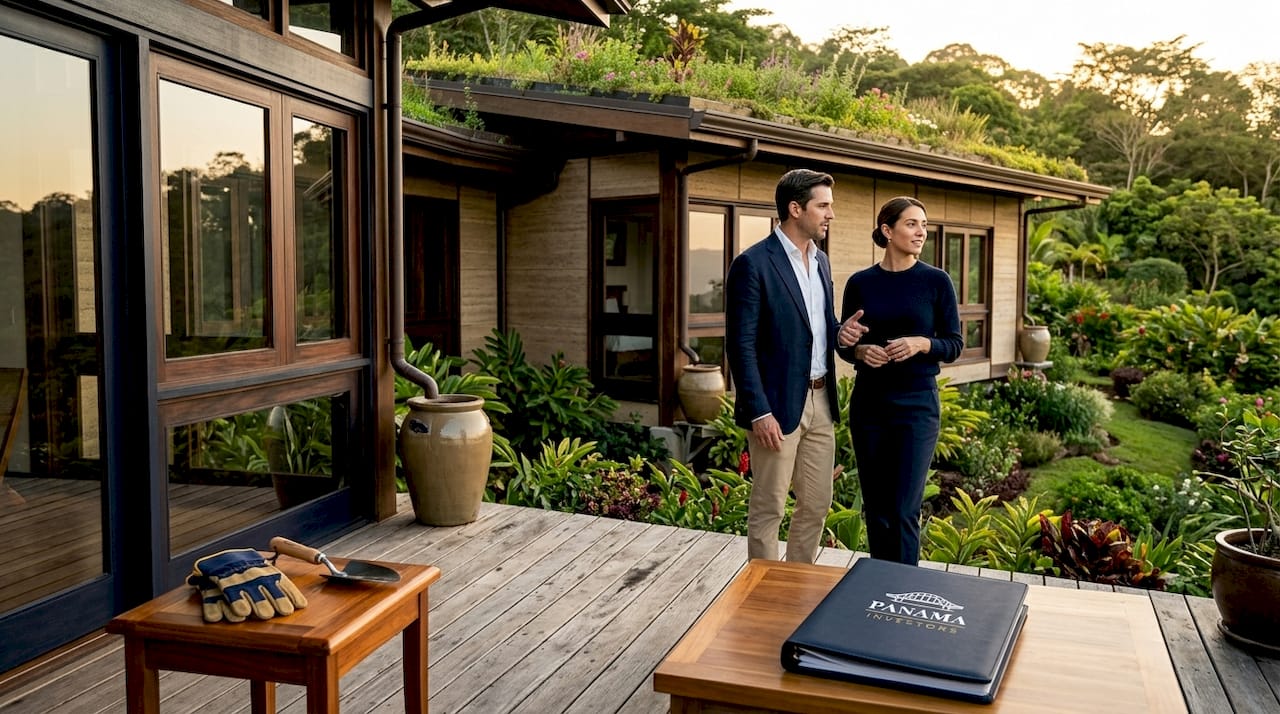
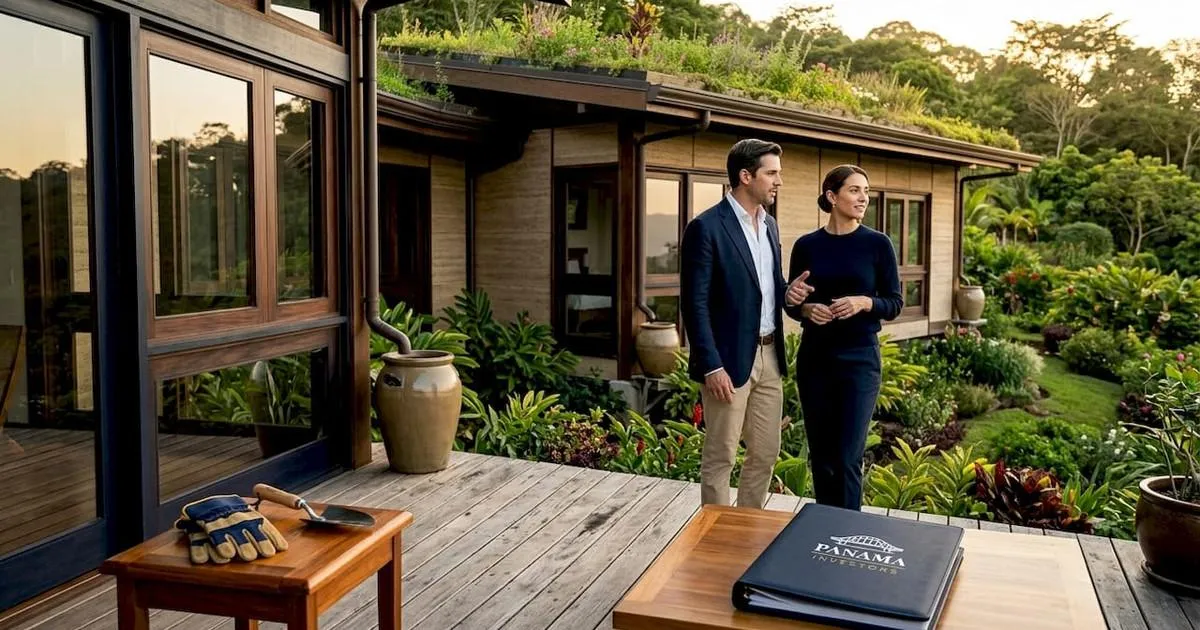
Finding genuinely sustainable homes in Panama requires more than scanning a listing for the word “eco-friendly.” The market contains everything from thoughtfully designed bioclimatic homes to developments that use green branding as a sales tactic rather than a building philosophy. For international investors and expatriates evaluating examples of sustainable homes Panama has to offer, the real question is whether a property’s design, materials, and systems actually reduce your operating costs, environmental footprint, and long-term maintenance headaches. This article breaks down four real projects, the criteria that separate them, and what each one means as an investment.
Table of Contents
The FRESH system: Modular, insulated homes for tropical comfort
Lega Vera: Regenerative farm village blending community and sustainability
Villa Almendro in Sanctuary Gardens: Luxury and durability meet eco design
Comparing sustainable home options: Features, benefits, and investment insights
Our perspective: The green label problem in Panama real estate
Key Takeaways
Point | Details |
Evaluation criteria matter | Assess sustainable homes by design, materials durability, renewable readiness, and community governance for true value. |
Design impacts comfort and cost | Bioclimatic and insulated construction drastically reduce cooling energy and maintenance in Panama’s climate. |
Community adds value | Regenerative farm villages lower operational risks by providing shared stewardship and ongoing support. |
Be cautious of ‘planned’ systems | Verify if solar and rainwater systems are installed or just planned to understand immediate eco-benefits. |
Diverse eco options exist | From bioclimatic homes to modular builds and luxury eco-villas, Panama offers sustainable investments for various preferences. |
Key criteria for evaluating sustainable homes in Panama
A practical evaluation framework prevents you from paying a premium for sustainability theater. Panama’s tropical climate creates specific demands that truly green homes address at the design stage, not as add-ons after the slab is poured.
Here is what to look for when assessing any eco-friendly homes Panama developers put in front of you:
Climate-adaptive architecture: Cross-ventilation, deep roof overhangs, and strategic window placement reduce cooling loads before you even think about an air conditioner. In Panama’s humidity, passive cooling isn’t a luxury, it’s a design requirement.
Durable, low-maintenance materials: Coastal and jungle environments accelerate rot, rust, and pest damage. Homes built with treated hardwood, steel framing, or reinforced concrete outperform those built with materials imported from temperate climates.
Renewable energy readiness: Solar panel infrastructure (conduit runs, structural anchoring, electrical panel space) costs almost nothing to include at construction and thousands to retrofit later.
Water management: Rainwater collection and gray water recycling extend water independence, lower utility bills, and reduce strain on local infrastructure during dry season.
Community-level sustainability: Developments with governance frameworks, shared maintenance funds, and land stewardship programs deliver more predictable outcomes than isolated builds with no operational support.
Lifecycle economics: A home that costs $15,000 more to build but saves $300 per month in cooling and maintenance often pays back in under five years.
Pro Tip: Before signing anything, ask the developer for a detailed breakdown of which sustainability features are installed versus which are “provisions for future installation.” That distinction changes the investment math significantly.
Understanding how neighborhood context affects long-term value is equally important. A look at Panama City neighborhoods helps you map these criteria against specific locations.
Cerquita del Cielo: Bioclimatic design in Altos del María
Cerquita del Cielo sits in Altos del María, a cooler highland area roughly 90 minutes from Panama City, and it represents one of the clearest examples of climate-responsive thinking applied to a residential project. The design minimizes site disturbance on a 150 m² footprint, preserving the natural topography rather than grading a flat construction pad.
The architecture is intentional in ways that matter financially. Key design decisions include:
Elongated floor plan: Maximizes airflow from prevailing breezes, reducing the need for mechanical cooling in a region where temperatures already run cooler than the coast.
Natural materials: Stone and wood walls provide thermal mass, absorbing heat during the day and releasing it slowly at night, smoothing out temperature swings without HVAC intervention.
Biodiversity preservation: By following the natural contours of the land, the project avoids the erosion and drainage problems that plague flat-pad construction in Panama’s rainy season.
Future-ready systems: The project minimizes earth movement, maximizes cross-ventilation and natural daylight, and includes solar and rainwater system provisions, meaning these systems can be added without structural modification.
What makes Cerquita del Cielo instructive as a model is that its sustainability is embedded in the structure itself, not dependent on technology that can break or become obsolete. If the solar panels are never installed, the home still performs well because the passive design does the heavy lifting.
Pro Tip: When evaluating bioclimatic architecture in Panama, ask for the architect’s thermal performance analysis. Legitimate bioclimatic projects can show measurable data on projected versus conventional cooling costs, not just design sketches.
The FRESH system: Modular, insulated homes for tropical comfort
The FRESH building system takes a different approach to sustainable architecture Panama-style, shifting the focus from passive design to engineered material performance. Rather than relying on site orientation alone, FRESH uses factory-built insulated panels and steel framing to create a thermal envelope suited for Panama’s coastal and lowland climates.
The practical benefits break down as follows:
Insulated structural panels: Prevent heat transfer from the exterior, reducing cooling dependency and lowering electricity bills in regions where air conditioning can account for 40 to 60 percent of monthly energy costs.
Steel kit framing: Resists moisture intrusion, wood-boring insects, and the salt-air corrosion that destroys conventional framing on Panama’s Pacific and Caribbean coasts within 10 to 15 years.
Factory production: Reduces construction waste by 30 to 50 percent compared to site-built methods and compresses build timelines, lowering your financing carry costs.
Maintenance-access design: Panels and systems are designed so repairs can be made without demolition, cutting the lifetime cost of ownership.
The modular approach also solves a problem most foreign buyers underestimate: construction quality control in Panama varies enormously. When panels are produced in a factory to a fixed specification, the outcome is more predictable than relying on site-by-site craftsmanship.
Pro Tip: If you’re comparing a FRESH-built home against a conventional poured-concrete build, request the insulation R-value specs and projected monthly cooling costs for both. The upfront cost difference often disappears within the first three years of ownership.
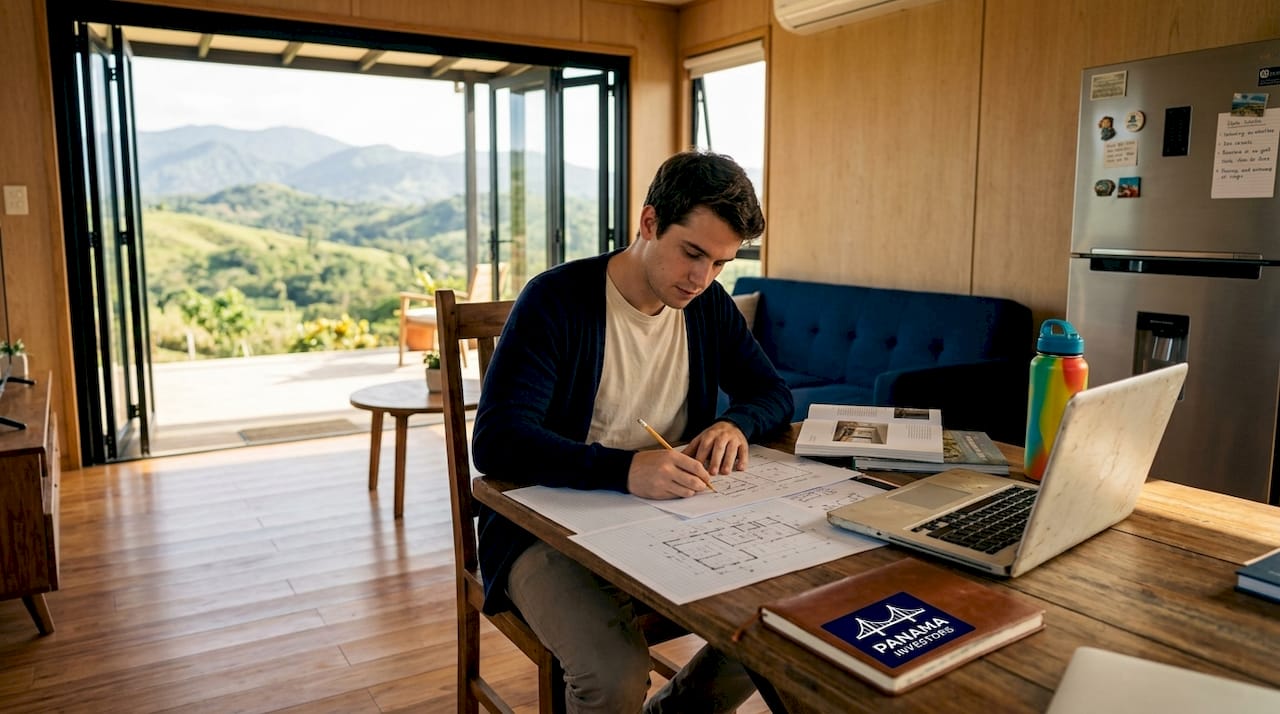
For investors interested in exploring Panama modular sustainable homes in more detail, comparing the system against traditional construction on a 10-year total cost basis is the most honest way to evaluate the opportunity.
Lega Vera: Regenerative farm village blending community and sustainability
Lega Vera is one of the most ambitious green building examples Panama has seen at the community scale. It is a 300-hectare development offering 50 titled homesites designed around the principle of regenerative agriculture, meaning the land is intended to improve over time rather than simply sustain its current condition.
What distinguishes Lega Vera from a typical eco-development:
Farm concierge support: Residents have access to agricultural management services, so you’re not expected to manage regenerative soil projects yourself.
Co-op village center: Shared amenities including a hotel, equestrian facilities, and community spaces reduce the isolation risk that affects many rural sustainable developments.
Regenerative governance: An established operational framework means decisions about land stewardship are collective and professionally managed, not left to individual homeowners.
Titled homesites: Full property titles within the development provide the legal security that community-only ownership models often lack.
Additional highlights include:
Soil health monitoring as a shared community resource
Lower infrastructure costs per homeowner due to shared systems
Built-in rental income potential through the co-op hotel component
Lega Vera offers climate-adaptive tropical architecture integrated with regenerative agriculture and community governance to reduce buyer risks. For buyers who want sustainable living in Panama but are not interested in managing a rural property independently, this kind of operational infrastructure changes the risk profile entirely.
Investors looking at comparable regenerative community investments in the region will find Lega Vera occupies a category of its own in terms of the support system it provides to homeowners.
Villa Almendro in Sanctuary Gardens: Luxury and durability meet eco design
Villa Almendro, located within the Sanctuary Gardens development near Playa Venao, demonstrates how luxury and sustainable architecture Panama can coexist without compromise. At 350 m², this is a turnkey property, meaning you are not buying a design and then managing a build process.
Key features that justify its position in a serious sustainable investment shortlist:
Reinforced concrete and steel construction: Designed specifically for the tropical Pacific coast environment, where wind, salt air, and humidity demand structural materials that will not degrade within a decade.
Passive cooling integration: The home’s orientation and shading are calculated for the specific microclimate of Playa Venao, using ocean breezes to supplement mechanical cooling and reduce operating costs.
Solar panel system included: Unlike projects where solar is a provision for the future, Villa Almendro includes an installed solar panel system, with optimized shading and cross-ventilation as standard design elements, not upgrades.
Ocean views with performance: The site selection serves double duty, providing a premium lifestyle asset while positioning the home in a naturally ventilated corridor.
For investors focused on luxury eco villa investment, Villa Almendro represents a ready-to-rent or ready-to-occupy asset rather than a development project with execution risk.
Comparing sustainable home options: Features, benefits, and investment insights
After reviewing each property in detail, a side-by-side comparison reveals where each project stands out and where tradeoffs exist.
Feature | Cerquita del Cielo | FRESH system | Lega Vera | Villa Almendro |
Size | 150 m² | Varies (modular) | 300-ha community, 50 lots | 350 m² |
Design approach | Bioclimatic passive | Modular insulated panels | Regenerative community | Luxury climate-responsive |
Solar energy | Provision for future | Provision for future | Community-managed | Installed and included |
Construction type | Stone and wood | Steel + insulated panels | Varies per homesite | Reinforced concrete + steel |
Community governance | Individual ownership | Individual ownership | Full co-op governance | Development HOA |
Investment type | Design-forward build | Turnkey or self-build | Community stake | Turnkey luxury |
Best for | Design-conscious buyer | Cost-efficiency focus | Lifestyle + land steward | Immediate use or rental |
Resale appeal | Architecture and setting | Durability and savings | Scarcity and concept | Luxury rental market |
The table makes one tension obvious: the most architecturally interesting projects (Cerquita del Cielo) carry execution risk, while the most immediately usable (Villa Almendro) carry a higher entry price. The FRESH system bridges both if you’re building new, and Lega Vera is a separate category entirely for buyers who want community infrastructure as part of the deal.
Pro Tip: For investors comparing multiple exclusive sustainable home deals Panama offers, weighting resale liquidity as heavily as sustainability features produces better 10-year outcomes than prioritizing either factor alone.
Our perspective: The green label problem in Panama real estate
The honest challenge with sustainable homes in Panama is that the label gets applied freely, and the market does not currently enforce a standardized certification process the way Germany’s Passivhaus standard or the U.S. LEED system does. That creates an information gap that favors developers over buyers.
What we have seen across 12-plus years working with international buyers in this market: the projects that hold their value and deliver real operating savings are the ones where sustainability is baked into the structure, not bolted on after the fact. Cerquita del Cielo’s passive ventilation works whether or not you ever install those solar panels. FRESH homes’ insulation performs on day one without a monitoring app. Lega Vera’s governance structure is operational before you move in.
The developments that underperform tend to be the ones where green features are added to standard construction to hit a price point or attract a trend-focused buyer. A conventional concrete box with solar panels on the roof is not a sustainable home, it’s a conventional home with a utility add-on.
Buyers who push for material specs, passive performance data, and proof of installed versus planned systems consistently make better purchases. The information is available if you ask for it. Most buyers do not ask, and most developers know that.
Ready to find your sustainable home in Panama?
Panama’s eco-friendly real estate market rewards buyers who know exactly what to ask for before entering negotiations. At Panama Investors, Luca Piva brings over 12 years of on-the-ground experience matching international buyers with properties that deliver genuine value, not just green marketing. Whether you are drawn to bioclimatic design in the highlands, modular construction on the coast, or a turnkey luxury villa with solar already installed, the right property exists in this market.
Book a strategy call with Luca to get a curated shortlist of sustainable properties matched to your budget, investment goals, and lifestyle priorities. You will get honest guidance on what is actually built, what is in development, and what the numbers really look like before you commit to anything.
Frequently asked questions
What defines a sustainable home in Panama?
A sustainable home in Panama integrates climate-adaptive design, durable materials suited for tropical conditions, energy and water efficiency features, and often participates in a community sustainability model. Sustainability means building systems designed to minimize environmental impact and maximize long-term performance.
Are solar panels typically installed in sustainable homes or just planned?
Many projects include provisions for solar panels and rainwater collection during design, but installation may be deferred. Investors should treat solar readiness as a separate design layer and verify whether systems are installed or placeholders before closing.
How do community models like Lega Vera reduce risks for sustainable homebuyers?
Communities like Lega Vera provide established regenerative operations and governance frameworks, offering farm concierge support and soil management that lower the learning curve and operational uncertainty. Community stewardship and operational support reduce uncertainty compared to isolated sustainable homes where buyers manage everything independently.
What are the benefits of using modular building systems like FRESH in Panama?
Modular systems like FRESH offer high insulation to reduce cooling costs, durable materials for tropical conditions minimizing maintenance, faster construction timelines, and a smaller ecological footprint. FRESH panels maintain thermal performance and durability while reducing construction waste and long-term maintenance needs.
Recommended
