Panama's Strategic Geographic Location Explained
Panama’s Strategic Geographic Location Explained
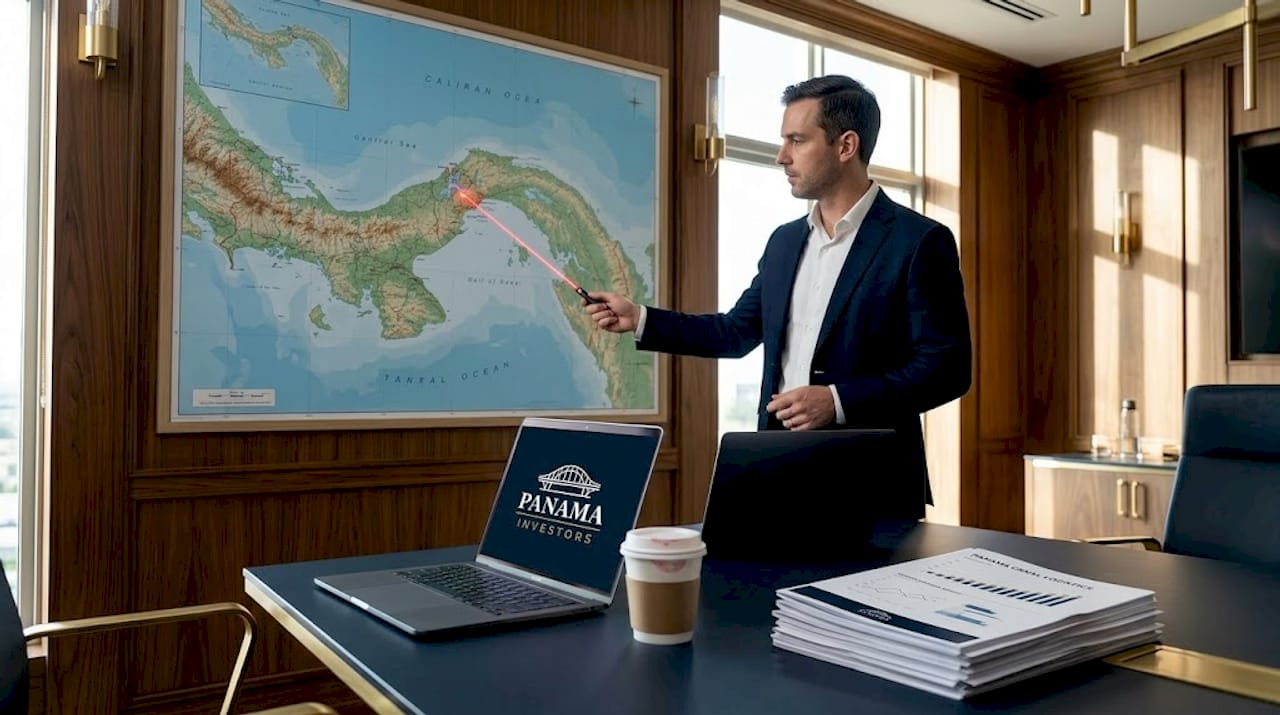
Panama is one of those places where geography and geopolitics collide in ways most people never fully appreciate. Understanding what is strategic geographic location Panama means recognizing a country that physically connects two continents, separates two oceans, and sits at the center of the world’s most important maritime trade routes. That combination does not happen anywhere else on earth. For investors, business owners, and anyone considering relocation, Panama’s location is not just a talking point. It is the reason the country punches so far above its weight in global commerce and why real estate in Panama has attracted serious international attention.
Table of Contents
- Key Takeaways
- What is the strategic geographic location of Panama
- The Panama Canal and its impact on global trade
- Panama as a logistics and investment hub
- Geopolitical implications of Panama’s location
- Practical guidance for investors and residents
- My perspective on what Panama’s geography actually means
- How Panamainvestors helps you act on Panama’s advantages
- FAQ
Key Takeaways
| Point | Details |
|---|---|
| Panama bridges two continents | Panama physically connects North and South America, making it unique for regional trade and logistics. |
| Canal drives global trade | The Panama Canal handles roughly 5% of global maritime trade annually, with outsized impact on U.S. supply chains. |
| Geography shapes investment | Logistics, real estate, and digital services all benefit directly from Panama’s position between the Americas, Europe, and Asia. |
| Geopolitics create real risk | U.S.-China rivalry over canal influence introduces governance complexity that investors must understand before committing capital. |
| Location advantages are operational | Canal lock reliability, water supply stability, and port governance matter as much as the country’s map position. |
What is the strategic geographic location of Panama
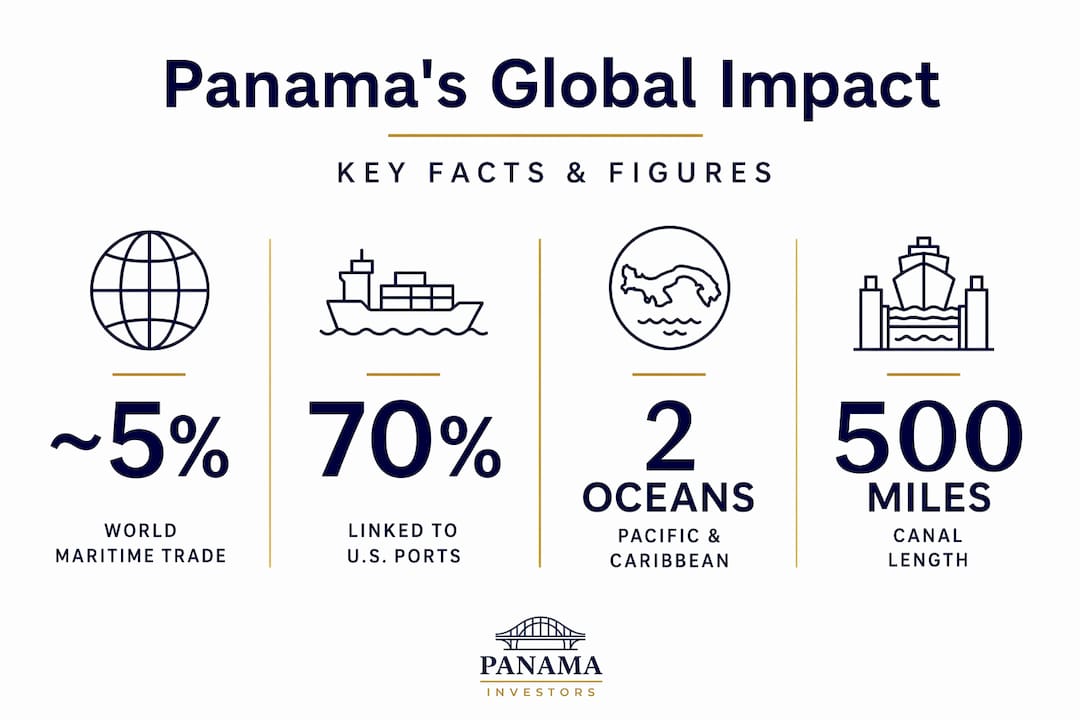
Panama occupies a narrow strip of land in Central America, roughly 500 miles long and as little as 31 miles wide at its narrowest point. It shares a border with Colombia to the southeast and Costa Rica to the northwest. On one side sits the Pacific Ocean. On the other, the Caribbean Sea connects to the Atlantic.
That isthmus position is not incidental. It is why Panama exists as a critical node in global logistics. The same geographic feature that drew Spanish colonizers in the 16th century, when they built the Camino Real to transport Incan silver across the land to waiting ships, still drives decisions by Fortune 500 companies and shipping conglomerates today.
Here is what makes the geography specific enough to matter practically:
- Dual ocean access. Panama has functioning deep-water ports on both the Pacific and Caribbean coasts, allowing goods to move from Asia to the U.S. East Coast without sailing around South America.
- Isthmus width. The narrowness of the land allowed for the construction of both a transcontinental railway and the canal itself.
- Tropical positioning. Sitting between 7° and 10° north of the equator, Panama benefits from warm-water ports that stay navigable year-round.
- Continental bridge. No other country sits at the precise junction of North and South America, giving Panama a geographic monopoly on hemispheric overland connectivity.
- Proximity to major markets. Panama City is roughly equidistant from New York, Miami, and São Paulo, making it a natural regional headquarters location.
The climate is worth mentioning, too. Panama’s geography produces two distinct zones, a wet rainforest interior and drier Pacific coastal areas, which shapes where residents and businesses concentrate and where real estate value tends to cluster most predictably.
The Panama Canal and its impact on global trade
The Panama Canal is the most direct expression of Panama’s geographic advantage, and its numbers are staggering. The canal handles roughly 5% of global maritime trade, with approximately 70% of that cargo linked to U.S. ports. About 40% of U.S. container traffic passes through the canal every year.
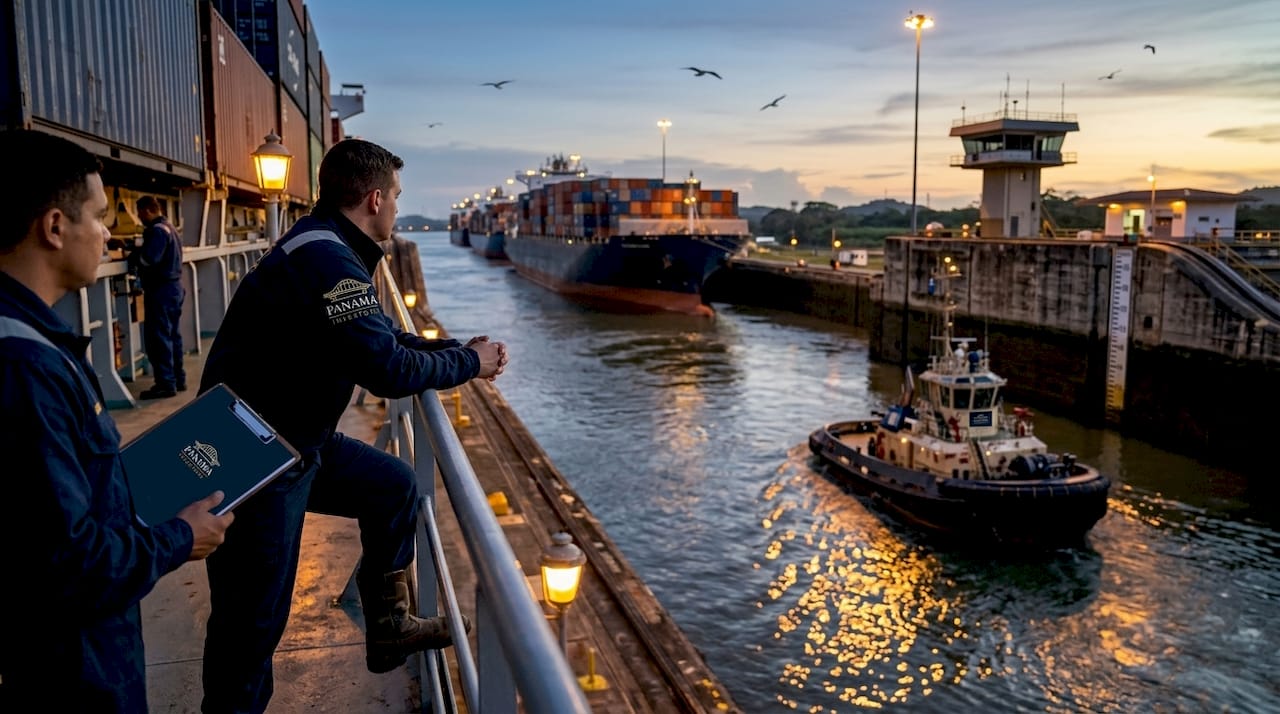
Those figures reframe the importance of Panama’s location entirely. This is not just a shortcut. It is the backbone of North American supply chains.
The canal’s engineering story amplifies the geographic significance. Before it opened in 1914, ships traveling from New York to San Francisco had to navigate around Cape Horn at the tip of South America, adding roughly 8,000 miles to the journey. The canal cut that distance dramatically, enabling both commercial and naval vessels to move between oceans in hours rather than weeks. The 2016 expansion added a third set of locks capable of handling the newer generation of massive container ships, locking in Panama’s relevance for decades.
| Metric | Figure |
|---|---|
| Share of global maritime trade | ~5% annually |
| Share linked to U.S. ports | ~70% |
| U.S. container traffic through canal | ~40% |
| Shipping distance saved (NY to SF) | ~8,000 miles |
| Canal expansion completed | 2016 (third lock set) |
Pro Tip: If you are evaluating logistics-related real estate near the canal zone, look beyond basic location. Operational continuity depends on water levels in Gatun Lake, which feeds the lock system. Droughts in 2023 forced transit restrictions that disrupted global supply chains. That risk is priced into smart investments.
Panama as a logistics and investment hub
The canal grabs the headlines, but Panama’s broader infrastructure is what converts geographic advantage into economic output. Geography alone is insufficient. Panama built a network of ports, transport links, and economic zones that turn its position into a living, operational hub.
The key infrastructure layers include:
- Balboa and Cristobal ports on the Pacific and Caribbean coasts respectively, both operating as major transshipment hubs.
- The Panama Canal Railway, the first transcontinental railway in the Western Hemisphere, which moves containers between coasts in about an hour.
- Tocumen International Airport, the largest in Central America, with direct flights to over 90 destinations. It functions as the “Hub of the Americas” for passenger and cargo traffic.
- Colón Free Trade Zone, the second largest free trade zone in the world after Hong Kong, generating billions in annual trade volume.
- Panama Pacifico, a special economic zone built on the former Howard Air Force Base that now houses hundreds of multinational companies.
For investors, this infrastructure stack translates into specific opportunities. Logistics real estate, including warehousing, cold storage, and last-mile facilities near the canal zone, has seen consistent demand growth. Panama City’s financial district, Punta Pacifica, benefits from its role as a regional headquarters city for companies that want Pacific and Atlantic market access from a single base.
Pro Tip: When comparing Panama to regional neighbors for business setup, factor in time-to-market advantages from dual-ocean port access. A company exporting to both Asia and Europe from Panama avoids rerouting costs that competitors operating from Colombia or Costa Rica face regularly.
The dollarized economy reinforces all of this. Companies operating in Panama do not carry currency conversion risk, which matters for businesses handling large volumes of trade-linked transactions. That stability, combined with the geographic advantages, makes Panama one of the few places where investment fundamentals in Latin America align this cleanly.
Geopolitical implications of Panama’s location
Strategic geography creates strategic tension. Panama’s position as a chokepoint for global trade means that major powers pay close attention to who controls its ports, its canal authority, and its governance decisions. That reality became unmistakably clear when Panama made a diplomatic shift from Taiwan to China in 2017, signaling its willingness to navigate between competing powers rather than align firmly with one bloc.
The canal’s geographic role as a chokepoint affecting U.S. national and economic security is now formally recognized in American strategic doctrine. That recognition has intensified as Chinese state-linked companies have invested in port facilities on both ends of the canal, raising questions about long-term governance and access.
“Panama’s strategic terrain is key for U.S. national and economic security,” — Center for Strategic and International Studies, 2025.
Chinese infrastructure investments near the canal have heightened concerns about Panama’s strategic alignment and the governance of port concessions. That is not an abstract risk for foreign investors. If canal operations became subject to geopolitical disruption, the downstream effects on logistics investment, real estate demand, and financial services activity in Panama would be significant.
The canal’s governance structure, administered by the Panama Canal Authority as an independent Panamanian entity, provides a layer of institutional protection. Panama’s constitution mandates canal neutrality. But those guarantees exist in a world where governance diligence around port concessions has become genuinely necessary, not just theoretical.
Practical guidance for investors and residents
Understanding why Panama is strategically located is the starting point. Translating that into investment or relocation decisions requires a sharper lens.
| Factor | Panama | Costa Rica | Colombia |
|---|---|---|---|
| Ocean access | Pacific + Caribbean | Pacific + Caribbean | Pacific + Caribbean |
| Free trade zone | World’s 2nd largest | Limited | Moderate |
| Canal presence | Yes | No | No |
| Dollarized economy | Yes | No | No |
| Regional air hub | Yes (Tocumen) | Partial | Yes (Bogotá) |
| Logistics infrastructure | Exceptional | Moderate | Growing |
The comparison with regional neighbors makes Panama’s structural advantages concrete. No neighboring country combines dual-ocean access, a functioning free trade zone, a dollarized economy, and a transshipment-grade port network in one package.
For real estate specifically, geographic advantages concentrate demand in predictable corridors. Properties near the canal zone, in Panama City’s financial district, and along Pacific-coast developments accessible from the capital attract the most consistent international buyer interest. The top investment real estate markets in Panama largely track the country’s logistics and transport geography.
Relocation considerations also benefit from the location. Panama’s geographic position means two time zones cover most of the Americas, making remote work for U.S. or Latin American employers practical. Flight connections to major hubs, direct from Tocumen, put most major cities within a four-to-six hour journey. That accessibility is a real quality-of-life variable, not just a business consideration.
My perspective on what Panama’s geography actually means
I’ve worked with enough investors moving money into Panama to recognize the gap between people who grasp the geography intellectually and those who understand it operationally. The map view gives you the concept. The operational view tells you where the risks and returns actually sit.
What I find most underappreciated is the water supply dependency. The canal lock system runs on freshwater from Gatun Lake. In 2023, a drought forced the Panama Canal Authority to restrict draft limits on transiting vessels. That single event disrupted shipping schedules globally and sent ripple effects through logistics real estate valuations near the zone. Geography sounds permanent. Operations are not.
The geopolitical piece also gets oversimplified. Most people frame it as “the U.S. wants control and China is moving in.” The reality I’ve seen is more nuanced. Panama’s government has historically used its geographic leverage to play both sides with sophistication, and the canal’s constitutional neutrality provides genuine institutional cover. That said, investors who do not monitor port concession decisions are missing a risk variable that belongs in any serious due diligence process.
My honest take: Panama’s geographic advantages are real, durable, and genuinely unique in the hemisphere. But the people who benefit most are those who understand the operational layer beneath the map. Location gives you the opportunity. Governance, infrastructure reliability, and timing determine whether you capture it.
— Roie
How Panamainvestors helps you act on Panama’s advantages
Panama’s geographic position creates real investment opportunities. But identifying the right property in the right location, with the right legal structure, requires local expertise that most international buyers simply do not have.

Panamainvestors, led by Luca Piva with over 12 years of on-the-ground experience in Panama’s real estate market, connects international investors and expatriates to the properties and deals that actually reflect the country’s strategic value. From canal-zone logistics real estate to Pacific-coast residences with strong appreciation histories, the advisory work goes beyond listings. If you are ready to move from understanding Panama’s geography to owning a piece of it, start with a strategy call or explore the current investment opportunities at Panamainvestors to see what the market looks like right now.
FAQ
What makes Panama’s geographic location strategic?
Panama sits at the junction of North and South America with access to both the Pacific Ocean and Caribbean Sea. That position, combined with the Panama Canal, gives the country an unmatched role in global maritime trade and regional logistics.
How much global trade passes through the Panama Canal?
The Panama Canal handles roughly 5% of global maritime trade annually, with approximately 70% of that cargo linked to U.S. ports. About 40% of all U.S. container traffic moves through the canal each year.
How does Panama’s location affect real estate investment?
Panama’s geography concentrates commercial and residential demand around its logistics corridors, the canal zone, Panama City’s financial district, and Pacific coastal markets. Properties in these areas benefit from sustained international buyer interest driven by the country’s trade role.
What geopolitical risks come with Panama’s strategic position?
U.S.-China rivalry over canal influence creates governance complexity, particularly around port concessions. Investors should monitor who controls infrastructure near the canal and how Panama’s government manages competing power interests.
Is Panama’s location better for investment than Costa Rica or Colombia?
Panama uniquely combines dual-ocean port access, the world’s second-largest free trade zone, a dollarized economy, and a major air hub. No regional neighbor matches that full combination, which is why Panama consistently attracts more logistics and financial investment than its neighbors.
