How to Analyze Sea View Property in Panama
How to Analyze Sea View Property in Panama
Panama’s coastal real estate market attracts international buyers with views that look too good to pass up, and that’s exactly where the risk begins. Knowing how to analyze sea view property in Panama requires more than admiring the scenery. The formal process is called coastal real estate due diligence, and without it, buyers routinely overpay for properties with title defects, legal restrictions, or boundary disputes that make ownership precarious. This guide walks you through every layer of that analysis, from legal classification to physical verification, so you can invest with real confidence.
Key Takeaways
| Point | Details |
|---|---|
| Titled land vs. ROP matters | The property’s legal classification determines security, financing, and transferability for sea view investments. |
| The 22-meter coastal strip | Foreigners cannot obtain full title within 22 meters of the highest tide line, affecting true beachfront ownership. |
| Registry and cadastral alignment | Cross-referencing Public Registry records with ANATI data is the single most critical due diligence step. |
| Marketing claims mislead buyers | “Oceanfront” does not always mean titled beachfront land. Always verify with official surveys. |
| Build a local professional team | A licensed surveyor, a real estate lawyer, and an experienced advisor prevent the most costly mistakes. |
How to analyze sea view property in Panama: prerequisites first
Before you look at a single listing photo, you need to understand how Panama categorizes coastal properties. The distinction is not cosmetic. It determines what you can build, whether you can get financing, and how secure your ownership actually is.
Panama recognizes two main types of non-urban coastal land: titled property, which is registered in the Registro Público (Public Registry) and carries a formal Finca number, and Right of Possession (ROP) land. ROP land lacks formal registry title, making bank financing nearly impossible and ownership far less secure than titled property. On the coast, ROP is common precisely because formal titling lags behind in rural and beachside areas.
Then there is the maritime zone issue. Foreigners cannot title land within 22 meters of the highest tide line on the Pacific coast. That strip is under government control. Ownership there takes the form of a concession, which grants use rights but not full title. The concession system limits construction and cannot be transferred like a standard deed. Many foreign buyers miss this detail entirely.
Before going deeper into any analysis, make sure you have access to:
- The property’s Finca number (the unique identifier assigned by Panama’s registry)
- Cadastral maps from ANATI (Autoridad Nacional de Administración de Tierras)
- A qualified Panamanian real estate attorney
- A licensed Panamanian land surveyor
- Copies of the seller’s identity documents or corporate records
Pro Tip: Ask for the Finca number on day one. If a seller cannot or will not provide it, that alone is a red flag worth taking seriously before you spend any time on further analysis.
Legal title verification: the step-by-step process
This is where evaluating coastal real estate in Panama gets technical, and where most buyers cut corners. Do not cut corners here.
-
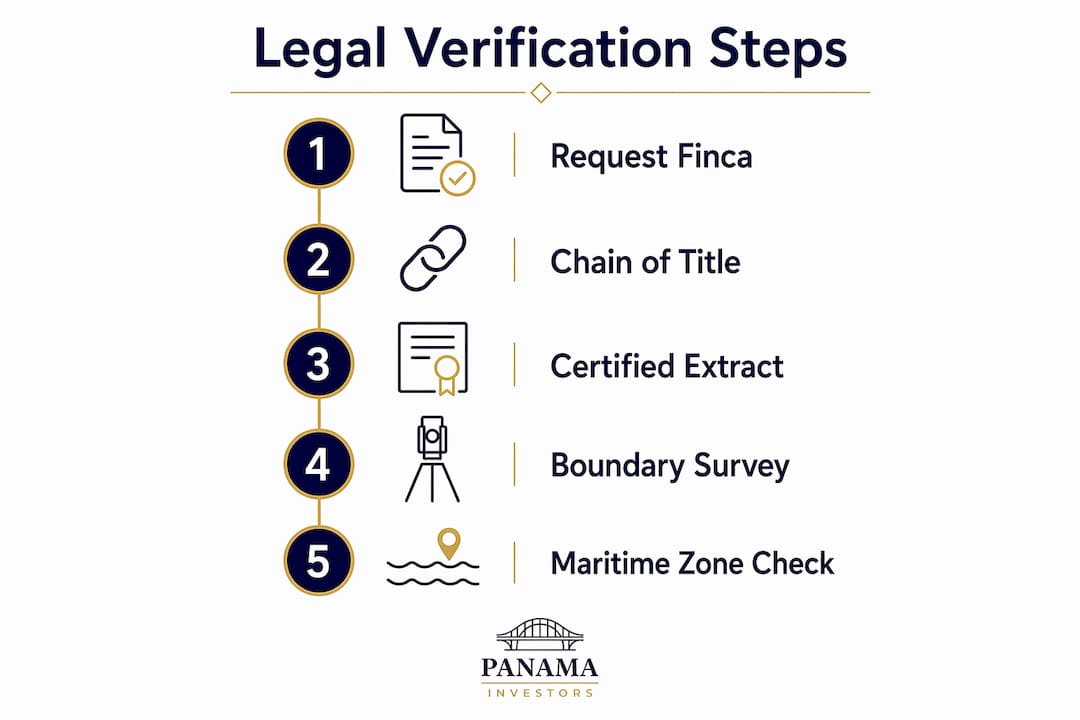
Pull registry extracts using the Finca number. The Finca number traces ownership and legal status directly through the Public Registry. Request a certified extract showing the current owner, the property description, and any registered encumbrances.
-
Cross-reference ANATI cadastral data. Discrepancies between cadastral and registry data frequently block or delay ownership transfer. You want both sources to describe the same physical property with the same boundaries. If they conflict, you have a problem that needs legal resolution before you proceed.
-
Identify the property’s legal classification. Confirm whether the land is titled, ROP, or under concession. Each carries different rights and risks. If any portion falls within the 22-meter maritime strip, treat that section as concession land regardless of how the seller describes it.
-
Check for encumbrances. Outstanding mortgages, liens, and judicial annotations block ownership transfer at the registry. A property can look clean in marketing materials while carrying hidden court seizures or unpaid debts that freeze the transaction at closing.
-
Verify the seller’s authority. If the seller is a corporation, confirm that the corporate representative signing the agreement actually has legal authority to do so. Request the corporate documents, board resolutions, and power of attorney if applicable.
-
Confirm tax and utility clearances. Outstanding property tax balances and unpaid utility bills attach to the property, not the individual. If you close without clearing these, they become your responsibility.
Pro Tip: Request a 30-year chain of title review, not just the current owner’s entry. Historic discrepancies or informal transfers can create latent claims that surface years after purchase.
Physical and valuation factors for sea view properties
Legal clarity gets you to the starting line. Physical and valuation analysis tells you whether the price actually makes sense.
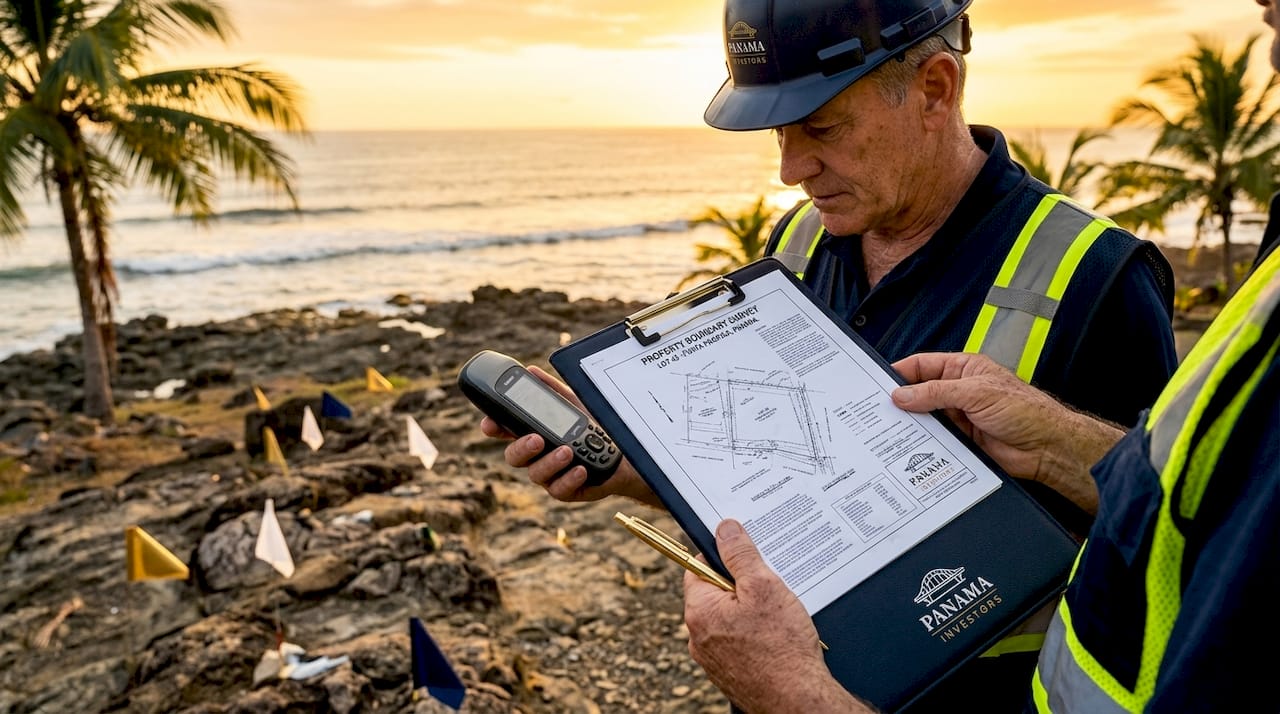
Start with a licensed surveyor’s official boundary verification. Survey plans must adhere to ANATI’s specific coordinate system and include exact measurements. A survey that does not meet these standards cannot support a title claim. Hire your own surveyor. Do not rely on one provided by the seller.
Once you have the survey, verify the property’s actual position relative to the maritime public zone and the highest tide line. This is the physical confirmation of what the registry says. If the survey shows the property encroaches on the restricted strip, you have a conflict between the marketing description and reality.
Here is a comparison that matters when you are buying sea view property in Panama:
| Feature | What marketing says | What due diligence confirms |
|---|---|---|
| “Oceanfront” | Direct beach access, highest value | May be concession land, no full title |
| “Sea view” | Ocean visible from property | Confirmed titled land set back from coast |
| “Beachfront community” | Proximity to beach | HOA rules, shared access, restrictions |
| “Buildable lot” | Construction ready | Requires zoning and environmental review |
Marketing claims about “oceanfront” status should always be verified against official surveys. A sea view property outside the restricted zone is often a smarter purchase than a concession-only plot marketed as beachfront.
Beyond title, consider these valuation factors:
- Panoramic vs. partial view. True 180-degree panoramic views command a significant premium. Partial views obscured by vegetation or neighboring structures are worth substantially less.
- Road and infrastructure access. Paved road access, utility connections, and proximity to services like grocery stores, hospitals, or airports directly affect rental income potential and resale value.
- HOA fees and restrictions. Planned developments with homeowners associations often restrict short-term rentals, exterior modifications, and land use. Read every HOA document before signing anything.
- Zoning regulations. Environmental and zoning regulations govern what you can build and how high. A lot with a great view but strict height or footprint limits may not support the villa or rental unit you planned. More information on what to expect from a beachfront investment is worth reviewing before you evaluate specific listings.
Common pitfalls when analyzing Panama coastal real estate
Even experienced investors get tripped up by Panama’s coastal market. These are the patterns that lead to losses.
- Buying concession strips as if they were full ownership. The concession allows use. It does not allow you to resell the land, use it as mortgage collateral, or make permanent structural improvements without government approval. Buyers who miss this distinction face enormous limitations.
- Ignoring unresolved title discrepancies. Without cadastral and Public Registry alignment, buyers risk purchasing land with overlapping boundaries or unclear legal rights. These situations are common in Panama’s coastal zones. The correction process takes years and is not guaranteed.
- Trusting informal possession claims. Local sellers sometimes offer ROP land with verbal assurances that titling is straightforward. Only about 19 percent of properties in Panama are officially titled, and the formal titling process for ROP coastal land is genuinely slow and uncertain. Verbal assurances are worth nothing in a legal dispute.
- Skipping independent legal review. Seller’s agents work for the seller. Always hire your own Panamanian real estate attorney to review contracts and conduct registry searches independently.
- Missing latent liens. Court judgments and liens may not be prominently displayed in registry records. A full encumbrance search conducted by a lawyer, not just a registry printout, is the correct standard of care.
A property with a cloudy title is not a bargain at any price. The legal work needed to clear coastal title disputes in Panama can cost more than the discount you received on purchase.
For a deeper breakdown of coastal ownership rights and legal risks, the Panamainvestors resource library covers specific scenarios that come up repeatedly in Panama’s beachside market.
Final verification steps before you commit
You have done the research. Now comes the checkpoint before signing anything binding.
-
Reconcile all documents. Your surveyor’s report, the registry extract, and the cadastral map should all describe the same property. Any inconsistency needs a written explanation from a qualified attorney before you proceed.
-
Conduct a final legal review. Have your Panamanian attorney draft or review the purchase agreement. Confirm the agreement specifies the Finca number, exact purchase price, payment schedule, and the specific representations the seller is making about title and encumbrances.
-
Run financial clearances. Obtain a tax debt certificate (paz y salvo) from the municipality and confirm zero outstanding public utility debt. These should be dated within 30 days of closing.
-
Understand cadastral modernization timing. Panama’s cadaster modernization is ongoing with World Bank support. For buyers acquiring ROP land, the modernization process will eventually improve legal certainty, but timelines are uncertain. Factor this into your risk tolerance.
-
Plan your post-closing registration. After purchase, confirm that the ownership transfer is registered promptly in the Public Registry under your name or holding entity. Delays in registration create exposure.
-
Know when to walk away. If a seller resists providing documents, if the attorney finds unresolvable encumbrances, or if the survey conflicts significantly with the registry description, those are exit signals. No view justifies unresolvable legal risk.
Pro Tip: Use a Panamanian holding corporation (Sociedad Anónima) to hold the property. It simplifies future sales and estate planning significantly, and your attorney can set one up quickly at modest cost.
My honest take on Panama’s sea view market
I have seen buyers walk into Panama’s coastal market expecting a simple transaction and walk out months later with expensive legal problems they never anticipated. The uncomfortable truth is that title complexity on the coast is not an edge case. It is the norm.
What separates successful sea view investors from frustrated ones is almost never the listing they chose. It is the team they assembled before choosing it. A licensed surveyor with ANATI experience, a real estate attorney who specializes in coastal transactions, and an advisor who actually knows the local market. Those three people, working together before you sign anything, are worth more than any amount of time spent on listing sites.
I also want to push back on the idea that ROP land is automatically a deal to avoid. Patient buyers who leverage cadastral modernization strategically, securing well-priced ROP properties in areas where titling is actively progressing, can position themselves for serious appreciation when formal title eventually arrives. That is a more sophisticated play, but it is a real one for buyers who do their homework. The title complexity and coastal restrictions in Panama reward patience and thorough legal checks far more than they reward speed.
The mistake is rushing because the view is beautiful. The view will still be there after you finish your due diligence.
— Roie
Ready to find your sea view property in Panama?
The analysis process described here is exactly what separates a smart Panama coastal investment from an expensive mistake. Panamainvestors brings over 12 years of local market experience to every buyer engagement, connecting you with vetted surveyors, experienced real estate attorneys, and exclusive listings that never appear on public portals.

Whether you are looking for a vacation home with ocean views or a high-yield rental investment, Panamainvestors guides you through every step of evaluating and purchasing coastal property in Panama. Visit Panamainvestors today to schedule a personalized strategy call with Luca Piva and get access to properties that match your investment goals.
FAQ
What is the 22-meter coastal rule in Panama?
Foreigners cannot obtain titled ownership of land within 22 meters of the highest tide line on Panama’s Pacific coast. This strip is government-controlled and available only under concession rights, not full ownership.
What is Right of Possession land and why does it matter?
Right of Possession (ROP) is land that has not been formally titled in the Public Registry. It is common on Panama’s coast, carries higher legal risk than titled property, and makes bank financing nearly impossible.
How do I verify a property’s legal status in Panama?
Request the property’s Finca number and pull a certified extract from the Public Registry. Cross-reference this with ANATI cadastral data and hire a licensed surveyor to confirm physical boundaries before signing any agreement.
Does “oceanfront” mean the property has full title in Panama?
Not necessarily. Marketing terms like “oceanfront” frequently describe concession land within the restricted coastal strip, which carries use rights but not transferable title. Always verify claims with official registry records and a licensed surveyor.
What professionals do I need to analyze a sea view property in Panama?
You need a licensed Panamanian land surveyor, a real estate attorney experienced in coastal transactions, and a local real estate advisor with knowledge of the specific market area. Each plays a distinct role in protecting your investment.
