Why Panama Delivers an Exceptional Quality of Life for Expats
Why Panama Delivers an Exceptional Quality of Life for Expats
- Panama Investors
- May 5
- 10 min read
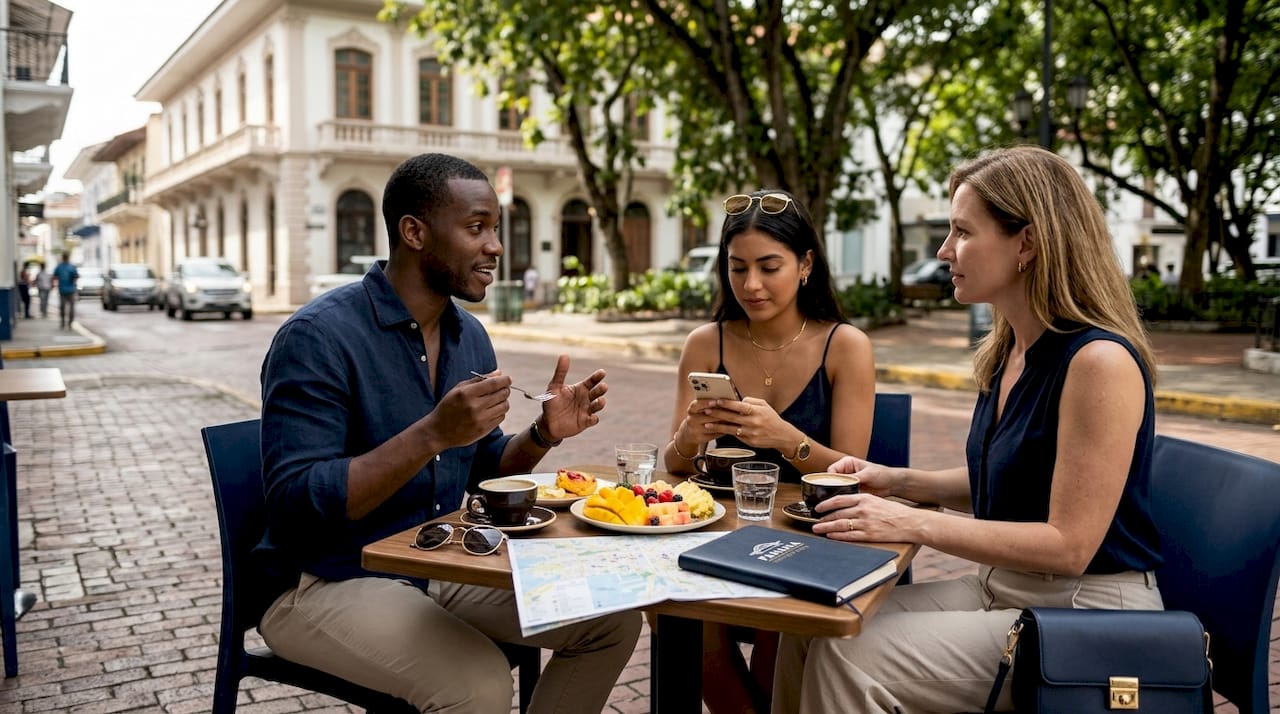
Most people assume that choosing affordability abroad means giving something up — a modern hospital nearby, a vibrant social scene, reliable infrastructure, or a genuinely safe neighborhood. Panama flips that assumption on its head. For the second consecutive year, Panama ranked #1 globally among expat destinations in the InterNations Expat Insider 2025, with 94% of surveyed expats reporting happiness there. That is not a marketing claim. It is data from over 10,000 respondents across 172 nationalities. In this article, you will discover exactly why Panama continues to lead the world and what it truly means for your lifestyle and investment strategy.
Table of Contents
Key Takeaways
Point | Details |
Top expat satisfaction | Panama ranks #1 for expat happiness and ease of settling in worldwide. |
Affordable quality living | Expats can enjoy a comparable lifestyle to the West for about 40 percent less in Panama. |
Safe and international | Main expat areas in Panama are reported as very safe with vibrant international communities. |
Rich natural lifestyle | Panama offers exceptional access to beaches, culture, and leisure all year round. |
Know the tradeoffs | Prospective expats should weigh urban challenges and healthcare specifics against Panama’s many benefits. |
What makes Panama’s quality of life exceptional?
Building on Panama’s standout reputation, let’s explore what sets its quality of life apart for discerning expats.
Panama’s top expat rankings are not based on a single feel-good metric. The InterNations survey evaluates dozens of sub-factors grouped into key pillars: ease of settling in, personal finance, quality of life, working abroad, and expat essentials. Panama placed in the top three across nearly every major category. That kind of consistency across multiple independent dimensions is extremely rare.
“Panama ranked #1 overall for expats for the second year in a row, with 94% happiness rate, 2nd in Ease of Settling In, 3rd in Quality of Life, 3rd in Personal Finance, 1st in Working Abroad, and 2nd in Expat Essentials.” — InterNations Expat Insider 2025
What makes this data even more meaningful is the sample. The survey covered 10,000+ expats from 172 nationalities, and notably, 35% of Panama-based respondents were retired, compared to just 11% globally. Retirees tend to have high expectations for safety, healthcare, convenience, and lifestyle. The fact that they are overrepresented among Panama’s satisfied expat population says a great deal about the country’s actual livability, not just its appeal to younger, more flexible digital nomads.
Here is a snapshot of how Panama performs across key quality of life dimensions:
Category | Panama’s Global Rank |
Overall expat destination | |
Ease of Settling In | 2nd |
Quality of Life | 3rd |
Personal Finance | 3rd |
Working Abroad | 1st |
Expat Essentials | 2nd |
Leisure & Culture | 3rd |
Safety | 5th |
Key contributors to this exceptional quality of life include:
Ease of transition: English is widely spoken in business and expat communities, and Panama City offers global amenities from day one.
International community: With expats from North America, Europe, and Latin America, building a social network happens naturally.
Modern healthcare: Private hospitals like Clinica Hospital San Fernando and Panama Clinic operate at standards comparable to the United States.
Dollarized economy: No currency risk. Your purchasing power is stable and predictable.
Geographic position: Two oceans, mountains, jungles, and a world-class city are all within a few hours of each other.
Explore more on expat retirement in Panama to understand how retirees are structuring long-term lives here.
Cost of living and financial advantages
Beyond its livability, Panama’s high-value lifestyle is deeply rooted in economic advantages.
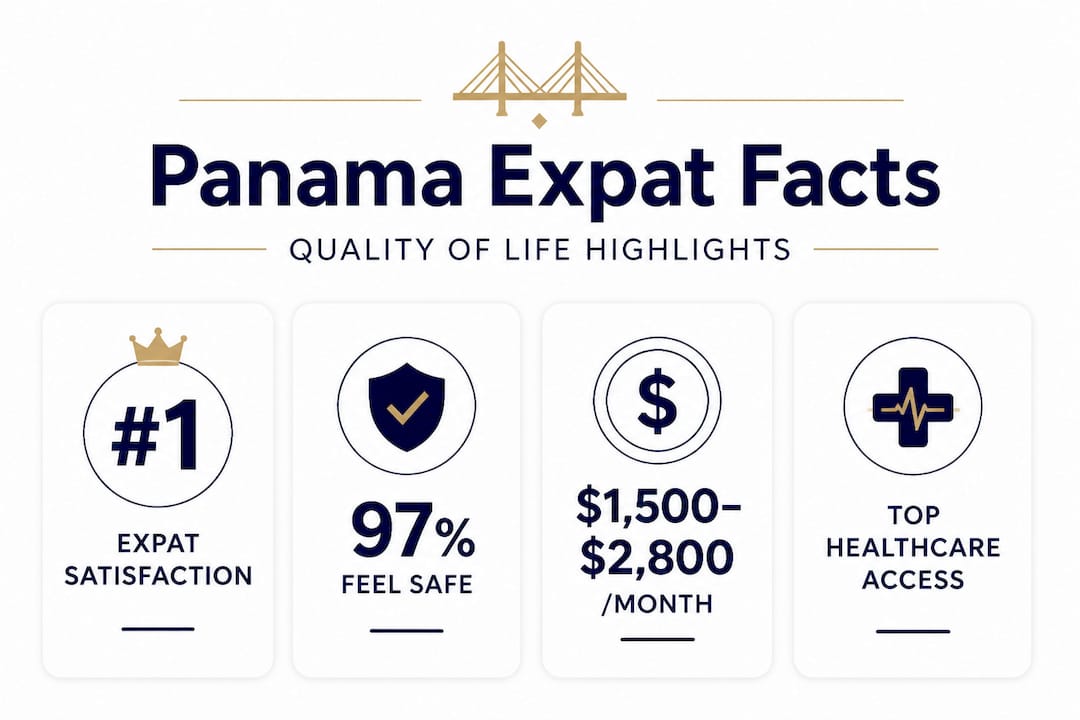
One of the most persistent myths about Panama is that budget-friendly living means compromising on quality. The numbers tell a different story. Expats consistently report a 40% lower cost of living compared to the United States and Western Europe for an equivalent lifestyle. A comfortable couple can live well in Panama for $1,500 to $2,500 per month, while a single professional in Panama City typically budgets $1,800 to $2,800 per month including rent.
Here is how Panama compares to the United States for common monthly expenses:
Expense | Panama (USD) | United States (USD) |
1-bedroom apartment (city center) | $700–$1,100 | $1,800–$2,800 |
Groceries (monthly, couple) | $300–$450 | $600–$900 |
Private health insurance | $80–$150 | $400–$700 |
Dining out (two people) | $25–$60 | $70–$140 |
Utilities (electricity, water) | $80–$150 | $200–$350 |
These are not rural, off-grid numbers. These figures apply to modern apartments in established neighborhoods like Marbella, El Cangrejo, or Costa del Este, where you will find international restaurants, modern gyms, and first-rate shopping malls within walking distance.
Panama’s financial advantages go well beyond cost of living. Here are the key financial perks that attract serious investors and retirees:
Territorial tax system: Panama only taxes income earned within its borders. Foreign-sourced income is completely exempt from local taxation.
Pensionado program: Retirees qualify for discounts of 15–50% on healthcare, entertainment, restaurants, and more, with proof of $1,000 per month in pension income.
Qualified Investor Visa: A real estate purchase of $300,000 or more qualifies for Panamanian residency.
No capital gains tax on property resale: Property investors face a simple 2% transfer tax rather than a percentage of profit, making exits financially straightforward.
No inheritance tax: Estate planning in Panama is significantly simpler and less costly than in most Western jurisdictions.
Review the full real estate buying guide for a structured look at how these advantages interact with the purchasing process.
Pro Tip: If you are renting before buying, avoid asking for prices in expat-heavy buildings where landlords quote in “expat dollars.” Negotiate in local market ranges by working with a bilingual local contact or an established agent who knows real pricing benchmarks. You can easily overpay by 20 to 30% without this guidance.
For a thorough breakdown of fiscal incentives, the section on Panama tax benefits covers exactly what foreign investors and residents can legally claim.
Safety, stability, and healthcare for expats
Financial advantages matter, but safety, stability, and healthcare complete Panama’s quality proposition.
Personal security is not an afterthought when you are making a long-term relocation decision. The good news: 97% of expats in Panama report feeling safe in the areas where they live and socialize. Panama ranks 5th globally among expat destinations for safety. That is a meaningful data point in a region that often carries an outsized reputation for risk.
Panama has maintained democratic governance since 1989 and has not experienced political instability or military conflict since then. The currency peg to the US dollar also removes a common source of economic turbulence that destabilizes other Latin American countries. For high-net-worth individuals evaluating long-term residency, political and monetary stability rank among the most critical factors.
That said, nuance matters. Panama City is a large urban center, and like any city of its size, not every neighborhood carries the same safety profile.
Neighborhoods and zones to prioritize for expat living:
Punta Pacifica: Upscale waterfront, very low crime, home to Johns Hopkins-affiliated hospital
Costa del Este: Master-planned, family-oriented, clean, modern infrastructure
Marbella and Bella Vista: Walkable urban lifestyle, popular with younger expats and professionals
Casco Viejo (renovated zone): Bohemian, culturally rich, increasing security in restored areas
Neighborhoods and zones to approach with caution or avoid:
Colón city center: Highest crime concentration in the country, not recommended for residential living
El Chorrillo: Urban poverty concentration in Panama City, best avoided especially at night
Curundu: Limited expat infrastructure, elevated petty crime risk
“While expat satisfaction remains high in established areas, urban drawbacks persist: Panama ranks 30th for traffic, 32nd for green urban services, and bureaucratic processes remain slow.” — InterNations Expat Insider 2025, Panama Profile
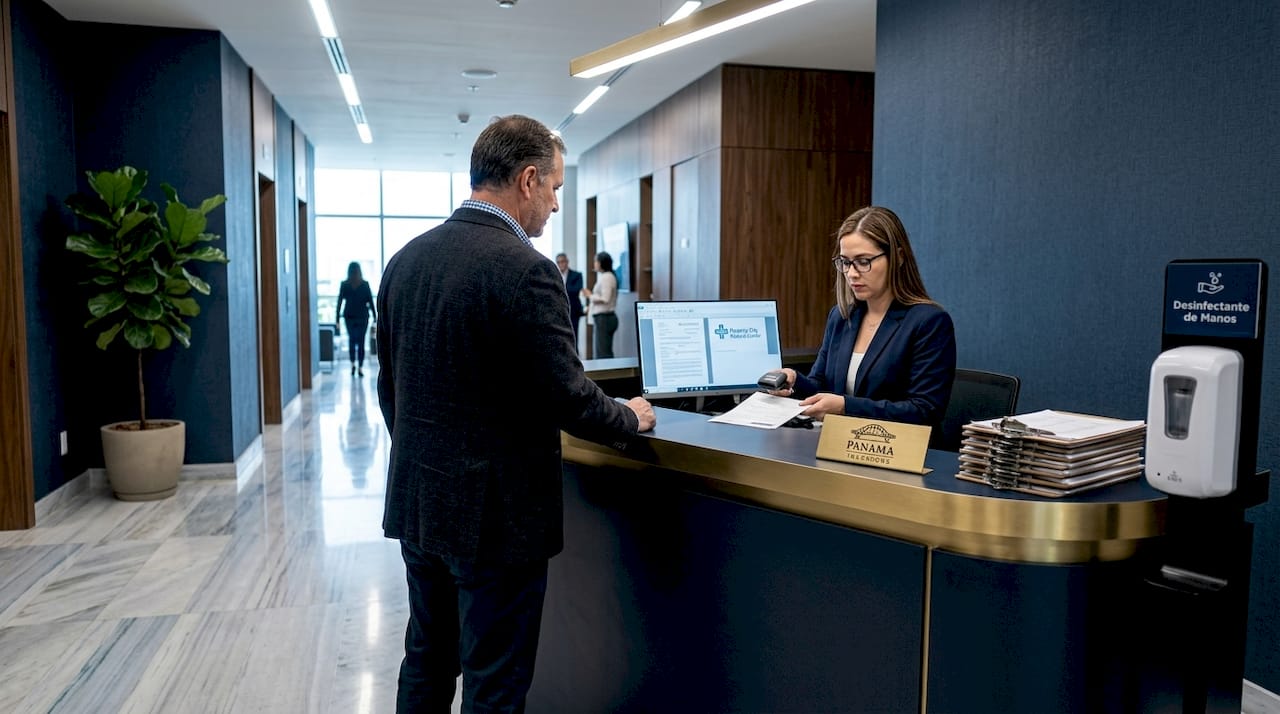
Healthcare access is another critical pillar. Private hospitals in Panama City operate at international standards. Procedures that would cost $40,000 in the United States routinely come in under $10,000 at a private Panamanian facility with no loss of quality. However, a critical point that many guides overlook: Medicare is not accepted in Panama. US retirees must obtain private international health insurance, which typically costs $80 to $200 per month depending on age and coverage level. This is still dramatically cheaper than US premiums, but it requires active planning before you arrive.
Pro Tip: Before relocating, secure a private international health insurance policy and identify your preferred hospital network in Panama City. Clinica Hospital San Fernando and Hospital Punta Pacifica are widely regarded as the top two options. Having a local doctor or specialist as a contact before you arrive removes significant friction in your first year.
For location-specific guidance on where to buy for security and lifestyle, the full breakdown of safe Panama City neighborhoods is an essential resource.
Climate, lifestyle, and leisure: The everyday expat experience
Now that security and finances are clear, let’s turn to Panama’s unique climate and lifestyle, the heart of daily satisfaction.
Ask any expat who has been living in Panama for more than six months what surprised them most, and the answer is often the same: the sheer variety available within a tiny geographic footprint. In a single weekend, you can surf on the Pacific coast at Santa Catalina, hike through cloud forest in Boquete, explore the art galleries of Casco Viejo, and return to your air-conditioned apartment in Panama City by Sunday evening.
99% of surveyed expats rated Panama’s natural environment, tropical climate, and leisure options positively. That is a remarkable consensus across thousands of respondents from very different cultural backgrounds. Panama ranks 3rd globally for leisure and culture as an expat destination, a category that evaluates access to dining, entertainment, outdoor activities, and cultural events.
Top lifestyle experiences for new arrivals:
Beach access: Pacific beaches like Coronado and Playa Venao are under two hours from Panama City. Caribbean beaches in Bocas del Toro offer a completely different atmosphere.
Mountain retreats: Boquete, at 3,900 feet elevation, provides cool temperatures and coffee farm tours year-round.
World-class dining: Panama City hosts hundreds of international restaurants across every cuisine, with a particularly strong Japanese, Peruvian, and Mediterranean dining scene.
The Panama Canal: Living near one of the world’s most important engineering feats is genuinely awe-inspiring, and access to the Miraflores Locks for viewing is simple and inexpensive.
Golf and marina lifestyle: Communities like Santa Maria Golf & Country Club and Punta Futura offer resort-style amenities as a daily reality, not a vacation luxury.
The climate does require realistic expectations. Panama City sits at sea level near the equator, which means heat and humidity are constants, particularly from January through April during the dry season. The rainy season runs from May through November and brings heavy afternoon showers. Most expats adapt within a few weeks by shifting outdoor activities to mornings, embracing air conditioning indoors, and planning trips to higher-altitude areas like Boquete or El Valle de Anton during the hottest months.
Browse top Panama locations to match your lifestyle preferences with the right investment geography.
The real expat perspective: What most guides miss about Panama
Every ranking and statistic cited in this article is accurate. Panama genuinely is one of the world’s top expat destinations by almost every measurable standard. But here is what most guides get wrong: they present Panama as a solved problem rather than an ongoing adjustment.
The expats who struggle most in Panama are the ones who arrived expecting a seamless plug-and-play version of their home country at lower cost. The ones who thrive are those who arrived prepared for a genuinely different operating environment. Bureaucracy is real. Processing a residency application can take 12 to 18 months. Banking for foreign nationals requires patience and documentation. Internet and utility service outside of Panama City can be unreliable.
Language is also more significant than rankings suggest. While English is spoken in business settings and tourist zones, daily life in Panama runs in Spanish. Expats who invest in even basic Spanish skills report dramatically better social integration, lower service costs, and a more authentic experience of the country.
The InterNations 2025 Panama profile itself notes this contrast clearly: high overall satisfaction alongside ranking 30th for traffic management, 32nd for green urban services, and with reports of rising costs in prime expat zones as demand increases. These are not reasons to avoid Panama. They are reasons to plan carefully.
The critical insight we have developed from years of working in this market: the gap between a frustrating experience and an exceptional one in Panama almost always comes down to who you work with locally, not where you move. Having the right buying property in Panama strategy, the right legal counsel, and an agent with real local relationships can completely change your outcome. Rankings tell you what is possible. Local expertise determines what you actually experience.
Taking the next step: Invest and thrive in Panama
Having explored the realities of Panama’s life and investment climate, you are now positioned to explore your options firsthand.
Panama’s rankings, financial incentives, and lifestyle advantages are compelling on paper. The real opportunity is translating that potential into a specific property, a clear residency path, and a portfolio that grows alongside your lifestyle. That requires more than reading guides.
At Panama Investors, we specialize in exactly this transition, connecting international buyers with properties that match both their lifestyle goals and investment criteria. Led by Luca Piva, a licensed agent with over 12 years on the ground in Panama, our advisory approach focuses on exclusive listings, honest market data, and hands-on guidance through every step of the purchase process. If you are ready to stop reading and start planning, speak with an advisor directly to map out a strategy tailored to your situation.
Frequently asked questions
How much do expats really need to live comfortably in Panama?
Most expats report a comfortable lifestyle for $1,500 to $2,800 per month, depending on location and housing preferences, with Panama City on the higher end of that range.
Is Panama safe for international families?
97% of expats in established areas report feeling safe, but neighborhood selection is critical, and zones like Colón and El Chorrillo should be avoided.
Are healthcare services accessible and reliable for expats?
Private healthcare in Panama City is modern and comparable to US standards in top facilities, but expats must note that Medicare is not accepted and private international insurance is essential.
What are the biggest challenges for new arrivals?
The most common friction points are slow bureaucracy, heavy traffic, and rising rental costs in prime expat zones, as reflected in Panama’s urban rankings where traffic ranks 30th globally.
How easy is it to integrate and find community as an expat?
Panama ranks 2nd globally for ease of settling in, and most expats find it straightforward to build connections through the large, well-established international community.
Recommended
