
How to find high rental demand areas in Panama
How to find high rental demand areas in Panama
- Panama Investors
- May 6
- 10 min read

Choosing the wrong neighborhood in Panama can leave your property vacant for months, quietly draining your capital while someone else’s unit down the street stays fully booked. The gap between a well-selected rental investment and a poorly chosen one often comes down to one thing: knowing how to read the market before you sign anything. This guide walks you through a concrete, repeatable methodology for locating high rental demand areas in Panama, so you can build a portfolio that generates real income rather than real headaches.
Table of Contents
Key Takeaways
Point | Details |
Follow data, not hype | High rental demand areas can be identified by analyzing population trends, infrastructure, and employment. |
Verify with on-the-ground checks | Tour neighborhoods and connect with local brokers to confirm demand before buying. |
Avoid common investor traps | Don’t trust only agency claims or short-term trends; prioritize long-term stability. |
Profile your ideal tenant | Different tenant groups drive demand in different neighborhoods, so match your investment to their needs. |
Key factors that drive rental demand in Panama
Before you can evaluate any specific neighborhood, you need to understand what actually moves the needle on rental demand across Panama’s diverse regions. The variables are specific, measurable, and often overlooked by investors who rely on instinct alone.
Rental income variables such as population growth, tourism volume, economic activity, and infrastructure development are the four pillars that shape whether a neighborhood will keep your unit full or frustratingly empty. Each one tells a different part of the story.
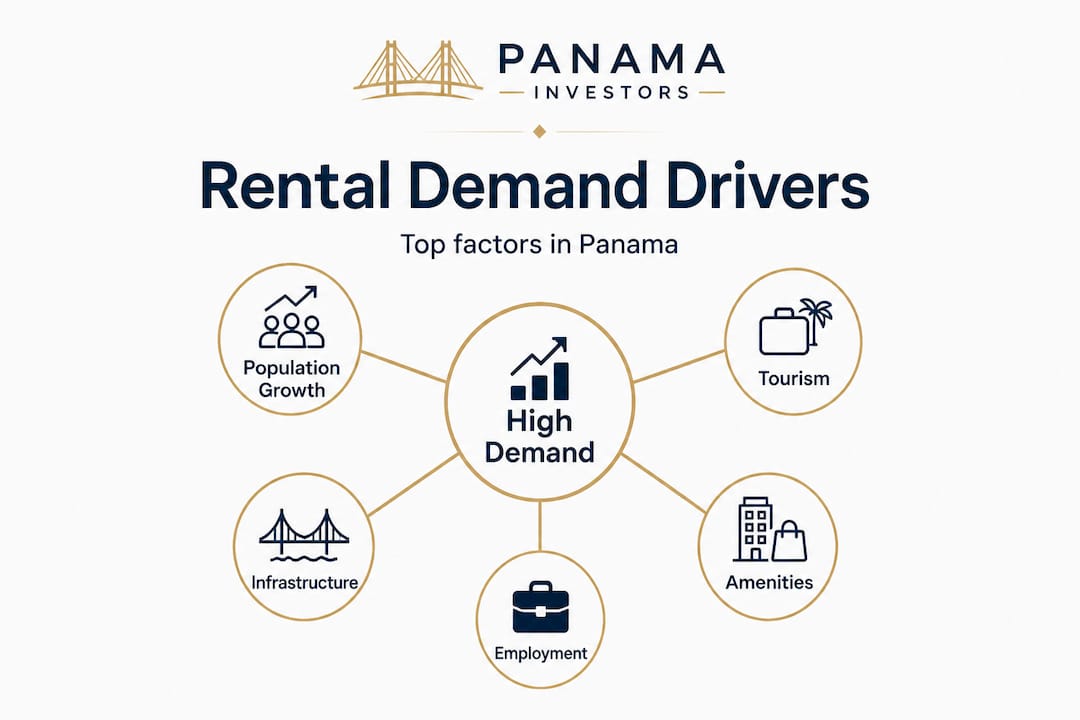
Population trends reveal whether people are actually moving into an area. Panama City, for example, has seen consistent in-migration from other provinces as well as from neighboring countries, fueling demand for mid-range and premium rentals alike. Areas with growing resident populations tend to support long-term tenants, which creates more predictable income.
Tourism influx matters enormously in places like Bocas del Toro, Boquete, and the Casco Viejo neighborhood of Panama City. Short-term rental platforms thrive in these zones, with seasonality that savvy investors can plan around. However, tourism demand alone is never enough to anchor a rental strategy. It needs to be paired with at least one other demand driver.
Major infrastructure projects are arguably the most underappreciated signal. When a new metro line, highway interchange, or commercial hub is announced or under construction, property values and rental demand in surrounding blocks tend to move upward well before the project completes. Panama’s ongoing urban infrastructure expansion across the Panama investment advantages landscape has made this factor increasingly important for forward-looking investors.
Local employment centers also deserve serious attention. Proximity to multinational corporate offices, free trade zones, banking districts, and hospitals drives steady demand from professionals and executives who need quality housing close to work. Panama City’s banking corridor and the Panama Pacifico special economic zone are examples where employment concentration directly fuels rental activity.
Here is a snapshot of how these demand drivers compare across major Panama regions:
Region | Population growth | Tourism strength | Infrastructure activity | Employment anchor |
Panama City (financial district) | High | Moderate | Very high | Very high |
Casco Viejo | Moderate | Very high | High | Moderate |
Boquete | Low | High | Moderate | Low |
Bocas del Toro | Moderate | Very high | Low | Low |
David (Chiriquí) | Moderate | Low | Growing | Moderate |
The key insight from this comparison: Panama City’s financial and residential neighborhoods consistently stack multiple demand drivers, while tourist-heavy areas outside the capital tend to rely on only one or two. That concentration of factors is why Panama City dominates rental yield performance for most international investors.
Key indicators to watch in any potential investment area include:
Net migration into the neighborhood over the past three to five years
Number of new commercial projects breaking ground nearby
Distance to major employment zones or free trade areas
Presence of quality schools, hospitals, and international retail
Ratio of owner-occupied versus renter-occupied units in the area
Pro Tip: Focus on areas where at least three demand drivers converge. A neighborhood strong in only tourism or only employment is vulnerable to shifts in a single sector. Multiple overlapping factors create much more resilient rental demand.
Gathering and using data: Neighborhood research essentials
Understanding the driving factors is one thing. Applying them to real areas is another. Here’s how to gather and interpret the right data for your search.
Analysis of neighborhoods with high rental yields in Panama City provides a concrete starting point for narrowing your search from the entire country down to two or three specific target zones.
Follow these steps to build a reliable data set for any neighborhood you are considering:
Start with online property portals. Sites like Encuentra24 and Compreoalquile list active listings and, more importantly, historical rental prices. Compare asking rents for comparable unit sizes across your target neighborhoods to establish baseline yield expectations.
Contact at least two local agencies per neighborhood. Ask specifically about average days on market for rentals, current vacancy rates, and the most common tenant profile. Good agencies will share this data readily. Those who are evasive deserve your skepticism.
Pull government and municipal reports. Panama’s National Institute of Statistics and Census publishes demographic data broken down by corregimiento (administrative district). This is free, often underutilized, and far more reliable than agency promotional materials.
Check occupancy data on short-term rental platforms. Tools like AirDNA aggregate booking data from Airbnb and Vrbo, giving you real occupancy percentages by neighborhood and price tier. This is especially useful for areas with significant expat or tourism traffic.
Calculate gross rental yield for each shortlisted area. The formula is simple: annual rent divided by purchase price, expressed as a percentage. Anything above 6 percent in Panama is considered solid. Above 8 percent is genuinely attractive for an international investor.
Here is a sample comparison framework for three Panama City neighborhoods:
Metric | El Cangrejo | Punta Pacifica | San Francisco |
Average monthly rent (2BR) | $1,100 | $1,600 | $1,300 |
Average purchase price (2BR) | $175,000 | $290,000 | $210,000 |
Gross rental yield | ~7.5% | ~6.6% | ~7.4% |
Typical tenant profile | Expats, young professionals | Executives, diplomats | Families, long-term expats |
Short-term rental potential | Moderate | Low | Low |
The numbers tell a clear story: El Cangrejo and San Francisco offer slightly better gross yields, while Punta Pacifica attracts higher-income tenants with longer lease commitments. Matching your financial goals with tenant profiles is just as important as chasing the highest yield number. You can explore the full breakdown of top Panama real estate markets to see how different zones rank across multiple investment criteria.
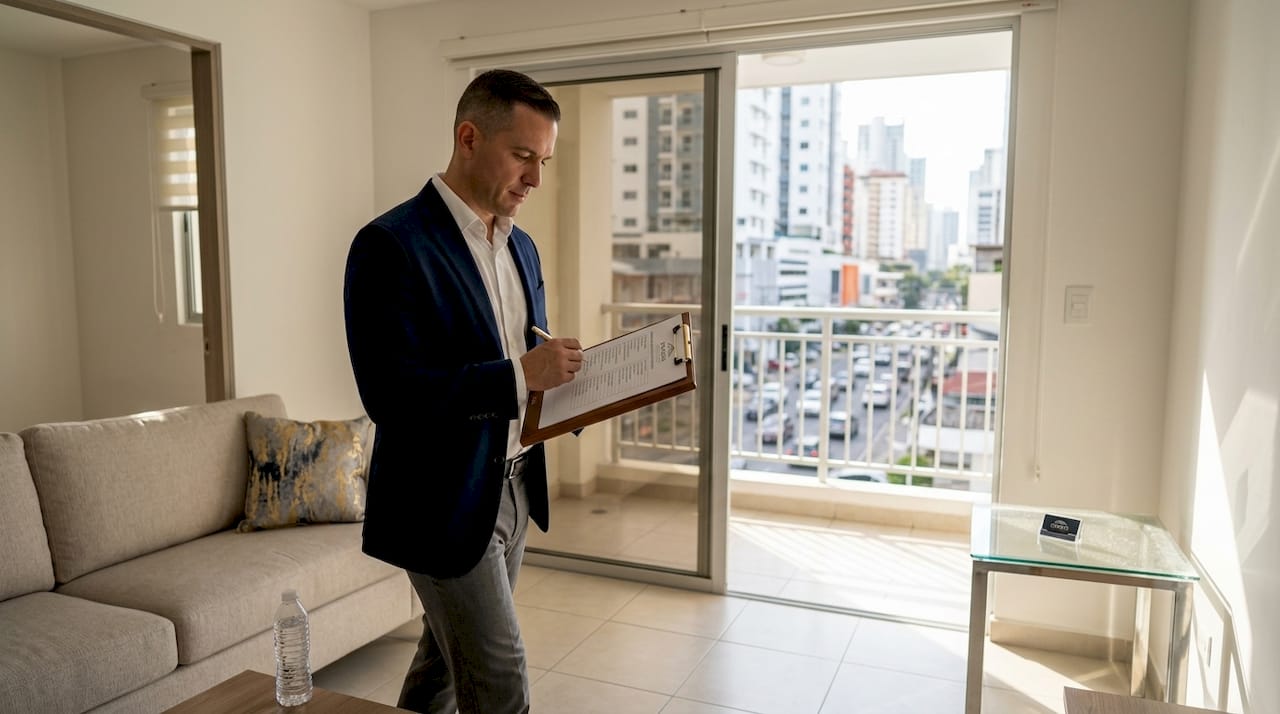
Pro Tip: Visit your target neighborhoods at three different times: a weekday morning, a weekday evening, and a weekend afternoon. Vacancy becomes visible when you walk the streets. Empty storefronts, few pedestrians, and abundant “for rent” signs on residential buildings are all telling signals that data alone may not capture.
Red flags and common mistakes in searching for high-demand areas
With a sense of how to gather data, it’s critical to be aware of traps that even seasoned investors fall into. Avoid these red flags as you evaluate candidate areas.
Investors should be careful about overestimating short-term tourism booms or skipping thorough due diligence in Panama neighborhoods, as both mistakes can seriously damage returns. The excitement of a booming tourist season can feel like permanent demand, but seasonality is ruthless when your mortgage payment arrives in February.
Watch for these specific red flags when evaluating any neighborhood:
High visible vacancy: More than 15 percent of units visibly available to rent in a building or block is a serious warning sign. It suggests either oversupply or weak demand, or both.
No anchor employment nearby: A beautiful neighborhood with no major employer within a reasonable commute will struggle to hold working professionals as tenants.
Speculative pricing without yield support: If purchase prices have jumped 30 percent in two years but rents have barely moved, someone is betting on appreciation alone. That is speculation, not investment.
Reliance on one seasonal event or one type of visitor: Some beach towns in Panama spike during Christmas and flatline the rest of the year. If your yield calculation only makes sense in peak season, it does not make sense at all.
Weak or absent rental regulation enforcement: Areas where rental agreements are rarely enforced create tenant risk for landlords. Panama’s legal framework for rentals is generally solid, but enforcement varies by district.
“The difference between a thriving rental portfolio and a perpetually vacant one often comes down to a single question: is this area’s demand built on lasting structural drivers, or on temporary excitement? Excitement fades. Demand built on population growth, employment, and infrastructure does not.” This distinction is one we revisit constantly when guiding clients through their selection process.
Common mistakes worth calling out directly include skipping on-the-ground visits entirely, trusting agency promotional materials without independent verification, and ignoring the legal and regulatory environment around short-term rentals. Panama has specific rules governing platforms like Airbnb in certain zones, and failing to research Panama real estate for foreigners regulations before purchasing can create costly compliance headaches later.
Verifying demand: Testing before you buy
After narrowing down your options and steering clear of common mistakes, the final step is active verification of true rental demand. This is where many investors stop short, and it costs them dearly.
On-the-ground verification and direct market analysis are vital before committing capital to any Panama neighborhood. Data is a starting point, not a conclusion.
Here is a hands-on verification sequence that consistently delivers the clearest picture:
Ask local agents for recent leasing activity, not just listings. Signed leases from the past 90 days tell you what the market is actually doing, not what sellers hope the market will do.
Check physical vacancy in person. Walk the target building or block and count visible “for rent” signs. Compare that number to total units. A building with 25 percent vacancy despite being in a supposedly “hot” area deserves serious scrutiny.
Talk to existing tenants if possible. Residents will tell you honestly about maintenance quality, management responsiveness, and how long neighbors typically stay. High tenant turnover is a hidden cost that destroys yields.
Contact a local property management company and ask them to model the rental. A reputable manager will give you their honest projection of occupancy and monthly income. If their numbers do not match the seller’s pitch, trust the manager.
Test short-term demand before purchasing. If you are targeting platforms like Airbnb, simulate your listing using a similar property in the same building or street. AirDNA data and direct inquiry with existing hosts will reveal real booking patterns.
Engage expat and digital nomad communities online. Forums like Expats in Panama on Facebook and Reddit’s r/Panama are unfiltered sources of tenant perspective. Search for complaints about specific buildings or neighborhoods before you buy.
Pro Tip: Use local online forums and expat groups not just for general impressions but for specific address feedback. Type in the building name and read what actual tenants have said. You will learn more in 20 minutes than from a full agency presentation. When you are ready to act on what you find, the step-by-step buying process will help you move efficiently once you have found the right property.
Our take: The overlooked secret to consistent rental demand in Panama
Here is something most data-focused guides will not tell you: location coordinates are only half the equation. The other half is knowing exactly who you want living in your property, and then working backward from there.
Too many international investors obsess over which street or which floor, but give almost no thought to tenant targeting. A property that is perfectly positioned for corporate expats but marketed to budget tourists will underperform every time, regardless of how strong the neighborhood metrics look on paper. Tenant profile is strategy, not detail.
In our experience, the tenant groups that create the most consistent, lowest-friction rental demand in Panama are corporate expats on company-paid housing allowances, Latin American executives relocating for regional roles, digital nomads on 90-day-plus stays, and diplomats or NGO staff on multi-year assignments. These groups prioritize quality, security, and convenience. They pay on time, maintain properties well, and stay longer than average. That combination is worth more than a marginally higher listed yield in a less stable neighborhood.
The data research process outlined in this article is essential. But the investors who truly outperform in Panama are those who blend rigorous analysis with genuine immersion in the local market. They build relationships with property managers, building administrators, and community members. They learn which buildings have strong HOA management and which ones have recurring maintenance problems. They know which streets flood in October and which ones stay dry. That kind of knowledge does not show up in a spreadsheet. But it shows up very clearly in your actual rental returns at the end of the year.
The mental shift worth making is this: stop searching for the best location and start searching for the best location for your target tenant. That single reframe will consistently lead you to better-performing assets than any map-based strategy alone.
Ready to find your next high-demand rental property in Panama?
Applying this methodology on your own takes time, local contacts, and market access that most international investors simply do not have on day one. That is exactly the gap that Panama Investors advisory is built to close.

Working with a licensed local advisor means you get direct access to neighborhood-level data, exclusive listings not publicly available, and the kind of unfiltered market intelligence that only comes from over a decade of boots-on-the-ground experience in Panama’s real estate market. Whether you are targeting high-yield short-term rentals in Panama City or stable long-term income from expat-heavy residential areas, personalized guidance ensures you are moving toward the right asset. Speak with an advisor today and get a tailored analysis of the neighborhoods that match your income targets and risk profile.
Frequently asked questions
What is the best neighborhood in Panama City for rental yield?
Neighborhoods like El Cangrejo, Punta Pacifica, and San Francisco often show consistently high rental yields due to strong local and expat demand, with gross yields commonly ranging between 6 and 8 percent.
How can I check if an area has high tourist demand in Panama?
Look for hotel occupancy rates, airport arrival statistics, and short-term rental platform data to gauge tourism demand, keeping in mind that tourism and infrastructure together create far more durable demand than tourism alone.
What common mistakes do international investors make when choosing Panama rental properties?
They often rely solely on agency claims, overlook long-term demand drivers, or skip thorough neighborhood visits, all of which the guidance on premium investment markets consistently warns against.
Should I prioritize furnished or unfurnished properties for higher rental demand in Panama?
Furnished rentals tend to attract expats, executives, and short-term tenants who pay a premium, while unfurnished units appeal more to long-term local renters who offer lease stability.
How can I get local insights on rental demand in a Panama neighborhood?
Speak directly with local agents, property managers, and members of expat community groups for honest, real-time perspectives that no data portal can fully replicate.
Recommended
