Benefits of retiring in Panama: A guide for retirees
Benefits of retiring in Panama: A guide for retirees
- Panama Investors
- 7 hours ago
- 8 min read
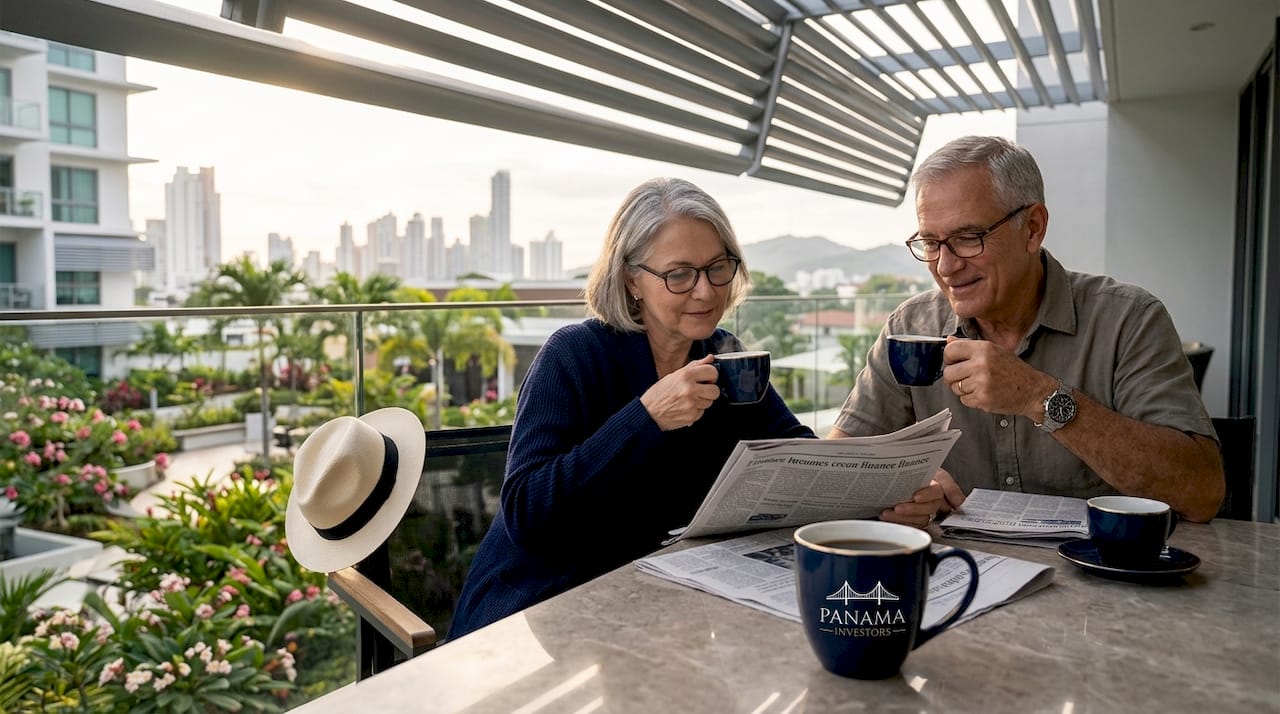
Choosing where to spend your retirement is one of the most consequential financial decisions you will make. Most retirees on a fixed income need more than a beautiful climate. They need a place where their money stretches, their health is covered, and the legal system actually welcomes them. The benefits of retiring in Panama go well beyond postcard scenery. The country offers a formal government discount program for retirees, a territorial tax system that protects your foreign pension, and healthcare costs that would make your U.S. insurance broker uncomfortable. This guide breaks down exactly what you get, what it costs you, and how to qualify.
Table of Contents
Key Takeaways
Point | Details |
Generous pension discounts | Panama’s Pensionado Visa offers 10-50% discounts on everyday expenses, saving retirees thousands annually. |
Tax-friendly system | Only income sourced within Panama is taxed, so foreign pensions and investments typically avoid local income tax. |
Affordable quality healthcare | Healthcare costs in Panama are significantly lower than the U.S., with additional savings through discounts. |
Multiple visa pathways | Retirees can choose between pension-based visas with discounts or higher-threshold real estate investor visas. |
Importance of process | Maximize benefits by understanding residency rules, actively claiming discounts, and maintaining insurance coverage. |
Key financial benefits of retiring in Panama
Panama is one of the few countries in the world that has codified retirement benefits into law. The Pensionado Visa, available to anyone who can prove a lifetime pension of at least $1,000 per month, grants you permanent residency and access to a tiered discount program that covers a wide range of daily expenses.
Pensionado cardholders receive discounts ranging from 10% to 50% on expenses including utilities, airline tickets, and healthcare. That is not marketing language. Those are legislated minimums that businesses are required by law to honor. Here is what the discount schedule looks like across major categories:
Category | Discount |
Healthcare and medical consultations | 10% to 20% |
Prescription medications | 10% |
Utility bills (water, electricity, phone) | 25% |
Hotel stays | 50% |
Restaurant meals | 25% |
Domestic and international airline tickets | 25% |
Entertainment (movies, cultural events) | 50% |
Public transportation | 30% |
Beyond discounts, Panama’s tax structure is genuinely favorable for foreign retirees. Panama’s territorial tax system means that foreign-source income, including your pension, Social Security, or investment income from abroad, is generally not subject to Panamanian income tax. If your retirement income comes from the U.S., Canada, or Europe and you live in Panama, Panama does not tax it. Full stop.
This combination of daily discounts and tax exemption on foreign income is the foundation of Panama’s appeal for middle-class retirees. A couple receiving $3,000 per month in combined pension income could realistically save $400 to $700 per month through discounts alone, depending on their spending habits. Over a decade, that is a meaningful number.
To access discounts: You must carry and present your Pensionado card at each transaction. Discounts are not automatic.
To maintain eligibility: You must keep your residency status current, which means renewing your cedula (national ID card) on schedule.
Tax exemption scope: This covers foreign-source income. Income earned inside Panama is taxed at standard local rates.
Pro Tip: When you first arrive, get your Pensionado card laminated and keep a digital photo of it on your phone. Many retirees report losing hundreds of dollars in the first year simply by forgetting to present it.
For a deeper breakdown of how Panama’s tax structure affects property ownership specifically, the tax benefits of Panama real estate guide covers capital gains treatment, property tax exemptions for new construction, and what foreigners actually owe.
With financial benefits clear, let’s explore Panama’s affordable, quality healthcare system, which is a top priority for retirees.
Affordable and quality healthcare for retirees
Healthcare is the single biggest wildcard in retirement planning. Panama addresses it in a way that surprises most North American and European retirees when they see actual numbers.
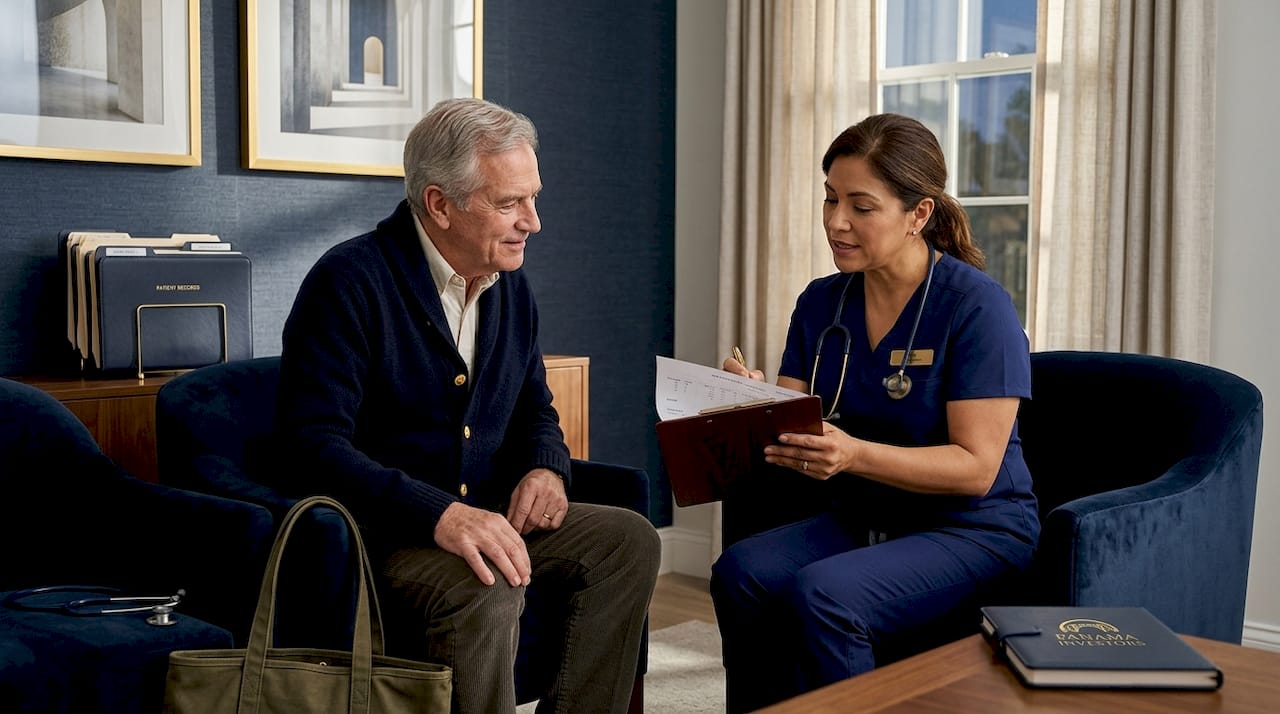
Private insurance in Panama costs less than half of comparable U.S. premiums, and Pensionado discounts apply on top of that for out-of-pocket expenses. A healthy 65-year-old couple can typically find solid private coverage in Panama for $300 to $500 per month combined, versus $1,500 or more in the United States for equivalent coverage.
What Pensionado discounts cover in healthcare:
10% to 20% off doctor consultations at participating clinics
10% off prescription medications at pharmacies
Discounts on hospital services at participating private hospitals
Reduced rates on diagnostic tests and labs at enrolled facilities
Panama City’s medical infrastructure is genuinely impressive. Punta Pacífica Hospital, affiliated with Johns Hopkins Medicine, treats complex cases with U.S.-trained physicians and modern equipment. Hospital Nacional and the Panama Clinic are also well regarded. For retirees settling outside the capital, cities like Boquete, David, and Coronado have reliable private clinics with English-speaking staff.
Pensionado discounts reduce routine care costs but do not replace private insurance for covering catastrophic health events. Budget for both.
That blockquote is worth sitting with. Many retirees arrive expecting the discount card to function like insurance. It does not. A discount on a $150 consultation is useful. A 20% discount on a $40,000 surgery is nice, but it does not solve the $32,000 gap. Private insurance solves that gap. The Pensionado card optimizes your day-to-day costs.
Pro Tip: When comparing health insurance plans in Panama, look for policies that include medical evacuation coverage. If you ever need specialized treatment not available locally, evacuation to Miami or Houston is far more affordable than you might expect, but only if your policy covers it.
The retiring in Panama guide covers insurance provider options, hospital networks by region, and what retirees in different cities actually pay for coverage.
Choosing your pathway: Retirement visa versus real estate investment
Panama offers several types of residency permits, and understanding which one fits your situation is critical before you start any paperwork. For retirees specifically, two pathways dominate the conversation: the Pensionado Visa and property-based residency routes.
Pensionado Visa at a glance:
Requires proof of a lifetime pension of at least $1,000 per month
Grants immediate permanent residency
Includes the full discount program described above
Pension must be from a government or private institution and verified by official documentation
Processing typically takes 3 to 6 months with a complete file
Property investment and Friendly Nations Visa routes:
Require a qualifying real estate purchase (thresholds vary by visa type; commonly $200,000 or more)
Do not include Pensionado discounts
Suit retirees whose income comes from investments, rental income, or business proceeds rather than a formal pension
Processing can take 6 to 12 months depending on the visa category
The Pensionado Visa grants permanent residency and significant discounts, while real estate investment routes require higher capital and do not include these discounts. That trade-off matters enormously depending on your financial profile.
The practical question is: do you have a qualifying pension, or is your retirement income structured differently? A retired federal employee with a FERS pension qualifies easily for the Pensionado route. A retired entrepreneur living off rental income and investment dividends may find the Friendly Nations or investor visa a better fit. The types of investment visas Panama offers accommodate multiple income structures, but none of them replicate the Pensionado discount program.
For a full breakdown of property-based options, the real estate residency visa guide explains qualifying purchase types, documentation requirements, and what permanent residency looks like under each route. If you are also evaluating properties, the guide on buying real estate in Panama is a practical starting point.
Comparison of key benefits and requirements for retirees in Panama
Let’s put the two primary pathways side by side so the decision is concrete, not abstract.
Feature | Pensionado Visa | Real estate or Friendly Nations Visa |
Income requirement | $1,000/month lifetime pension | $200,000+ real estate investment (typical minimum) |
Residency status | Immediate permanent residency | Temporary, then permanent after qualifying period |
Discount program | Full Pensionado discounts included | Not included |
Income source | Pension from government or institution | Any passive or investment income |
Processing time | 3 to 6 months | 6 to 12 months |
Best for | Retirees with formal pension income | Investors or retirees with non-pension income |
Pensionado Visa holders receive immediate permanent residency along with meaningful discounts, while investment visas require higher capital and offer no discount equivalent.
Here is what these differences mean in practical terms. A retired couple on the Pensionado Visa could save $5,000 to $8,000 annually through the discount program alone, factoring in utilities, healthcare, travel, and entertainment. That is money they do not need to withdraw from savings. Over a 20-year retirement, it is a number worth taking seriously.
Key considerations when choosing your visa pathway:
How is your retirement income structured? Pension, dividends, rental income, or a mix?
Are you planning to purchase property in Panama regardless? If yes, a property-based visa may align naturally.
How quickly do you need residency status? The Pensionado route generally moves faster.
Do you want the discount program? Only the Pensionado Visa includes it.
Pro Tip: If you have both a qualifying pension and capital to invest in property, you can pursue both goals simultaneously. Buying property does not disqualify you from the Pensionado Visa. Many retirees hold Pensionado residency and own property as a separate investment decision.
The Panama retirement guide walks through the full list of residency requirements, documentation steps, and common filing mistakes that delay approvals.
Maximizing your retirement benefits in Panama: Lessons from experience
Here is what most online articles about retiring in Panama get wrong. They present the discount list and the tax exemption as if those benefits automatically flow into your life the moment you land. They do not.
The benefits of retiring in Panama are real, but they are not passive. They require active management. Retirees must maintain their residency cards and present them at every point of sale. Letting your cedula lapse means you cannot legally claim any discount until you renew it, and renewal backlogs at the immigration office are a documented reality. This is not a technicality. It is a cash-flow risk.
The same applies to insurance planning. Pensionado discounts optimize your cash flow but do not substitute for coverage when something serious happens. I have spoken with retirees who budgeted as if the discount card was their health plan. When a hospitalization occurred, the math became very uncomfortable, very fast.
The retirees who genuinely thrive in Panama financially are the ones who treat the discount program as a bonus, not a budget foundation. Their budget is built on realistic insurance coverage, a clear understanding of local costs, and a reserve for unexpected expenses. The discounts then become real, tangible savings on top of a solid plan.
One more thing worth saying directly: Panama’s residency programs reward people who understand local procedures. The system is not designed to be difficult, but it does require engagement. Hiring a local immigration attorney for your visa application is not an indulgence. For most retirees, it is the fastest path to actually receiving the benefits you qualified for.
Connect with Panama real estate and retirement experts
Navigating Panama’s residency programs, property market, and tax environment is significantly easier with local expertise behind you.

At Panama Investors, Luca Piva and his team work directly with retirees and investors to match properties to residency goals, walk clients through documentation requirements, and identify neighborhoods that fit specific lifestyle and budget profiles. Whether you are exploring the Pensionado route or considering a real estate investment as part of your residency plan, the complete retirement guide is a strong starting point, and a direct consultation call helps you move from information to action with a clear plan tailored to your situation.
Frequently asked questions
What is the monthly pension required to qualify for Panama’s Pensionado Visa?
You need to prove a lifetime pension income of at least $1,000 per month to qualify for the Pensionado Visa.
Do Panama Pensionado Visa discounts apply automatically?
No. You must maintain your residency card and present your Pensionado card at each point of sale to claim discounts; otherwise, you pay full price.
Is healthcare in Panama affordable for retirees?
Yes. Private insurance premiums cost less than half of U.S. prices, and Pensionado discounts reduce routine medical expenses further on top of that.
Can I keep my foreign pension income tax-free in Panama?
Panama follows a territorial tax system, so foreign-source income including pensions is generally not taxed locally.
Recommended
