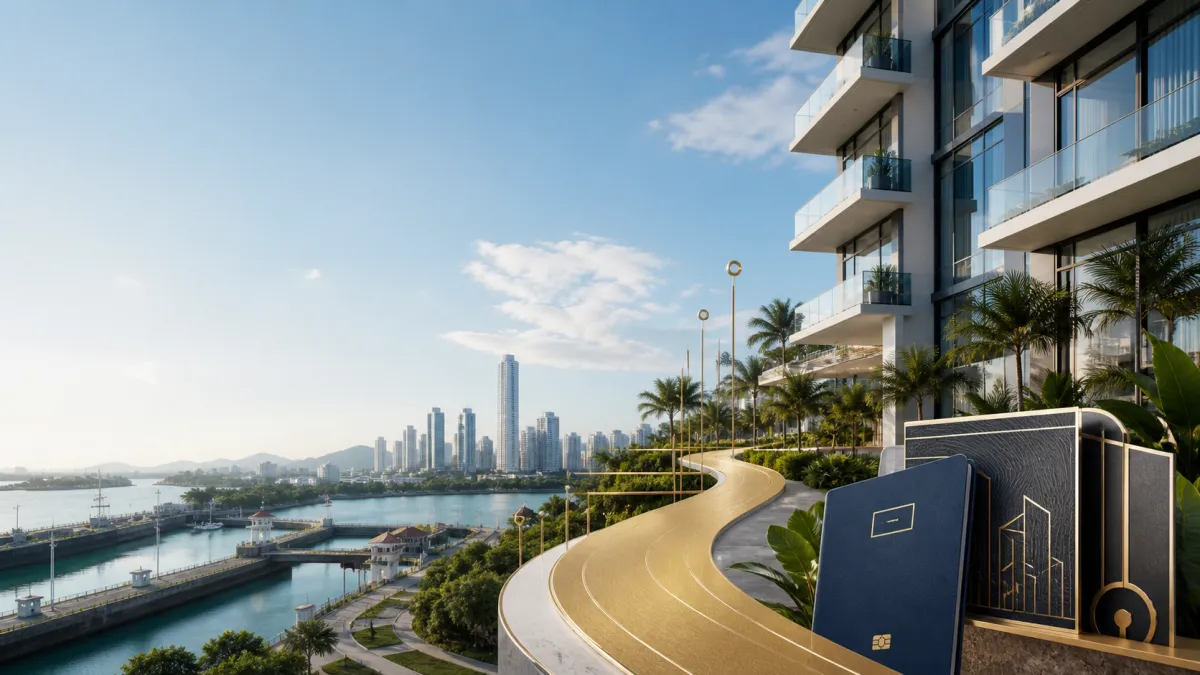
Panama's Qualified Investor Visa in 2026: The $300,000 Window Closes October 15
If you have been weighing a move on Panama residency, 2026 has handed you an unusually clear deadline. The Qualified Investor Visa - Panama's fastest route to permanent residency - currently requires a real estate investment of $300,000. On October 15, 2026, that threshold is set to rise to $500,000. For investors who were already planning to buy property in Panama, the difference is not subtle: acting before mid-October means qualifying with a property budget that is $200,000 lighter.
Here is how the program works, why the deadline exists, and what a well-run application timeline looks like from where we stand in August.
What Is the Qualified Investor Visa?
The Qualified Investor Visa (often called Panama's "golden visa") was created by Executive Decree No. 722 of October 2020, at a moment when Panama wanted to attract foreign capital quickly. It remains the only Panamanian residency program that grants permanent residency immediately - no two-year provisional stage, no renewal applications - and it is processed on an expedited track, typically in a matter of weeks rather than months.
Three investment routes qualify:
Real estate: currently a minimum of $300,000 in Panamanian property, purchased with funds transferred from abroad.
Securities: at least $500,000 invested through a licensed Panamanian brokerage on the local stock exchange.
Bank deposit: a fixed-term deposit of at least $750,000 with a Panamanian bank, held for five years.
For most of our clients the real estate route is the natural fit - it is the lowest threshold of the three, and unlike a deposit or a securities portfolio, the asset can earn rental income and appreciate while it anchors your residency.
Why October 15, 2026 Matters
The $300,000 real estate threshold was always designed as an introductory rate. The original decree scheduled an increase to $500,000, and the government has extended the lower figure more than once - most recently through Executive Decree No. 193 of October 2024, which fixed the current expiry at October 15, 2026.
Could Panama extend it again? It is possible, and nobody can promise otherwise. But planning around a hoped-for extension is not a strategy. As of today, the published rule is that applications relying on the $300,000 level must be in before mid-October - and immigration lawyers in Panama City are already reporting a busy pipeline of investors working toward exactly that date.
What You Get: The Benefits in Plain Terms
Immediate permanent residency. Approval grants permanent resident status for you, your spouse, and dependent children in one step. Most other Panamanian visas, including the Friendly Nations Visa, now route through a provisional stage first.
Speed. The program sits on an expedited processing track. Well-prepared files are commonly resolved within 30 to 90 days of filing.
No relocation requirement. Permanent residency is maintained by visiting Panama at least once every two years. You do not need to live in Panama full time - which makes the program popular with investors who want a Plan B rather than an immediate move.
A path to citizenship. After five years of permanent residency, you become eligible to apply for Panamanian naturalization, subject to the usual requirements.
Panama's structural advantages. The economy is fully dollarized, so your investment and any rental income live in US dollars. And Panama taxes on a territorial basis: income earned outside Panama is generally not taxed by Panama. (Tax outcomes depend on your personal situation and home-country rules - coordinate with a cross-border tax professional.)
The Fine Print Worth Knowing
A few practical rules shape how you should structure the purchase.
Funds must come from abroad. The investment capital must be transferred into Panama from outside the country, in the applicant's name, and you should keep clean wire documentation - it forms part of the application file.
Five-year holding period. The qualifying property must be maintained for at least five years. Selling early puts your residency status at risk.
The property should be unencumbered. The standard route uses titled property registered in your name (or a structure you control) free of mortgages, though a portion above the threshold can be financed in some structures. There are also mechanisms for qualifying with pre-construction purchases through escrow arrangements. Rules here are technical - this is precisely where an experienced Panamanian attorney earns their fee, and current requirements should always be confirmed before you commit.
You apply through a licensed Panamanian lawyer. All immigration filings in Panama require local counsel. Legal and government fees are additional to the investment itself, so budget for them from the start.
Does $300,000 Buy a Property Worth Owning?
Yes - and this matters, because the visa should be the bonus, not the excuse for a bad purchase. At the $300,000 level in today's market you are looking at, for example, a well-located two-bedroom condo in established Panama City neighborhoods such as El Cangrejo or San Francisco, newer one- to two-bedroom units in Costa del Este or along Avenida Balboa, or beach-corridor product around Coronado and Playa Caracol, where the short-term rental market has been strengthening alongside Panama's tourism recovery.
Note that the $300,000 can also be spread across more than one property in some structures, and a purchase above the threshold obviously qualifies as well. With Panama City rents having risen meaningfully over the past year and inventory in the most liquid segments tightening, the honest framing is this: the same purchase that secures your residency can also be a defensible income property on its own merits. That is the standard we would hold any qualifying property to.
A Realistic Timeline From August
Working backward from October 15, the window is tight but workable.
August: define your budget and criteria, and shortlist properties - remotely or with an in-person visit. Engage your Panamanian immigration attorney now, not after you find the property.
September: complete due diligence and close on the purchase, wiring funds from abroad with proper documentation. Begin assembling the application file (apostilled police records, passport documentation, proof of investment).
Early October: file the application before the deadline.
The riskiest part of that timeline is not the government processing - it is finding the right property and closing cleanly with enough margin. Titles need checking, buildings need vetting, and rushed purchases are how investors end up owning the wrong asset for the next five years.
The Bottom Line
Deadlines like this one reward preparation, not panic. If a $300,000 Panama property was already on your radar - for yield, for dollarization, for a second residency - the next ten weeks are simply the most efficient moment in years to act on it. If it was not, the visa alone should not talk you into it.
Either way, the right first step is a conversation, not a wire transfer. Luca Piva, our Panama-licensed broker with 13 years in this market, has guided investors through Qualified Investor purchases from shortlist to filing, working alongside experienced immigration counsel. Book a free consultation at https://panamainvestors.com/book-now and we will give you a straight answer on whether the window is worth catching - and which properties actually clear the bar.
Immigration and tax rules change. Confirm current requirements with a licensed Panamanian attorney before making commitments.
