Can Americans buy property in Panama? Everything you need to know (2026)
Can Americans buy property in Panama? Everything you need to know (2026)
- Panama Investors
- Apr 19
- 5 min read

If you’re an American thinking about buying property in Panama, here’s the short answer: yes, you can — and it’s more straightforward than you might expect. Panama is one of the few countries in the world that grants foreign nationals virtually the same property rights as its own citizens. No residency requirement, no local partner, no special structure required for most purchases.
That said, there are important things to know before you wire a deposit. This guide covers everything: legal rights, the buying process step by step, costs and financing, top locations, residency pathways, and the common mistakes Americans make that cost them time and money.
Do Americans have the right to buy property in Panama?
Yes. Panama’s constitution guarantees the right to private property, and this extends to foreigners in nearly all circumstances. Americans can own titled real estate directly in their own name — no Panamanian partner or local corporation required for most purchases.
There are two exceptions worth knowing. First, land within 10 kilometers of Panama’s borders cannot be owned outright by non-citizens (this rarely affects typical buyers). Second, the first 22 meters from the high-tide line on beaches is concession land, not titled — purchasing here means buying a concession right, not fee-simple ownership. Both are manageable with proper legal guidance, but they’re non-negotiable.
What property types can Americans buy?
Americans can buy essentially any type of titled real estate: condos, single-family homes, commercial properties, raw land, and farm parcels. The key word is “titled” — the property must have a registered title in the Public Registry of Panama.
Untitled or “possession rights” properties exist, particularly in rural areas and the interior provinces. These are legal in Panama but carry significantly higher risk for foreign buyers — title disputes are common, and enforcement is slow. First-time foreign buyers should stick to titled properties in established markets.
Step-by-step: how the buying process works
The typical purchase timeline in Panama is 30 to 60 days from signed offer to closing. Here’s how it unfolds:
Find a property and agree on price — your agent or advisor (like Luca) will source options, including off-market deals not visible on public portals
Sign a promesa de compraventa (purchase agreement) and pay a deposit, typically 10% — this locks the deal
Your attorney conducts due diligence: title search, lien verification, encumbrance checks, HOA review
Transfer funds — typically via wire to an attorney escrow account
Sign the escritura (deed) before a Panamanian notary
The deed is registered with the Public Registry of Panama — you are now the legal owner
You do not need to be physically present in Panama to buy. Power of attorney can be granted to your lawyer or representative to sign on your behalf, making remote purchases entirely viable.
What does it actually cost?
Closing costs in Panama are low compared to the US — typically 1.5% to 2% of the purchase price. The breakdown usually looks like this:
Transfer tax: 2% of sale price or appraised value (whichever is higher)
Capital gains tax (paid by seller): 3% of sale price — sometimes rolled into negotiation
Legal fees: $1,500 to $3,000 for a standard residential transaction
Notary and registry fees: $300 to $600
Agent commission: typically 4% to 5%, paid by the seller
Annual property tax in Panama is among the lowest in the hemisphere. Properties valued under $120,000 pay zero property tax. Properties between $120,000 and $700,000 pay 0.5% annually. New construction often qualifies for 20-year exonerations under Panama’s incentive programs.
Can Americans get financing in Panama?
Yes, though the terms differ from US mortgages. Panamanian banks do lend to foreign nationals, but typically require 30% to 50% down payment. Interest rates are generally in the 6% to 8% range. US credit scores are not recognized — you’ll need to provide two to three years of bank statements, income documentation, and a reference letter from your US bank.
Most American buyers pay cash or use home equity from US properties. Developer financing on pre-construction condos is increasingly available with more flexible terms than bank financing and lower down payment requirements.
How does buying property in Panama lead to residency?
Panama has two main residency pathways tied to real estate investment, both of which are highly attractive for Americans:
The Friendly Nations Visa requires a $200,000 real estate investment and is available to citizens of 50 countries including the United States. It offers a path to permanent residency within approximately two years.
The Qualified Investor Visa requires a $300,000 real estate purchase and grants permanent residency in approximately 30 days — one of the fastest investor visa programs in the world. The property must be free of mortgage, or the portion above any mortgage must meet the threshold.
Residency in Panama also opens up Panama’s territorial tax system, which means income earned outside Panama is not taxed locally. For Americans with international income streams, this is a significant financial planning advantage.
Where do Americans typically buy in Panama?
Location depends on your objective. The three most common profiles:
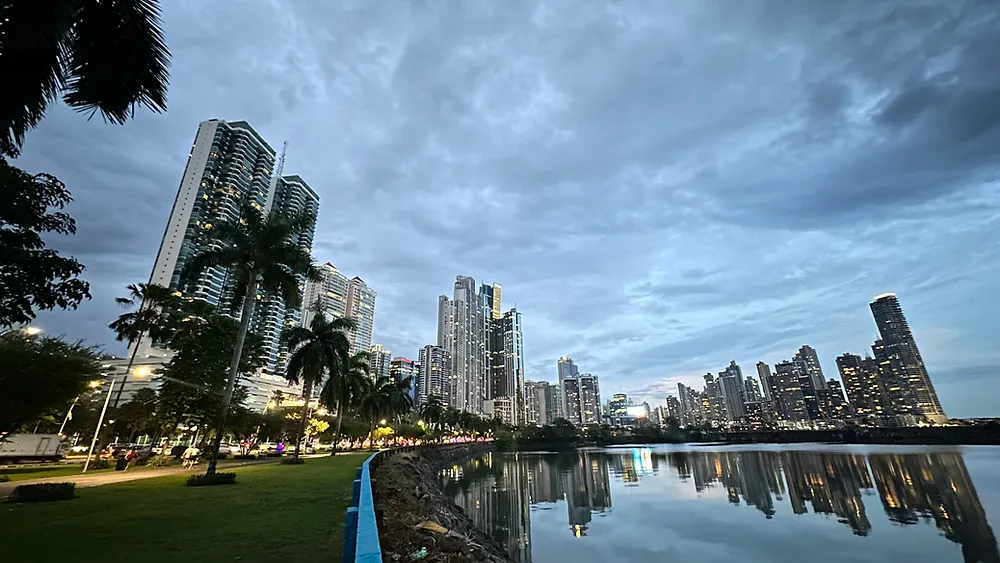
Investors seeking rental income and capital appreciation tend to focus on Panama City — specifically neighborhoods like Costa del Este, Punta Pacifica, and El Cangrejo. Gross rental yields in Panama City currently average 6% to 8%, with strong demand from expats and multinational employees.
Retirees and lifestyle buyers often gravitate toward Boquete in the mountains (cooler climate, established American expat community, $200,000 to $400,000 entry range) or the Pacific beach corridor including Coronado, Santa Clara, and Pedasí.
Second-home buyers looking for a vacation base with rental upside tend to target Casco Viejo (Panama City’s UNESCO-protected historic district) or beachfront developments along the Pacific coast.
The biggest mistake Americans make when buying in Panama
The most common and costly mistake is using the seller’s attorney or a developer’s in-house legal team. In Panama, it’s standard practice for the seller to have their own lawyer — and that lawyer’s job is to protect the seller’s interests, not yours. Every American buyer needs independent legal representation.
The second most common mistake is buying based on projected rental income provided by the developer or agent. These projections are routinely optimistic. Always request historical occupancy data from comparable units in the same building, and model your returns conservatively.
Why work with a local advisor?
The best deals in Panama — the ones with genuine upside — are not listed on Encuentra24 or international property portals. They circulate through local networks: relationships with motivated sellers, pre-construction allocations at pre-market pricing, and portfolio sales from investors exiting positions.
Luca has spent years building exactly that kind of network. If you’re serious about buying in Panama, the first step is a conversation to understand your goals — whether that’s passive income, residency, a second home, or all three.
